Sourdough starter care guide

Sourdough bread has become all the rage in recent years amongst the homesteading community, and beyond and while I myself just jumped on the trend about 5 years ago, the practice of making bread with a sourdough starter has been around for thousands of years. 

If you’re not familiar, sourdough bread is bread that is proofed with a fermented starter culture that consists of bread and water. The natural bacterias and yeasts in the starter allow the bread to rise without the use of commercial yeast. 

Many people procure sourdough starters from a friend, or even order them online. Some people have starters that have been passed down for generations and are many years old. Sourdough starters are living thing, so they do require some care to survive but it’s not as hard as it may seem. 

If you don’t want to order a sourdough starter online, or you don’t know someone who has a starter to share, you can make your own, although this can be a little tricky. 

If you are interested in making your own sourdough starter, start by mixing together equal parts of flour and water by weight, 100 grams is good to start with, then mix until a paste forms. Cover your starter loosely with a towel or a lid (not screwed on) and leave it out at room temperature. If it’s cold out, you may want to leave your starter in the oven (without turning it on) to help encourage faster rising.

The next day feed your sourdough starter again, equal parts water and flour by weight, this time 50 grams instead of a 100. Leave it covered for another day.

On day three you’ll feed your starter the same amount, 50 grams of water, and 50 grams of flour but this time you’ll discard half of your starter prior to feeding, so you don’t end up with too much starter.

Repeat this process of discarding and feeding everyday for a week at least, or until your starter begins to form bubbles and doubles in size in between feedings. In certain climates this can take more than two weeks.

I did not have much luck trying to make my own sourdough starter recently but it was the dead of winter in Michigan and I think it may have been too cold for my starter to survive, and grow. So, on the quest to find an active sourdough starter I set out on Facebook market place to find someone local in the area who had an active sourdough starter they were willing to share. 

I found one, and we’ve been going strong ever since. I’ve had several sourdough starters in the past, some stronger than others but I’ve always unfortunately killed them for some reason or another. 

This is probably the longest I’ve kept one alive, and she is thriving! I’ve even been fortunate enough to share some of my starter with some of my friends and family- the inspiration for this article. 

So you’ve acquired a sourdough starter, how do you keep your sourdough alive? 

Your sourdough needs to be fed regularly to stay alive and active. Your frequency of feedings depends on how often you bake, and where you keep your starter. If you bake every day or every other day, you will probably want to keep your start out at room temperature. If you only bake once a week or even less, you can keep your sourdough starter in the fridge. This will allow you to go more time between feedings. You can keep your starter in the fridge for several weeks without feeding and it will still survive. Your starter will be its most active bubbly self at room temperature, so when you are planning to bake, plan ahead by pulling your starter out of the fridge and feeding it 12 hours before you bake (times may vary depending on the season and how hot is. You may only need 6 hours in the summer, and maybe more in the winter) 

Typically when you feed your sourdough you’ll want to discard any excess starer prior to feeding. You can compost this extra starter or you can save it in a separate jar and use it to make sourdough “discard” recipes. Sourdough discard is inactive sourdough starer so it doesn’t provide the same kind of rise as a regular sourdough starter, because it’s inactive it also doesn’t break down the gluten the same way your regular starter will, but you can still make some great stuff with it. However, if you don’t want to waste, or you worry about not being able to use up a whole jar of discard you can eliminate this step with a little strategic planning in your feeding. 

You can save just enough sourdough starter in-between baking to be able to refeed your starter so that it grows enough to bake just what you need. I tend to save between 1/4-1/2 cup of sourdough starter after baking each week, and then it goes back in the fridge. When I pull it out to feed it the next week I feed it equal parts water and flour and the quantity of starter that this produces for me is just enough to bake what I need while still saving enough leftover to be fed the next week. This way I use just what I need and I don’t have an excess sourdough starter that has to be thrown out each week, and my jar isn’t overflowing with starter either. 

It may take time to figure out the perfect baking formula for you, but it’s worth the experimentation. 

When it’s time to feed your sourdough starter, you’ll need unbleached, unenriched flour, and tepid or slightly warm filtered water (I like to use warm water in the winter) 

I like to use a kitchen scale, and a kitchen scale is the most tried and true method by most bakers, but it you don’t have a kitchen scale you can use measuring cups. I have done both. 

Weigh or measure out your sourdough starter, if you are discarding some do that first and then weigh out and add it to a jar, bowl, cup, whatever container you like to store your starter in, (I use mason jars) 

Then weigh out equal parts water, and equal parts flour. Mix until combined. You should have a thick paste like texture, like thick pancake batter. If you are measuring rather than weighing, you can use equal parts but you may find your sourdough starter is runny. If this is this case just add more flour. Leave your jar loosely covered (don’t seal it) for 12 hours, or into roughly doubled in size, with large bubbles. Then your starter is ready to bake with! 

How do I know when my sourdough starter is ready to be fed? 

Your sourdough starter should be at its peak after feeding before you bake with it. Large air bubbles, doubled in size. It will be thick in texture with lots of air bubbles, and when you tilt your jar from one side to another it may appear stringy. This is a very active starter.

A starter that is past its peak after feeding will be deflated, and look thin like pancake batter. This doesn’t mean your starter is necessarily hungry, it just means it’s not at its peak for baking. 

When your sourdough starter is hungry you will develop a darkish layer of liquid on the top of your starter. This is called hooch, and it’s produced by the wild yeast in the starter. If this has happened don’t worry! Your sourdough starter is going to be fine. In the fridge your starter can last quite awhile after this point before a feeding, however if your starter is at room temperature, it needs to be fed soon to prevent mold from growing on top. Once mold grows on top it is nearly impossible to get it to stop, and your starter needs to be tossed out. 

If you have a layer of hooch on your starter you can either pour it off, or mix it into your starter before feeding. It can make your sourdough starter even more sour and add a more complex flavor to your bread. 

What kind of flour should I feed my starter? 

There are a ton of different flour brands out there and different options for feeding your starter. The most basic things I look for in a flour are unenriched and unbleached. Enriched and bleached flour is so devoid of natural bacteria and microbes that there really isn’t much of anything for your starter to feed off of. 

Organic flour is better if you can afford it, but not necessary. My favorite brands for regular flour (both organic and non organic) are King Arthur and Bob’s Mills.

Now, if you really want to get into the nitty gritty you may know that our white flour that we bake with is not what flour used to be. The modern wheat crop has been so modified throughout the last several decades that it no longer resembles ancient wheat. So if you’re truly looking for the healthiest bread one can eat, with the best beneficial bacteria and the easiest digestibility, you may want to consider ancient grain flours. 

Spelt and einkorn flour are two of the most popular flours for this purpose. Ancient grain flour is more expensive than regular flour and it does not bake quite the same way. The gluten content in these ancient flours is lower than your modern flour. This produces a less stretchy and elastic dough, as well as a less airy crumb and texture in the bread itself. It’s quite hearty and can be an acquired taste to some, but it actually has a very nutty flavor and a nice depth to it.

This is not for everyone, it’s not the most affordable option, and if you’re new to baking these flours take some time to get use to. They’re not your grandmas flours (they’re your great, great grandmas flours) but if health is of the highest priority, ancient grain flours are the way to go. 

What kind of tools do I need to get started with my bread baking? 

It’s very easy to get caught up in not thinking that you have the right equipment to do the job when in reality, you don’t need all the equipment instagram sourdough influences have. In fact, I’ve even brought my sourdough starter on vacation with me and baked bread in an airbnb without any of my regular equipment. So what do you really need to bake a loaf of bread? 

Measuring cups, mixing bowls, an oven safe pan and potentially an oven safe casserole dish (if your oven safe pan is not a dutch oven) 

The easiest thing to bake your sourdough bread in is a dutch oven. Dutch ovens are deep and trap the steam in the with lid on them which creates air bubbles, and a soft chewy inside during the initial baking process. However, if you don’t have a dutch oven, you can achieve this in other ways. My favorite way to do this at home is to bake my bread in a regular cast iron pan (or oven safe pan) and add a stainless steel mixing bowl on top to act as a lid, and trap in steam. This works great for me and is even easier than a dutch oven in some ways because it’s easier to drop my bread in my shallow cast iron pan, than in the dutch oven. If you’re going to use this method, make sure you’re using stainless steel bowls, or something that is oven safe. 

The other way to bake bread is to add a tray of water on the oven shelf below your bread. This will also create steam for the bread. After 30 minutes of baking, remove the tray of water, just as you would your dutch oven lid, so the crust has a chance to become crispy. 

Dehydrating your sourdough starer

If you’ve been gifted a sourdough starter from someone, or acquired it through some other way and you’re worried about killing it, this is how to preserve a little bit of your stater in case of an emergency. 

Take your active starter and spread a thin layer over parchment paper or silicone baking mats, or a dehydrator tray. If you’re Using your oven, set it to the lowest temp you can and leave your starter in there until it’s completely dry. Alternatively, if you have a dehydrator, you can use that. I set mine to around 145 degrees. 

Make SURE your starter is completely dry before storing. You can break it up into little pieces or even blend into a powder in a blender or food processor. Your starter will keep indefinitely and should something happen to your active starter, you can rehydrate this and have another active starter. It takes between 3-5 days of regular feedings before your starter is back to normal. 

Making your sourdough bread

So your starter is active and bubbly, it’s doubled in size and you’re finally ready to bake your fist loaf of bread. 

Honestly, in my opinion, this is the easy part. There are hundreds of different recipes on the internet for how to make a loaf of sourdough. Bakers more skilled than myself have experimented to find the perfect amount of salt, flour and water for their particular kitchen setting. You could pick any one of them and probably have success if you follow the instructions, and have an active starter. 

This is the recipe I’ve been following over the last few months: Homemade Sourdough bread

If I’m using all ancient grain flour, sometimes I adjust it depending on how the dough is behaving but the reason there are so many different recipes is because everyone’s sourdough starter, and kitchen climate are going to be different. A very old sourdough starter in a very warm climate may not need nearly as much time to rise and develop as a newer starter in a colder climate. For this reason you may even have to adjust your recipes based on season. 

I’ve been baking sourdough bread for five years and really only got consistent (and consistently good) within the last year. It’s not necessarily hard, but it does take time to learn what methods work best for you. 

Making homemade bread that is free of all the preservatives, fillers, and nonsense in conventional grocery store bread, and not having to pay and arm and a leg for it, like you would at the farmers market, is a great way to begin taking steps towards a healthier lifestyle for your family. 


6 Food Industry Tricks You Don’t Know About

If you shop in a typical US supermarket or big-box store, there may be more to your food purchases than meets the eye. Even the simplest of foods – apples, oranges, and chicken, for example – are commonly altered, treated with chemicals, or even injected with artificial coloring.

If you value pure real food, there’s no getting around the fact that buying your food directly from a farm (or via a farmer’s market), or, alternatively, growing it in your own backyard, are among the last remaining ways to secure such unadulterated food for your family.

6 Food-Industry Tricks That Might Shock You

TIME recently featured six food-industry tricks that should be common knowledge, but instead are mostly swept under the carpet. The food industry would rather you believe that your apple is just an apple, rather than a fruit with an added wax coating, for example – and that’s only the tip of the iceberg.

As TIME reported:1

“…your food goes through a lot to make it to you, from being treated with antibiotics to getting a chlorine bath and a wax coating. Many of these steps are no big deal… but some are bad for your health and others huge money wasters.”

1. Farm-Raised Salmon Is ‘Colored’ Pink

Wild salmon swim around in the wild, eating what nature programmed them to eat. Therefore, their nutritional profile is more balanced and complete, with micronutrients, fats, minerals, vitamins, and antioxidants like astaxanthin, which gives salmon its naturally pink, or in the case of sockeye salmon, red-colored, flesh.

Farmed salmon, on the other hand, are fed an artificial diet consisting of grain products like corn and soy (most of which is genetically modified), along with chicken and feather meal, artificial coloring, and synthetic astaxanthin.

Ironically, synthetic astaxanthin is not approved for human consumption, but is permitted to be used in fish feed that humans ultimately eat. How rational is that?

Astaxanthin is added to turn their flesh pink – the color most people expect their salmon to be. Natural salmon get astaxanthin from green algae. However, farmed salmon, without these synthetic “pigment pellets” added to their diets, would be an unappetizing grey color.

There are other reasons to avoid farm-raised salmon (and farm-raised seafood of all kinds). For instance, levels of critical omega-3 fats may be reduced by about 50 percent in farmed salmon, compared to wild salmon, due to increasing amounts of grain and legume (e.g. soy) feed.

The other issue with farmed salmon is the high levels of contaminants. The Norwegian Department of Health has raised serious concerns about high levels of contaminants in farm-raised salmon. The contaminants in question originate in wild fish, courtesy of environmental pollution.

These toxic contaminants bind to the fat molecules in wild fish, and when these fish are ground up for use in fishmeal together with added high-fat fish oils, ultimately these molecules can enter your body where they bind to your cells.

In 2006, Russia actually banned Norwegian farmed salmon, claiming it contained excessive amounts of lead and cadmium (originating from the feed).

Norway is the world’s top producer of farmed salmon. Last year, reports of farmed salmon toxicity actually spread through Norwegian news, and the Norwegian Health Department went on the record warning against eating too much farmed salmon due to contamination concerns.

2. Your Oranges Might Be Dyed

Why would orange producers go to the trouble of dying an orange orange? Because early in the season, some oranges might not be orange enough to attract consumers, so some Florida oranges are sprayed with Citrus Red No. 2.

This artificial dye is toxic to rodents at modest levels and caused tumors of the bladder and possibly other organs. It is not allowed to be used in California oranges.

Citrus Red No. 2 is not intended for consumption, which is why it’s typically added to juice oranges. If your oranges are dyed, it should state it on the bag’s label; be sure to avoid using the zest or peel of dyed oranges in your cooking.

3. Many Foods Are Dyed

It’s not only oranges that may be dyed with artificial colors. Your wheat bread may contain caramel color, as might your roast beef deli meat. Pickles spears are often dyed yellow to make the look more appealing, as are countless other foods.

In their 58-page report, “Food Dyes: A Rainbow of Risks,” CSPI revealed that nine of the food dyes currently approved for use in the US are linked to health issues ranging from cancer and hyperactivity to allergy-like reactions — and these results were from studies conducted by the chemical industry itself.2

For instance, Red # 40, which is the most widely used dye, may accelerate the appearance of tumors of the immune system in mice, while also triggering hyperactivity in children.

Blue #2, used in candies, beverages, pet foods, and more, has been linked to brain tumors. And Yellow #5, used in baked goods, candies, cereal, and more, may not only be contaminated with several cancer-causing chemicals, but it’s also linked to hyperactivity, hypersensitivity, and other behavioral effects in children.

4. Produce Often Gets a Wax Coating

Some produce is waxed after harvest to withstand the long journey to market unscarred and to protect against the many hands that touch it. While the wax is supposed to be food-grade and safe, there are different types used:3

  • Carnauba wax (from the carnauba palm tree)
  • Beeswax
  • Shellac (from the lac beetle)
  • Petroleum-based waxes

The natural waxes are far preferable to the petroleum-based waxes, which may contain solvent residues or wood rosins. Produce coated with wax is not labeled as such, but organic produce will not contain petroleum-based wax coatings (although it may contain carnauba wax or insect shellac).

The other potential issue is that wax seals in pesticide residues and debris, making them even more difficult to remove with just water. To reach the contaminants buried beneath the surface of your vegetables and fruits, you need a cleanser that also removes the wax, which is what my fruit and vegetable wash does. Produce that is often waxed includes:

Cucumbers Bell peppers Eggplants
Potatoes Apples Lemons
Oranges Limes


5. Olive Oil Might Be Mixed with Cheaper Oils

Olive oil is a common target of food fraud, in which it is deliberately adulterated at your expense, according to the U.S. Pharmacopeial Convention’s (USP) Food Fraud Database. Even “extra virgin” olive oil is often diluted with other less expensive oils, including hazelnut, soybean, corn, sunflower, palm, sesame, grape seed, and walnut. But these other oils will not be listed on the label, nor will most people be able to discern that their olive oil is not pure. If you live in an area where olive oil is made, buying from a local producer is the ideal solution as it allows you to know exactly what’s in your oil.

If not, try an independent olive oil shop that can tell you about the growers, or at least seek out a brand name that you trust to produce quality oil from your local supermarket. If at all possible, taste the oil before you buy it. While this won’t necessarily be a guarantee of quality (especially if you’re not skilled at picking out all the potentially subtle taste differences), it can help you to pick out the freshest-tasting oil possible (and if you open a bottle at home and find that it tastes rancid or “bad,” return it to the store for a refund).

6. Chicken Is Given a Chlorine Bath

The US Department of Agriculture (USDA) permits poultry producers to put all the poultry through an antimicrobial wash, using chlorine and other chemicals to kill pathogens. We already have a problem with antibiotics causing antibiotic-resistant “super germs” when used in the animals’ feed, and this likely makes the problem even worse. Workers in the plants have also reported health problems from the chemical washes, including asthma and other respiratory problems. Not to mention, it’s unclear how much of the chlorine residue remains on the chicken when you eat it. In the European Union (EU), the use of chlorine washes is not only banned, but they won’t even accept US poultry that’s been treated with these antimicrobial sprays.

Germans Alarmed Over US ‘Chlorhuehnchen’ (Chlorine Chicken)

Both the USDA and the US Food and Drug Administration (FDA) claim that giving chickens a chlorine bath is safe, but that’s not enough to convince many Germans, who are now among the most vocal opponents to a free trade agreement between the US and EU. The so-called Transatlantic Trade and Investment Partnership, or TTIP, could generate an estimated $100 billion a year in economic growth for both the US and the EU, but many Germans believe a trade agreement with the US would compromise their food safety and quality. According to Reuters:4

The phrase ‘Chlorhuehnchen,’ or chlorine chicken, has entered the parlance of everyone from taxi drivers to housewives since trade negotiations began a year ago. An Internet search for the term generates thousands of results, bringing up cartoons of animals dumped in vats of chemicals and stabbed with needles. A majority of Germans believe chlorine-washed chicken is a danger to human health despite its successful use in the United States to kill bacteria, according to survey by pollster Forsa.”

The US Food Industry Allows These Dodgy Practices That Are Banned in Europe

If it surprises you that the EU may be more forward thinking when it comes to food safety than the US, it shouldn’t. Thanks to a largely industry-beholden government and regulatory system, Americans are simply not being afforded many of the same protections given to Europeans. For instance, the EU has historically taken a strict, cautious stance regarding genetically modified (GM) crops, much to the chagrin of biotech giant Monsanto and in stark contrast to the US.

While GM crops are banned in several European countries, and all genetically modified foods and ingredients have to be labeled, the US has recently begun passing legislation that protects the use of GM seeds and allows for unabated expansion, in addition to the fact that GM ingredients do not have to be labeled on a federal level. In another example, chicken litter, a rendered down mix of chicken manure, dead chickens, feathers, and spilled feed, is marketed as a cheap feed product for US cows. The beef industry likes it because it’s even cheaper than corn and soy, so an estimated 2 billion pounds are purchased each year in the US.

However, any cow that eats chicken litter may also be consuming various beef products intended for chickens – raising concerns about Mad Cow Disease. And it’s not only the spilled feed that’s the problem; the infectious agent can also be passed through the chicken manure as well. In the US, the use of poultry litter in cow feed is unrestricted. Europe banned all forms of animal protein, including chicken litter, in cow feed in 2001. Want yet another example? The drug ractopamine is banned in 160 countries, including Europe, Taiwan, and China.

If imported meat is found to contain traces of the drug, it is turned away, while fines and imprisonment result for its use in banned countries. Yet, in the US an estimated 60-80 percent of pigs, 30 percent of ration-fed cattle, and an unknown percentage of turkeys are pumped full of this drug in the days leading up to slaughter because it increases protein synthesis. In other words, it makes animals more muscular… and this increases food growers’ bottom line.

Adding insult to injury, up to 20 percent of ractopamine remains in the meat you buy from the supermarket, and this drug is also known to cause serious disability, including trembling, broken limbs and an inability to walk, in animals. It’s also killed more pigs than any other animal drug on the market. While Europe has remained steadfast on its Ractopamine ban, including refusing imported meat treated with it, the US is actively trying to get other nations to change their minds and accept Ractopamine-treated pork.

What Are the Worst Processed Food Additives?

Processed foods can last a long time on the shelf without going bad, thanks to their chemical cocktails of preservatives and other additives. Unfortunately, their makers put a lot of money and time into strategies to increase shelf life and create attractive packaging, with little attention put on the foods’ nutrient value or how it will actually detract from lasting health. Limiting your intake of processed foods is crucial to optimal health, but, if you choose to eat them, be aware of these worst offenders to avoid if you want to protect your health (many of these are already banned in other countries due to health risks):

Ingredient Found in Health Hazards
Coloring agents: blue #1, blue #2, yellow #5, and yellow #6 Cake, candy, macaroni and cheese, medicines, sport drinks, soda, pet food, and cheese Most artificial colors are made from coal tar, which is a carcinogen
Olestra (aka Olean) Fat-free potato chips Depletion of fat-soluble vitamins and carotenoids. Side effects include oily anal leakage
Brominated vegetable oil (aka BVO) Sports drinks and citrus-flavored sodas Competes with iodine for receptor sites in the body, which can lead to hypothyroidism, autoimmune disease, and cancer. The main ingredient, bromine, is a poisonous, corrosive chemical linked to major organ system damage, birth defects, growth problems, schizophrenia, and hearing loss
Potassium bromate (aka brominated flour) Rolls, wraps, flatbread, bread crumbs, and bagel chips See bromine above. Associated with kidney and nervous system disorders, gastrointestinal discomfort
Azodicarbonamide Breads, frozen dinners, boxed pasta mixes, and packaged baked goods Linked to asthma
BHA and BHT Cereal, nut mixes, gum, butter, meat, dehydrated potatoes, and beer BHA may be a human carcinogen, a cancer-causing agent. BHT can cause organ system toxicity
Synthetic hormones: rBGH and rBST Milk and dairy products Linked to breast, colon, and prostate cancers
Arsenic Poultry EPA classifies inorganic arsenic as a “human carcinogen”

Beat the Food Industry at Their Own Game: Choose Real Food

When it comes to staying healthy, avoiding processed foods and replacing them with fresh, whole foods is the “secret” you’ve been looking for. Additionally, the more steps your food goes through before it reaches your plate, the greater the chance of contamination, alteration, and adulteration becomes. If you are able to get your food locally, you eliminate numerous routes that could expose your food to contamination with disease-causing pathogens and other intentionally added (yet still disease-causing) additives. Quite simply, swapping your processed food diet for one that focuses on fresh whole foods may seem like a radical idea, but it’s a necessity if you value your health.

And when you put the history of food into perspective, it’s actually the processed foods that are “radical” and “new.” People have thrived on vegetables, meats, eggs, fruits and other whole foods for centuries, while processed foods were only recently invented. If you want to eat healthy, I suggest you follow the 1950s (and before) model and spend quality time in the kitchen preparing high-quality meals for yourself and your family.

If you rely on processed inexpensive foods, you exchange convenience for long-term health problems and mounting medical bills. It’s also important to source your food directly from high-quality, local sources so you can determine that your chicken is not doused in chlorine and your apples are not coated in wax, for instance. For a step-by-step guide to make this a reality in your own life, simply follow the advice in my optimized nutrition plan along with these seven steps to wean yourself off processed foods.


Is Yogurt the New Junk Food? Some Yogurts have More Sugar than a Twinkie

(NaturalNews – J. D. Heyes) If you are a fan of the 1990s hit comedy series Seinfeld, perhaps you remember the episode in which Jerry and his friends began to suspect that the frozen yogurt sold in a store that Kramer has invested money in was responsible for the comedian’s and Elaine’s sudden weight gain. Jerry and Elaine have a sample of the alleged “non-fat yogurt” tested, and sure enough, it’s loaded with calories. It’s a scandal that goes all the way to the office of the Mayor-elect, Rudy Giuliani.

Well, fast forward a couple of decades since that episode first aired in 1993, and it appears as though some brands of yogurt still are not the healthy breakfast or snack choice they are made out to be. In fact, new findings show that many of the brands have much more sugar in them than some junk foods that you’d never consider eating, The Huffington Post reports.

According to the news site, the American Heart Association recommends that men consume no more than 36 grams of sugar a day, and women no more than 20 grams. If you eat, say, just one Hostess Twinkie cake, that will make a huge dent in the recommended daily sugar max; the cakes pack in 19 grams of sugar each.

There are better options

“A Twinkie is not worth it, not just because of the caloric content–150 calories is adequate for a snack–but because it lacks fiber, which will provide satiety over a period of time and because it is loaded with sugar, which will cause you to crash and become tired 15 minutes after you eat a Twinkie,” Tracy Lockwood, a registered dietitian at F-Factor Nutrition, told Time. “You can choose so many other options, such as a handful of almonds or an apple and two table spoons of peanut butter, that will keep you full and will provide you with protein and fiber.”

Well, as it turns out, many of the top-selling yogurts have much more sugar content than a Twinkie.

Part of the reason for the high sugar content is because it occurs naturally in yogurt; however, the amount of naturally occurring sugar varies dramatically depending on the kind. In an interview with HuffPo, Monica Reinagel, MS, LDN, CNS, said that low-fat yogurt, for example, has a reputation for being notoriously high in sugar. Other experts agreed, and suggested alternatives:

The first 17 grams of sugar per serving, in lowfat varieties, is naturally occurring lactose. In original yogurt, it’s common to see anywhere between 12 and 15 grams of natural sugar, according to Heather Bauer, R.D., CDN. That’s why Bauer recommends going Greek. Greek yogurt, she said, has as little as 6 grams in plain flavors.

What really boosts sugar content, however, is what folks tend to put into plain yogurt. Fruit — and especially the high-syrupy kind that is put into store-bought yogurts — is one of the most common causes of increased sugar. Also, once you begin tossing in candied nuts or, say, sweetened granola, you will quickly find that your concoction contains far more sugar than that found in a Twinkie.

“If you’re going to add toppings, always stick to a plain flavor,” Bauer said.

Would-be yogurt eaters will say that one of the big reasons why they don’t care for plain yogurt is its bitter flavor. So, to make it more palatable to a wider group of people, just about all of the big brands — think Dannon and Yoplait — offer selections of yogurt containing fruits and sometimes even dessert-flavored choices.

And these sweet additions are usually what makes yogurts contain more sugar than a highly processed piece of yellow, creme-filled spongecake.

Some of the worst offenders:

— Yoplait Original Strawberry

— Dannon Fruit on the Bottom Blueberry

— Stoneyfield Smooth and Creamy Lowfat French Vanilla

— Brown Cow Nonfat Vanilla

— Activia Blueberry Probiotic Yogurt

Sources:
http://www.huffingtonpost.com
http://www.imdb.com
http://healthland.time.com
http://science.naturalnews.com


Yes, Organic Foods are Different from “Natural” Foods

(NaturalPapa – Derek Markham) For those of us who believe strongly in the benefits of eating organic foods (for both our own bodies and for the health of the soil and air and water), the Certified Organic label is a key indicator of foods make the cut for our grocery shopping.

But there’s a lot of confusion out there, because marketers and designers have been labeling food and personal care products with all sorts of meaningless language, including “natural”, “all-natural”, and “contains natural ingredients”, which don’t require meeting any standards to use.

And if a product fits the general description as a “natural” food item, it will probably end up on the shelves of a natural foods store, where many shoppers may be led to believe that either it’s an organically grown food product, or that it doesn’t contain GMO ingredients, or that it’s good for them, none of which may be the case.

After working for years in the natural and organic food industry, as well as being the main grocery buyer for my family during that time, I got to be a pretty keen label reader and a labeling skeptic, and have always tried to debunk label claims for friends and family (much to the dismay of those who found out their “natural” foods choices weren’t really any healthier than those found in mainstream grocery stores).

At a very basic level, in order to be labeled as such, organic foods are subject to stringent environment and animal welfare standards enforced by USDA, while the label of “natural” has no official definition, and little to no enforcement of its misuse.

A new public education campaign aims to clear up some of that confusion around organic foods and natural foods claims, and help consumers make an educated choice when it comes to the food they buy and eat. This isn’t just a little issue, either, as more than $20 billion of products with claims of being “natural” are sold every year, including many with GMOs, pesticide residues, synthetic food additives, and high fructose corn syrup.

http://www.youtube.com/embed/AftZshnP8fs
“Foods made with the use of toxic persistent pesticides and even genetically engineered ingredients are being labeled as natural. Only organic guarantees that food is produced without the use of toxic persistent pesticides, hormones, antibiotics or genetically engineered ingredients. Only organic gives you complete piece of mind.” – Gary Hirshberg, Chairman of Stonyfield Farm.

Find out more about the difference between organic foods and those that claim to be “natural” foods, at Only Organic.


Top 10 Destructive Nutrition Lies Ever Told

(Dr. Mercola) There is no shortage of health advice out there, and no shortage of bad advice to go along with it. Some misguided notions are harmless—but others are outright dangerous and can lead you down the road to chronic health problems and may even trim years off your life.

It is critically important to decipher fact from fiction. Many nutrition myths get repeated over and over until they are mistaken for truth, especially when perpetually spread by public health authorities.

But the good news is that slowly, the real truth finally appears to be reaching mainstream audiences, as evidenced by the eagerness of satirists to take a jab at the food industry, as in the clever Coca-Cola parody featured above.

In an article addressing destructive nutrition lies, Kris Gunnars of Authority Nutrition1 is among those admirably trying to bust the dangerous dietary myths that continue being spread by so many nutritionists. I agree with the majority of his points, but have added a few others that I believe to be important. Read on for my own top 10 list, which builds upon his.

Lie #1: Breakfast Is the Healthiest Meal of the Day, and You Should Eat Many Small Meals a Day

There is now a good deal of research supporting the health benefits of intermittent fasting—which is what you are really doing whenever you zip out of the house in the morning without breakfast.

Recent studies suggest that intermittent fasting can provide the same health benefits as constant calorie restriction which many studies have shown to dramatically increase life span in animals. It may also be helpful for those who cannot successfully reduce their everyday calorie intake.

Besides turning you into an efficient fat burner, intermittent fasting can also boost your level of human growth hormone production (aka the “fitness hormone”) by as much as 1,200 percent for women and 2,000 percent for men.

Intermittent fasting and continuous calorie restriction have both been shown to produce weight loss and improve metabolic risk markers. However, intermittent fasting tends to be slightly more effective for reducing insulin resistance.

Other benefits include reducing inflammation, improving blood pressure, and increased lean body mass. Intermittent fasting can also improve your brain function by increasing levels of BDNF, a protein that protects your brain cells from the changes associated with Alzheimer’s and Parkinson’s disease.

There are several types of intermittent fasting to choose from, so I recommend experimenting to see what style works best for you. One of the easiest, however, is to simply skip breakfast, and limit your eating to a narrow window of time each day—say between 11am and 7pm, to start. You can review my more comprehensive article on intermittent fasting for more details.

The advice to “eat six small meals per day” comes from seemingly logical principles (portion control, keeping your energy up, stabilizing blood sugar, etc.), but in reality, eating this way has not been shown to provide these benefits. We seem to need periods of fasting for optimal metabolic function.

And if you think about it, our ancient ancestors never had access to a grocery store 24/7 and they went through regular periods of feast and famine. The problem is that most of us are in 24/7 feast mode. Implementing intermittent fasting is the quickest way I know of to jump start your body into burning fat as its primary fuel again.

Lie #2: Saturated Fat Causes Heart Disease

The dangerous recommendation to avoid saturated fat, which arose from anunproven hypothesis from the mid-1950s, has been harming people’s health for about 40 years now. As recently as 2002, the “expert” Food & Nutrition Board issued the following misguided statement, which epitomizes this myth:

“Saturated fats and dietary cholesterol have no known beneficial role in preventing chronic disease and are not required at any level in the diet.”

Similarly, the National Academies’ Institute of Medicine recommends that adults get 45-65 percent of their calories from carbohydrates, 20-35 percent from fat, and 10-35 percent from protein. This is the polar opposite of an ideal fat to carb ratio and virtually guarantees you a heightened risk of disease.

Most people benefit from a diet where 50-85 percent of daily calories are derived from healthful fats. However, you need very few, if any, carbohydrates for optimal health. Although that amount of fat may seem like a lot, fat is very calorie-dense, and will therefore still constitute the smallest amount, in terms of volume, on your plate.

The truth is, saturated fats from animal and vegetable sources provide the building blocks for your cell membranes and a variety of hormones and hormone-like substances, without which your body cannot function optimally.

Fats also serve as carriers for the fat-soluble vitamins A, D, E, and K and are required for converting carotene into vitamin A, absorbing minerals, and a host of other important biological processes. Saturated fat is also the preferred fuel for your heart! Good sources of healthy fats to add to your diet include:

Avocados Butter made from raw grass-fed organic milk Raw dairy Organic pastured egg yolks
Coconuts and coconut oil Unheated organic nut oils Raw nuts, especially macadamia, and raw seeds Grass-fed and finished meats

Lie #3: High Omega-6 Seed and Vegetable Oils Are Good for You

Of all the health-destroying foods on the market, those made with highly processed vegetable and seed oils are some of the worst. When consumed in large amounts, as they are by most Americans, they seriously distort your important omega-3 to omega-6 ratio. In a perfect world, this ratio is 1:1—but the average American is getting 20 to 50 times more omega-6 fats than omega-3 fats. Excessive omega-6 fats from processed foods significantly increase your risk for heart disease, cancer, Alzheimer’s, diabetes, rheumatoid arthritis, and many other illnesses.

The cholesterol found in arterial plaque is oxidized, damaged cholesterol, which your immune system identifies as bacteria. In response, your immune system sends out macrophages to attack it, which creates inflammation inside your artery walls. A major factor driving heart disease is this oxidized cholesterol, which you introduce into your body every time you consume vegetable oils, or foods cooked in them.

Many vegetable and seed oils are also genetically engineered, which only compounds their health risk. More than 90 percent of US canola oil is GE. So what’s the best oil to cook with? Of all the available oils, coconut oil is the one of choice for cooking because it’s close to a completely saturated fat—meaning, much less susceptible to heat damage. And coconut oil is one of the most nutritionally beneficial fats. For more information about coconut oil, please see our special report. Olive oil, while certainly a healthful oil, is easily damaged by heat and is best reserved for drizzling cold over salad.

Lie #4: Artificial Sweeteners Are Safe Sugar Replacements for Diabetics, and Help Promote Weight Loss

Most people use artificial sweeteners to lose weight and/or because they are diabetic and need to avoid sugar. The irony is that nearly all of the studies to date show that artificial sweeteners cause even MORE weight gainthan caloric sweeteners. Studies also show that artificial sweeteners can be worse than sugar for diabetics.

In 2005, data gathered from the 25-year long San Antonio Heart Study showed that drinking dietsoft drinks increased the likelihood of serious weight gain much more so than regular soda.2 On average, each diet soda the participants consumed per day increased their risk of becoming overweight by 65 percent within the next seven to eight years and made them 41 percent more likely to become obese. There are several possible reasons for this, such as:

  • Sweet taste alone appears to increase hunger, regardless of caloric content
  • Artificial sweeteners appear to perpetuate a craving for sweets, and overall sugar consumption is therefore not reduced, leading to further problems with weight control3
  • Artificial sweeteners may disrupt your body’s natural ability to “count calories,” as evidenced by multiple studies. For example, a Purdue University study found that rats fed artificially sweetened liquids ate more high-calorie food than rats fed high-caloric sweetened liquids4

The list of health risks associated with artificial sweeteners, particularly aspartame, continues to expand. I maintain an ongoing list of studies related to the detrimental effects of aspartame, which I recommend you review for yourself if you are still on the fence. I invite you to watch my aspartame video, as well.

Lie #5: Soy Is a Health Food

The meteoric rise of soy as a “health food” is a perfect example of how a brilliant marketing strategy can fool millions. But make no mistake—unfermented soy products are NOT healthful additions to your diet, regardless of your age or gender. I am not opposed to all soy—properly fermented and preferably organic soy, such as tempeh, miso, and natto, offer great health benefits, courtesy of the beneficial bacteria (probiotics) the fermentation process produces.

Thousands of studies have linked unfermented soy to a number of health problems, however. More than 90 percent of American soy crops are also genetically engineered, which only compounds its health risks.5 If you find this information startling, then I would encourage you to review some of the articles on my Soy Page. The following table lists a number of the damaging health effects science has linked to unfermented soy:

Breast cancer Brain damage and cognitive impairment Heart disease
Thyroid disorders Kidney stones Immune dysfunction
Severe, potentially fatal food allergies Malnutrition Digestive problems
Problems with pregnancy and breastfeeding Reproductive disorders and impaired fertility Developmental abnormalities in infants

Lie #6: Whole Grains Are Good for Everyone

The use of whole grains is an easy subject to get confused about, especially for those with a passion for health and nutrition. For the longest time, we’ve been told that whole grains are highly beneficial. Unfortunately, ALL grains can elevate your insulin and leptin levels, even whole grains and organic varieties—and elevated insulin/leptin increases your risk of chronic disease. This is especially true if you already struggle with insulin/leptin resistance, which would manifest as high blood pressure, distorted cholesterol ratios, being overweight, or diabetes).

It has been my experience that more than 85 percent of Americans have trouble controlling their insulin and leptin levels and have one or more of the symptoms listed above. You may be one of those if you struggle to maintain an ideal body weight and body composition, tend to accumulate fat around you belly, or have a suboptimal lipid profile. In fact, insulin/leptin dysregulation is a common indicator for many of the diseases so prevalent today, such as diabetes, heart disease, dementia, and cancer.

Many whole grains also contain gluten, which is a common trigger for allergies and sensitivities. Subclinical gluten intolerance is far more common than you might think, with symptoms that are not always obvious. I strongly recommend eliminating or at least restricting grains from your diet, as well as sugars/fructose, especially if you have any of the conditions listed above. As a general rule, the higher your insulin levels are, the greater your grain restriction should be.

Lie #7: Genetically Engineered Foods Are Safe and Comparable to Conventional Foods

Genetic engineering (GE) of our food may be the most dangerous aspect of our food supply todayI strongly recommend that you avoid ALL GE foods. Since more than 90 percent of the corn and 95 percent of the soy grown in the US are GE, then you can count on virtually every processed food having at least one GE component if it doesn’t bear the “USDA 100% Organic” or non-GMO label.  Perhaps the most dangerous aspect of them is that the crops are saturated with one of the most dangerous herbicides on the market, glyphosate, to the tune of nearly a billion pounds per year. This toxic chemical can’t be washed off as it becomes integrated into nearly every cell of the plant, and then gets transferred into your body.

No one knows exactly what will be the ultimate impact of these foods on your health, particularly over the long term. Animal studies have pointed to increased disease, infertility, and birth defects as the top contenders. The first-ever lifetime feeding study showed a dramatic increase in organ damage, cancer, and reduced lifespan. It’s important to realize that, unless you’re buying all organic food or growing your own, you’re probably consuming GE foods on a daily basis. In order to avoid as many GE foods as possible, be aware that the following common crops are likely to be GE unless otherwise labeled:

Corn Canola Alfalfa
Soy Cottonseed Sugar from sugar beets
Zucchini Crookneck squash Hawaiian papaya

Lie #8: Eggs Are Bad for Your Heart

Eggs are one of the most demonized foods in the US… thanks to the cholesterol myth. The misguided belief that cholesterol, such as in egg yolks, will give you heart disease is simply untrue (see Lie #1). Studies have shown that eggs do NOT have a detrimental impact on cholesterol levels and are actually one of the most healthful foods you can eat. In one Yale study,6 participants were asked to consume two eggs daily for six weeks. Researchers found that this egg consumption did not spike cholesterol levels and did not have a negative effect on endothelial function, a measure of cardiac risk.

Choose pasture-raised organic eggs, and avoid “omega-3 eggs” as this is not the proper way to optimize your omega-3 levels. To produce these omega-3 eggs, the hens are usually fed poor-quality sources of omega-3 fats that are already oxidized. Omega-3 eggs are also more perishable than non-omega-3 eggs. Some of the many nutritional benefits of eggs are summarized for you in the table below.

One egg contains six grams of high quality protein and all nine essential amino acids Beneficial for eye health due to lutein and zeaxanthin, antioxidants in your lens and retina that help prevent eye diseases such as macular degeneration and cataracts Good source of choline, a member of the vitamin B family (essential for nervous system, cardiovascular system, and prenatal brain development)
Vitamin D: eggs are one of the few foods that contains naturally occurring vitamin D (24.5 grams) Sulfur (essential component of glutathione, also promotes healthy hair and nails) Many other vitamins and minerals (B vitamins, vitamins A and E, calcium, copper, iodine, iron, magnesium, potassium, selenium, and zinc)

Lie #9: Low-Fat Foods Prevent Obesity and Heart Disease

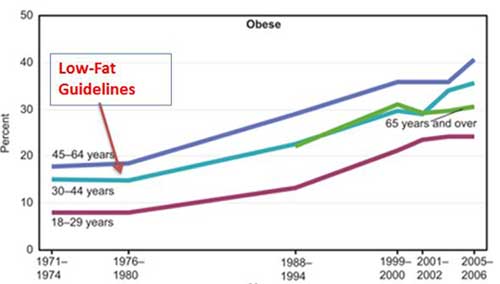
Conventional recommendations over the past 40 years or more have called for drastically decreasing the overall fat in your diet, but this fat aversion is a driving force behind today’s metabolic dysfunction, obesity, and ill health. As discussed earlier, most people need between 50 and 85 percent of their calories from fats—a far cry form the less than 10 percent from saturated fat recommended by the USDA!7 Kris Gunnars stated it quite nicely:8

“The first dietary guidelines for Americans were published in the year 1977, almost at the exact same time the obesity epidemic started. Of course, this doesn’t prove anything (correlation does not equal causation), but it makes sense that this could be more than just a mere coincidence.

The anti-fat message essentially put the blame on saturated fat and cholesterol (harmless), while giving sugar and refined carbs (very unhealthy) a free pass. Since the guidelines were published, many massive studies have been conducted on the low-fat diet. It is no better at preventing heart disease, obesity or cancer than the standard Western diet, which is as unhealthy as a diet can get.”

Let’s face it, if low-fat diets worked, the United States would be the healthiest nation on the planet—folks have been following them since the late 1970s! But if you look at the following graph, you can see that America’s waistline has done nothing but expand since then. There’s no telling how many people have been prematurely killed by following these flawed guidelines. Yet, despite mounting research to the contrary, low-fat diets are stillbeing pushed as “heart healthy” by the majority of nutritionists, cardiologists, and the like.

Lie #10: Carbs Should Be Your Biggest Source of Calories

I have already covered how insulin resistance is a key factor in disease (see Lie #4). A diet high in non-fiber carbohydrates—particularly processed grains and sugar—leads directly to insulin and leptin resistance. When your highest percentage of calories comes from healthful fats, these problems just don’t exist. Most high-carb diets are high in sugar and starch, not vegetables. When the low-fat mantra swept over the country, the high-carb craze soon followed. When fat was removed from foods, something had to be added back in to make foods more palatable—and that something was sugar. Particularly, highly concentrated forms of fructose, such as high fructose corn syrup, which spell metabolic disaster for your body.

With fat being the identified villain (albeit falsely accused), sugar was completely ignored—even though sugar was the realculprit behind inflammation, metabolic dysfunction, diabetes, and heart disease. America’s love of sugar was a boon to the processed food industry—which added fructose to practically everything from soup to nuts… literally. If you want to see what effects this had on the country’s health and belt size, just turn on your national news.

A high-carb diet disrupts your insulin and leptin signaling, and over time may very well result in type 2 diabetes. By contrast, a diet higher in beneficial fats corrects these metabolic issues. Recent research has demonstrated that the ketogenic diet—one marked by carbohydrate restriction and substantial healthful fats—extended the lifespan of mice by 20 percent, because it optimized their insulin sensitivity and other metabolic processes. There is evidence that low carbohydrate diets, combined with appropriate amounts of protein, can even slow down Alzheimer’s disease and cancer.

Now for the #1 Truth…

The more you can eat like your ancestors, the better—fresh whole foods, locally and sustainably raised, and foods that are minimally processed or not processed at all. These are the types of foods that your genes and biochemistry are adapted to and will provide you with the ability to reverse and prevent most diseases. You will find these at your local farmer’s market, food co-op, or in your own backyard garden. And you will be amazed at the positive changes you’ll see in your health when you “clean up” your diet!  Be wary of nutritional advice from mainstream “experts” as it may not be based on science—or based on bad information that is several decades outdated. Truthful, accurate information is your number one weapon in taking control of your health.

Recommended Reading: