Two States Ready to Fight for GMO Labeling in November While Industry Pushes Bill to Remove State Rights

(Dr. Mercola) The pesticide and junk food industries continue to cause harm, even deaths, while destroying our rights and indemnifying themselves from liability.

That’s the take-home message from the September 8 article in The Progressive,1 which recounts the travails of residents in Cedar Valley, Oregon. It’s also the take-home message of other related news. And yet there’s hope…

A group of residents of the Cedar Valley area near Gold Beach in Curry County, Oregon say their properties were doused with pesticides by a helicopter aiming for privately-owned timberlands last October,” the featured article states.

In what has been called a ‘severe sanction,’ the pesticide applicator and the aerial spray company he owns have been fined $10,000 each by the state and had their pesticide licenses suspended for a year for providing false information that misled investigators.

But at least one of those affected says this basically amounts to a big traffic ticket, when instead he believes the incident should be considered an act of ‘criminal trespass’ linked to 45 illness reports.”

‘Right to Farm’ Laws Protect Big Ag from Legal Action

At present, the “Farm and Forest Practices Act” prevents the residents from suing for damages. But 17 of those affected by the pesticide dousing are now challenging the constitutionality of that law.

While originally intended to protect small farmers from frivolous nuisance lawsuits by suburban neighbors, today, many of these laws do little more than shield large corporations from being held accountable for large-scale environmental and human harm.

Small farms have been replaced with gigantic warehouse-style factory farms that produce toxic waste on a scale that is simply incomparable to a regular family-run farm.

Yet you still cannot sue them for damages as long as they’re following “generally accepted” farming or foresting practices—including aerial pesticide applications, even though in this case people were doused in their own backyards!

Moreover, Oregon’s Right to Farm law contains a provision stating that if you sue and lose the case, then you are responsible for paying the defendant’s legal fees. This is another effective dissuasion strategy that coddles big industry while leaving regular folk to suffer without effective recourse.

Residents Exposed to Toxic Agent Orange Ingredient

Two residents reporting health problems in this case include John Burns, who is the assistant chief of the local volunteer fire department, and his neighbor, James Welsh.

According to Burns, a total of 45 people have suffered health effects from the exposure. While Burns began feeling progressively worse as the day wore on, Welsh was immediately struck will nausea and breathing problems when the chemicals rained down on him.

Welsh, who had a preexisting heart condition, rapidly deteriorated after the exposure, and died in April. That exposure, it turned out, was a mix of 2,4-D—which was a major ingredient in Agent Orange—and triclopyr, plus an adjuvant.

One of the ingredients was applied “at a rate above the maximum allowed by the label instructions,” according to the Oregon Department of Agriculture.2 As reported in the featured article:

The pesticide spray over Cedar Valley is certainly not the first residential exposure due to aerial pesticide application. Residents of the Triangle Lake area in Lane County say they have been exposed to aerial pesticide drift multiple times in recent years, especially in 2011, as CMD has reported.

Urine tests performed by scientists at Emory University in spring 2011 confirmed 2,4-D in 100 percent of their urine samples and the weedkiller atrazine in most.”

Cedar Valley Residents Challenge ‘Right-to-Farm’ Law

The law firm Craig Law Center has taken on Cedar Valley’s case, challenging the “Right to Farm” law. According to the featured article:

Crag attorney Chris Winter said he was interested in the case because he became ‘concerned that people weren’t able to defend their property rights against toxic chemicals.’

The lawsuit challenges ‘right-to-farm’ under the under the clause of the state constitution that guarantees that every individual will have a legal remedy for the violation of any fundamental legal right…

Winter said, ‘Because toxic chemicals and aerial application are so risky, courts have said there’s a higher standard of care, more than just being reasonably prudent, but being careful that nothing gets on neighbors’ property.’

But because of the ‘right-to-farm’ law, citizens still can’t sue. That means courts have ‘tipped in favor of chemical companies and applicators.’

Winter says that the plaintiffs hope to change the ‘Right to Farm and Forest Law,’ but that additional changes are needed to address structural problems in the state’s regulatory system, like ‘basic standards and guidelines for how pesticides are applied.’”

Judge Declares Idaho’s ‘Ag-Gag’ Law Potentially Unconstitutional

In related, but slightly more optimistic news, a federal judge has ruled that Idaho’s Bill 13373–dubbed the “ag-gag law,” as it criminalizes the secret filming of agricultural practices—may in fact be unconstitutional.

The bill was hastily signed into law in February, after footage of animal abuse occurring in a confined animal feeding operation (CAFO) was aired on TV. The law was quickly challenged by the Animal Legal Defense Fund (ALDF), alleging that politicians ignored the First Amendment simply to protect corporate interests. As reported by the Courthouse News Service:4

Gov. C.L. ‘Butch’ Otter and Attorney General Lawrence Wasden moved to dismiss the complaint in April… but US District Judge B. Lynn Winmill… said the opponents may have a case: First Amendment and equal protection clause.

While the protection of private property is a valid concern, it does not necessarily justify the restriction of free speech, the court found.

‘The First Amendment requires more than the invocation of a significant government interest; it requires that the restriction’s benefits be balanced against the burden on protected speech,’ Winmill wrote. ‘The state therefore must justify a need to serve its interests in protecting private property through targeting protected speech.’”

This is good news, as this law is all about protecting the status quo of industrial farming; turning it into a crime to expose the horrors, cruelties, and dangers associated with big agricultural business… Time will tell if the “ag-gag rule” will be repealed, but at least the issue will be addressed in a court of law.

Help Vermont Defend America’s First No-Strings GMO Labeling Law!

Speaking of courts of law… The Grocery Manufacturers Association of America (GMA), which consists primarily of pesticide producers and junk food manufacturers, is suing Vermont in an effort to overturn H.112—the first no-strings-attached GMO labeling in the US.5, 6, 7 H. 112 was passed by an overwhelming margin,8 and Governor Peter Shumlin signed the historic bill into law on May 8 this year.

The law will require food manufacturers to label genetically engineered (GE) foods sold in Vermont, and prohibits them from labeling foods with GE ingredients as “natural” or “all natural.” The GMA’s lawsuit claims that their members are going to end hunger with their pesticide-laden GMOs, but we already know that the problem with hunger is not production, it’s distribution. There’s more than enough food to go around; it’s just poorly distributed.

Besides, must Americans be kept in the dark about what we’re eating in order for the chemical technology industry to be able to “save the world” with its genetically engineered grains? To help Vermont defend its GMO labeling law against these multi-national giants, please consider making a donation to the Organic Consumers Fund, which has been set up to raise funds for this purpose. The fund has also pledged to help Oregon and Colorado pass their respective GMO labeling initiatives this November.

Beware the ‘DARK’ Act…

The GMA, whose 300-plus members include Monsanto, Coca-Cola, and General Mills, is also pushing a Congressional bill called the “Safe and Accurate Food Labeling Act of 2014.9 The bill, dubbed the “DARK” (Denying Americans the Right to Know) Act, would actually preempt all states from passing GMO labeling laws.10 It would also bar states from enacting laws that make it illegal for food companies to misrepresent their products by labeling GE ingredients as “natural.” Last but not least, the DARK Act would also limit the FDA’s power to force food companies to disclose GE ingredients.

Does any of this make you warm and fuzzy inside? Are these the actions of companies that have your best interest at heart? I would say no. They are trying to HIDE the presence of genetically engineered ingredients, and are pulling out ALL the stops to do so! Ask yourself, why? These companies—the very ones providing much of our food—are actually trying to take awayindividual state’s rights, just to ensure certain food ingredients remain hidden! Curiously enough, Monsanto is more than willing to “support” GMO labeling in other countries.

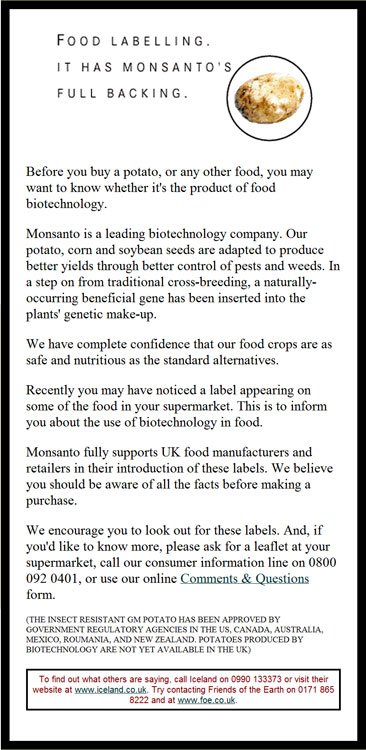
Here’s a Monsanto ad from the UK, letting British consumers know how much the company supports the mandatory labeling of their goods—even urging Britons to seek such labels out—ostensibly because Monsanto believes “you should be aware of all the facts before making a decision.” What’s the difference between British shoppers and American shoppers? Why does Monsanto support one nation’s right to know but not another? It’s time to put an end to this hypocritical charade and label foods in the US, as has been done in 64 other countries across the globe already!
American state rights were encouraged by our constitution, and the constitution was meant to prevent federal superpowers becoming corrupted and creating an authoritarian, fascist federal government. Sadly, we’ve watched our individual and state rights deteriorate over many decades, succumbing to these enormous industry powers, and this is probably one of the biggest, most blatant overreaches yet, proving that corporate interests are ruling the roost on Capital Hill. As stated by Marni Karlin, director of legislative and legal affairs for Organic Trade Association:11

Consumers, particularly the eight out of ten American families who buy organic products, want to know what is in their food. Rep. Pompeo’s bill ignores this consumer demand for information. Instead, it ties the hands of state governments, the US Department of Agriculture, and the Food and Drug Administration concerning GMO labeling. It is fatally flawed.”

What Happens in Oregon and Colorado in November Could Make or Break the GMO Labeling Movement

In addition to all this legal wrangling, opponents of GMO labeling spent more than $27 million on lobbying in the first six months of this year alone. This is about three times more than they spent during all of 2013, when they shelled out $9.3 million.12 Among the biggest spenders on anti-labeling lobbying were the Grocery Manufacturers Association (GMA) and major food makers such as Coca-Cola Co and PepsiCo Inc., along with chemical industry heavyweights like Monsanto and DuPont.

Undoubtedly, they are well aware that November is going to be a crucial turning-point for the GMO labeling movement. Both Colorado and Oregon have GMO labeling on their November ballots, and it’s absolutely imperative that we make a strong push to make sure these ballots succeed. So please, consider making a generous donation to the Organic Consumers Fund.

I know, it’s an uphill battle, but persistence pays! We cannot and will not give up now. During last year’s I-522 ballot campaign to label GMOs in Washington State, the Grocery Manufacturers Association (GMA) came up with a devious, and illegal, money-laundering scheme to protect the identity of members who donated funds to the opposing campaign. Unfortunately, this illegal move helped the GMA defeat I-522 by a mere one percent margin—ONE PERCENT!

Fortunately, the GMA was caught, and sued by Attorney General Bob Ferguson, who accused them of intentional money laundering and violating state campaign disclosure laws. They had to resort to illegal activity to beat us by one percent the last time… With that in mind, I am firmly convinced that we CAN win in both Colorado and Oregon. But it will take effort. And money, to make sure all the voters are informed enough to make a sound decision. It’s time for truth in labeling. Together, we can make it happen.

I recently named the GMA “the most evil corporation on the planet,” considering the fact that it consists primarily of pesticide producers and junk food manufacturers who are going to great lengths to violate some of your most basic rights—just to ensure that subsidized, genetically engineered and chemical-dependent, highly processed junk food remains the status quo.

The insanity has gone far enough. It’s time to unite and fight back, which is why I encourage you to boycott every single product owned by members of the GMA, including natural and organic brands. To learn more about this boycott, and the traitor brands that are included, please visit TheBoycottList.org. I also encourage you to donate to the Organic Consumers Fund. Your donation will help fight the GMA lawsuit in Vermont, and also help win the GMO labeling ballot initiative in Oregon in November.

Voting with your pocketbook, at every meal, matters. It makes a huge difference. By boycotting GMA Member Traitor Brands, you can help level the playing field, and help take back control of our food supply. And as always, continue educating yourself about genetically engineered foods, and share what you’ve learned with family and friends.

Recommended Supplements (These supplements help detoxify GMOs):

Further Reading:


Vitamin B6 and What You Should Know About it

Vitamin B6 (pyridoxine, pyridoxa, pyridoxamine) works with other B vitamins to change carbohydrates into glucose, to help form hemoglobin, to create neurotransmitters, maintain normal nerve function, to break down protein, to maintain normal blood sugar levels, and to make antibodies.

B6 is not stored in the body. Therefore, it is important to eat a healthy diet that supplies the daily need for this essential nutrient.

Foods Rich in Vitamin B6

Natural food sources high in vitamin B6 include the following: sweet potatoes, potatoes, spinach, cabbage, turnip greens, garlic, winter squash, bok choy, bell peppers, avocado, green peas, tuna, chicken, turkey, beef, salmon, lentils, lima beans, pinto beans, banana, and sunflower seeds.

Vitamin B6 Deficiency

Deficiency causes depression and cognitive problems, skin inflammation, burning feet, sore tongue, anemia, and chronic inflammation of the body. Severe deficiency can lead to convulsions. B6 is important for liver detoxification and immune system function. Severe deficiencies are rare, however, mild deficiencies are common.

How Vitamin B6 Is Used Therapeutically

B6 has been proven to be a successful treatment for morning sickness, to lower homocysteine levels, and to treat tardive dyskinesia. The best known use of B6 is to treat PMS, however, double blind studies have not confirmed its efficacy. (But try telling this to any woman who has received immediate relief from raging hormones by taking B6, and any man who knows to give them to her ). Studies have proven its aid in treating children with asthma in reduction of medications, but studies on adults with asthma have not shown the same result.

Evidence is incomplete or contradictory in regards to benefits in treating depression, vertigo, dermatitis, schizophrenia, prevention of kidney stones, HIV, photosensitivity, and diabetes during pregnancy.

In reading the literature it appears that many studies have been conducted with small groups and many of the studies have not been set up properly. It is also suspect that none of the studies have been conducted with B-complex vitamins since B vitamins always work together.

Remember, if supplementing B6, it is best to take B6 along with the other B vitamins in a B complex, because any long-term use of a singular B vitamin will cause an imbalance in the others. B-complex formulas are available with higher B6 that maintains a working balance of these precious vitamins.

Managing PMS with B6

With a healthy diet, good whole food multivitamin/mineral supplementation and balanced fats (these are necessary for proper B vitamin assimilation), and a complex B vitamin that’s heavy on the B6, many people have been able to manage their PMS symptoms down to almost nonexistent. Your gut also needs to be balanced in order to properly assimilate b vitamins, and consider Shillington’s Female Balance Formula.

Recommended Supplements:
Further Reading:
Sources:


Four Steps to Feeling Well for Those New to Natural Health

If you’ve made the decision that you are truly ready to change your lifestyle and claim your birthright of vibrant health, these are the steps to achieve your goal:

Eat Right

If you drill down health to its most critical and essential element, diet plays the most important role. We’ve all heard the old adage, “You are what you eat.” Once you understand the critical role diet plays in health, you will understand the absolute truth of this statement. Your diet provides every single building block your body uses to create cells, to repair tissue, to move, to breathe, to exist.

Common sense tells us, the better your diet, the better your health. But what is the best diet? Hopefully we all know the traditional American diet ranks at the bottom of the list. But which of the many alternative diets hold the top position? Vegan? Vegetarian? Paleo? There are many to choose from. But I suggest, you don’t choose.

We are all individuals with particular likes and dislikes. Unfortunately, we are habitual creatures who seem hell bent on getting stuck in the same patterns and the same ruts. But this is a time of change, so… Take the first step–clean out your cupboards and pantry. Toss out all of your processed foods. Get rid of anything with artificial flavors, colors, or preservatives. No MSG. No trans fats. No high fructose corn syrup. No foods that could be GMO, and that includes refined sugar. Toss it ALL out.

Next, you shop. A healthy diet consists of a wide variety of whole, unadulterated, unprocessed, organic foods. Meat and eggs should be free range AND organic. If you choose dairy (know that goat milk and cheese may be a better choice) be absolutely sure you choose organic. Milk is actually good for you if it is not pasteurized, but good luck finding it. And as far as meat goes, remember if you choose to eat meat, you are eating off of the top of the food chain. If that animal was fed GMO grains, you don’t want to eat it.

Vegetables should be the basis of your diet. A full 80% of your diet should consist of raw, organic, whole vegetables and fruits, more vegetables than fruit.

Grains should be whole. Why lose most of the nutrients? Remember, this new lifestyle of yours is all about nutrient dense foods.

Avoid the trap of becoming a vegan, vegetarian, or other “good” diet follower who has simply found a new way to be a junk food junkie. Processed food is processed food. Choose a great homemade smoothie instead of “healthy” cookies.

Get To Know Your Local Farmer’s Markets! 

A good farmer’s market (not a boutique gathering where they sell jellies and such) will carry the freshest food at the best prices.  Find one that sells organic meat as well as organic fruits and vegetables. Even if you have to drive across town or out into the countryside, the trip is worth it.

Detox

Good stuff in, bad stuff out. Your body has been accumulating parasites, yeast, heavy metals, and a full array of chemicals your whole life. It’s time to cleanse your body and help it to flush out all of these unwanted substances while cleansing your colon to aid in both digestion and elimination. All of those wonderful foods that you will be putting in your body need a fully functioning digestive system to extract the nutrients that will provide your body with the building blocks it needs to repair and grow tissue, to create neurotransmitters, to create hormones, to maintain and build your immune system, and more.

Detox twice a year for the greatest benefit. And always kill excess candida and balance the gut when you do.

Check Out These Detox Articles:

Exercise

Just move. Your lymphatic system needs you to move in order for your lymph to circulate through your body. It has no pump, no other means than the movement of your muscles to circulate your lymph fluid. Try yoga, Tai Chi, walking, rebounding, anything that gets you moving. It’s okay to start off slow and gentle. You don’t need to push it. Once you achieve vibrant health you’ll want to move. It’s one of the signs that you are on the right path.

Supplements

Ideally, your nutrition will come from your food. But let’s be honest, we live in an imperfect world with farming soil stripped of its minerals. Even if the soil was rich, food loses its vitamins and minerals as it makes the journey from farm to table. So unless you are growing your own food in great soil, we suggest you consider supplementation. You may want to consider a nutritional supplement to add to your daily smoothie as well as vitamins, minerals, and supplements to aid in your detox. Source them well. You want only the best. We recommend Shillington’s Total Nutrition Formula as a nutritional supplement to add to your smoothies. For your detox, you need a supplement to kill the candida, a supplement to rebuild the flora, one to MicroDefense – Pure Encapsulations, and one to clean the intestines.

Recommended Supplements:
Further Reading:
Sources:


Mental Health, Physical Health & B Vitamins – Nature’s Valium

If you feel stressed out, anxious, irritable, tired, run down, cranky, muddled, or confused, you may need to up your intake of B vitamins. If your intake is low, deficient or depleted, you will feel an instant boost in energy and well-being.

Vitamins are molecules that work as catalysts for chemical reactions within the body. The B vitamins are often found together, working work together to perform various functions. They help carbohydrates break down to glucose, the process whereby our cells produce energy, and they aid in the breakdown of fats and proteins, providing fuel or the proper function of our nervous system and brain. B vitamins are essential for neurotransmitters and nerve tissue. They help our bodies form red blood cells and regulate homocysteine levels. Folic acid (B9) and B12 are essential for normal, healthy, fetal development.

For proper B vitamin production and assimilation, one must have a healthy gut. Please check out How To Heal Your Gut for more information on that.

B Vitamin Deficiency

B vitamin deficiencies affect every system in the body. Mild deficiencies can affect mood and health, can cause inflammation and a host of other symptoms both physical and cognitive. Severe deficiencies can be life-threatening or be causal factors for serious conditions including anemia, heart disease, depression, pellagra, dementia, paranoia, and delusion.

B vitamins are nature’s valium; they assist with sleep, mood stabilization, and cognition. They are a standard treatment for PMS and for those suffering from irritability, anxiety, or depression. B vitamins are also gaining recognition as a treatment for stuttering, with favorable results for about 30% of cases.

Vitamin Deficiency What It Can Help Sources
Vitamin B1 (thiamin)
Integral to converting simple carbohydrates to glucose. It is vital to the nervous system and brain and helps make new cells. B1 is found in nearly all foods but is often destroyed by processing.
Deficiency can cause irritability, confusion, and weight loss.Affects the heart, the nervous system, and digestive system. Deficiency is linked to neuritis, Alzheimer’s, Parkinson’s, alcohol-related brain disease, and beriberi. Severe deficiency can be fatal. Digestive problems including poor appetite, ulcerative colitis, and ongoing diarrhea. Increase mental acuity. A lot of B1 is used to process alcohol, therefore take B complex after drinking. Vegetables: asparagus, brussel sprouts, green peas, beet greens, spinach, sweet potato.
Beans & Legumes: navy, black, pinto, lima, kidney, lentils, peanuts.
Whole grains: unpolished rice, barley, oats
Seeds & Nuts: sunflower seeds, sesame seeds, flax seeds
Fruits: watermelon, oranges
Other Foods: liver
Vitamin B2 (riboflavin)
Helps make red blood cells and is believed to help incorporate iron into the red blood cells.
Mild deficiency results in cracked lips, swelling and inflammation of the mouth, throat, and tongue as well as inflammation of the skin. Impaired blood cell production, impaired iron absorption. A deficiency may be associated with cataracts and Parkinson’s Reduces homocysteine levels, iron deficiency anemia, hypertension Vegetables: Beet greens , spinach, asparagus, crimini mushrooms, collard greens, sweet potato, green peas.
Other Foods: eggs, turkey, tempeh, sardines, tuna
Vitamin B3  (niacin)
Needed to convert fats, carbohydrates, and proteins into energy. B3 is also an important dietary antioxidant.
Mild deficiency causes fatigue, indigestion, vomiting, canker sores, and depression. Severe deficiency causes pellagra, a disease that can be fatal. A deficiency may be associated with Reynaud’s disease,schizophrenia, and Type 1 diabetes Lowers LDL cholesterol, raises HDL cholesterol, lowers triglycerides, reduces hardening of the arteries, and reduces risk of a second heart attack. Vegetables: asparagus, crimini mushrooms, potatoes, sweet potato, green peas
Animal Protein: tuna, chicken, turkey, salmon, lamb, beef, sardines, shrimp
Nuts and Seeds: peanuts, sunflower seeds
Other: brown rice, barley
Vitamin B5 (pantothenic acid)
Critical for manufacturing red blood cells and sex hormones.
Deficiency causes depression and irritability, vomiting, and fatigue. Helps reduce triglycerides. Vegetables: avocado, crimini and shitake mushrooms, sweet potato, green peas
Vitamin B6 (pyridoxine and other forms)
Helps to form hemoglobin, is needed to metabolize carbohydrates and for   neurotransmitters and the immune system
Deficiency causes depression and cognitive problems, skin inflammation, burning feet, sore tongue, anemia, and chronic inflammation of the body. Severe deficiency can lead to convulsions. Liver detox, PMS, depression, immune system function. Vegetables: sweet potatoes, potatoes, spinach, cabbage, turnip greens, garlic, winter squash, bok choy, bell peppers, avocado, green peas.
Animal Protein: tuna, chicken, turkey, beef, salmon.             Beans and Legumes: lentils, lima beans, pinto beans. Other Foods: banana, sunflower seeds
Vitamin B7 (biotin–often just called biotin)
Essential for carbohydrate and fat metabolism and for neurotransmitters, tissue, bone marrow, sweat glands, skin, hair, and more.
Deficiency causes nausea, muscle pain, anemia, seizures, and depression. A deficiency interferes with other B vitamins’ ability to help the nervous system function properly. Cradle cap, diabetes, hair loss, fatigue, rashes, and brittle nails. Vegetables: sweet potatoes, onions tomatoes, carrots
Grains: oats
Nuts: peanuts, almonds, walnuts
Other Foods: eggs, salmon, bananas
Vitamin B9 (folate–folic acid)
Necessary for fetal development, red blood cell development and control of homocysteine.
Deficiency can cause sterility and infertility, anemia, osteoporosis, dementia, and cancer. Essential to prevent birth defects. Irritability, general, mental or physical fatigue, forgetfulness, confusion, periodontal disease. Helps prevent homocysteine build up. Helps prevent dementia. Vegetables: asparagus, spinach, turnip greens, broccoli, Romaine lettuce, bok choy, cauliflower, green peas, avocados, leeks, fennel, summer squash, brussel sprouts
Beans: lentils, pinto, garbanzo, black, navy, kidney
Other: papaya, quinoa
Vitamin B12 (cyanocobalamin )
Helps  make red blood cells, DNA, nerve tissue, neurotransmitters.
Deficiency affects balance, causes weakness and fatigue, numbness and tingling in extremities. Severe deficiency can lead to pernicious anemia, paranoia, confusion, depression, delusions, and memory loss. Reduces homocysteine levels. Treats depression. Animal Protein: sardines, salmon, tuna, cod, lamb, shrimp, scallops, beef, yogurt, milk

Supplementation

B vitamins are water soluble. Unlike fat-soluble vitamins, they are not stored in the body, with the exception of B12, which is stored in the liver. Due to this lack of retention, it is important to provide the body with these vitamins on a daily basis.

Update: Sciences is discovering that a healthy gut microbiome produces many of the B vitamins we need. Again, see How To Heal Your Gut.

B vitamins are nature’s Valium; they assist with sleep, mood stabilization, and cognition. They are a standard treatment for PMS and for those suffering from irritability, anxiety, or depression. B vitamins are also gaining recognition as a treatment for stuttering, with favorable results for about 30% of cases.

A healthy, diverse diet that includes plenty of vegetables, legumes, and animal protein should provide all of the B vitamins needed, however, our ability to metabolize B vitamins can be impaired with age, with digestive disorders, with alcohol consumption, with pharmaceuticals, and by certain health conditions. Celiac disease and Crohn’s disease for example, seriously hamper the body’s ability to absorb B12.  At 50 years of age and older, supplementation with a good whole food complex B vitamin should be seriously considered.

Vegetarians, especially vegans, face a serious challenge in acquiring enough B12 through their diet. Supplementation is strongly recommended.

Studies conducted more than 20 years ago warned that long term use of one B vitamin may result in a deficiency of other B vitamins. It is best to take B complex vitamins to avoid this possibility. Though this caution should be widely known, medical doctors routinely prescribe one B vitamin, such a B6 or B12.

When gut health is not optimal, vitamin B is not assimilated properly. If you have a B vitamin deficiency or just find yourself needing them regularly, check out Gluten, Candida, Leaky Gut Syndrome, and Autoimmune Diseases and The Power of Our Hormones and How To Balance Them.

Related Products:
Recommended Reading:
Sources:


The Unspoken Link Between GM-Foods and Cancer

(NaturalNews – Cindy L. Tjol) For those living in US, about 70 percent of the processed foods one consumes daily actually contain genetically modified (GM) ingredients. Should this be of concern? Yes! Studies, few as there are, show a strong link between GM-foods and cancer. And it is time to learn about them.

Proponents of GM-foods have been claiming that these “new foods” are safe, but they are actually backed by little or no evidence, except the argument that GM-foods are “substantially equivalent” to non-modified foods so they can be regarded as safe as the latter. At the same time, studies indicating the ill-effects of GM-foods on human health are often hijacked before their completion, or denounced if leaked into the open. It is no wonder that many people are taken aback by the horrendous findings on GM-foods below.

GM-foods and nutritional deficiency

The GM process often results (unintentionally) in the disruption of functioning genes in the genetically modified organism. In other words, while the GM-tomato may look like the “real” thing, it could actually be totally different in substance and nutritional value from its original form, because the genes that give the tomato its very nature have been altered.

Indeed, the existing few studies that analyzed GM-foods already on the market found that these modified foods were significantly lower in nutritional value than non-GM-foods. This means that the long-term consumption of mainly GM-foods in one’s diet could bring about nutritional deficiencies. And when it comes to cancer, nutritional deficiencies have been found to be a major contributing factor.

GM-foods and toxic genes

The only human feeding study on GM-soybeans found that a gene inserted into soybean to make it herbicide-tolerant spontaneously transferred out of the soybean into the DNA of intestinal bacteria in the human subjects. This means that even if the subjects stop eating GM-soybeans, the bacteria in their guts will continue to produce the herbicide-tolerant protein in their bodies.

Imagine what happens then when GM-corn with a gene inserted for producing a pesticide are eaten. One’s gut bacteria could ensure a lifetime supply of the pesticide, even if one diligently keeps away from crops grown with chemicals. And if this pesticide can kill insects, over the long-term, it is not inconceivable that it can kill a human, if not bring about degenerative diseases like cancer.

Indeed, there had been many reports of farm animals dying from consuming GM-crops inserted with the Bacillus-thuringiensis-pesticide-producing gene.

And in what is considered the first ever published study on the long term effects of consuming GM-foods, Gilles-Eric Seralini (from the University of Caen) and his team found that rats developed huge tumors, incurred widespread organ damage and eventually died prematurely, after ingesting GM-corn and trace levels of a chemical fertilizer (known as Roundup) often used with GM-crops.

GM-crops and farming chemicals

Designed to be tolerant of larger quantities of herbicides and other farming chemicals, GM-crops actually allow for more of these chemicals to be used to increase yields. A study on more than 8,000 university-based field trials found that farms cultivating GM-soybeans (known as Roundup Ready soybeans) actually use 2 to 5 times more herbicides (i.e. Roundup) than farms using traditional weed control.

This means that even if the above harms of GM-foods were not consequential (but they are), the amount of farming chemicals used in growing GM-crops would be enough to poison a person. And not surprisingly, farming chemicals like herbicides and pesticides are found to directly cause cancer, if not death.

Moral of the story: Stay as far away from GM-foods as to lower the risk of cancer.

Sources for this article include:
http://www.naturalnews.com
http://truthwiki.org
Bollinger, Ty. Cancer: Step Outside The Box. 5th ed. USA: Infinity 510 510 Partners, 2011. Print.
Mercola, Joseph, Dr., and Pearsall, Kendra, Dr. Take Control of Your Health. Schaumburg, IL: Mercola.com, 2007. Print.
Murray, Michael, ND., Pizzorno, Joseph, ND., and Pizzorno, Lara, MA, LMT. The Encyclopedia of Healing Foods. New York, NY: Atria Books, 2005. Print.

Recommended Supplements (These supplements help detoxify GMOs):

Further Reading:


Periodontal Disease, Gum Disease – What you need to know (with Recipes)

Periodontal disease is the scientific name for all gum disease, ranging from gingivitis to periodontitis. Gingivitis is inflammation and swelling of the gums; periodontitis is the last stage of periodontal disease when the ligaments that attach a tooth to bone are inflamed and infected as well as the bone itself, usually resulting in tooth loss.

According to the mainstream dental community, there is one cause and one treatment path for periodontal disease. This is their take on it:

  • Our mouths are full of bacteria
  • Mucous that covers our teeth mixes with bacteria to form plaque
  • If plaque is not brushed and flossed away each day, it turns into tartar
  • Tartar attracts more bacteria, resulting in more tartar
  • Tartar and bacteria cause infection of the gums
  • Pockets form in the gums, gums recede and/or no longer adhere to teeth
  • Tartar cannot be brushed away; it must be removed by a dentist.
  • Oral hygiene and dental cleanings are the only defense against gum disease

They tell us, while gingivitis can be reversed with better oral hygiene and regular dental cleaning, untreated gingivitis can (and probably will) result in periodontitis. As the infection spreads under the gum line, pockets form between the gums and the teeth and the gum line recedes. In time, the infection breaks down bone and connective tissues. Conventional treatment for periodontitis includes deep cleaning, antibiotics taken orally and or packed into the gum pockets, and surgery (bone grafts and tissue grafts for advanced cases.)

One Body, One Source of Disease

While other causal factors are discussed (smoking, hormonal changes, genetics, diabetes) there is little to no recognition of the mouth being one part of an entire system. We know that the balance of good vs. bad bacteria and keeping Candida in check in our gut is essential to health. Most of us know the same is true of our skin. Why would the inside of the mouth be any different? Why isn’t an infection in our mouth considered a failure of our immune system or our bacterial balance rather than our dental care?

This conventional, accepted theory of periodontal disease and tooth decay and its treatment mirrors conventional medicine—symptoms are treated rather than the cause. But through the work of Weston Price, we have known for more than seventy years that isolated populations who did not practice oral hygiene but ate healthy, indigenous foods were free of dental disease—both tooth decay and gum disease. When the Western diet was introduced, dental disease followed.

Today, we are re-learning that simple truth. When it comes to health, in every part of the body, nutrition is the key.

Nutrition

The bottom line is that nutrition is the one cure for anything that ails you. It’s a little more complicated than that, but not much. Our bodies were made to fight disease, to maintain a balance between good bacteria, bad bacteria, and yeast. The common Western diet does not support this balance. Nor does the Western diet give us the nutrition (vitamins and minerals) we need to promote health and maintain a strong immune system.

A healthy mouth requires a healthy body. In a healthy body, bad bacteria do not run rampant, causing infection and disease. The immune system does not become overwhelmed and incompetent when faced with a minor gum infection.

Though it would not be advisable to avoid the dentist, it would be advisable to research the use of fluoride and other chemicals before using them to treat your periodontal disease. One article touted the efficacy of a particular antibiotic used to pack gum pockets, claiming its use resulted in shrinking gum pockets by one millimeter. Natural solutions have been known to shrink pockets by 3 millimeters or more.

A healthy diet is a must. If you suffer from periodontal disease, your mouth is telling you to feed your body right.

  • Avoid all artificial ingredients: colorings, flavorings, preservatives, and GMOs
  • Avoid processed foods
  • Avoid pasteurized dairy
  • Eat organic as much as possible, especially the “dirty dozen” and animal protein
  • Soak or sprout beans, nuts, and grains to release enzyme inhibitors
  • Eat at least 80% raw, focusing on a variety of foods with lots of green leafy vegetables
  • Eat a balanced diet with plenty of healthy fats
  • Drink a gallon of pure spring water daily
  • Stop eating refined sugars

If you supplement your diet with vitamins and minerals, make sure they are not synthetic. Choose whole food vitamins and minerals so your body can properly assimilate them. Vitamin D, vitamin C, and B vitamins are essential to dental health.

If you smoke, stop. If you smoke anything—stop. Smoking cigarettes or marijuana introduces free radicals and other toxins that damage the gums and therefore encourage and promote periodontal disease. Obviously, chewing tobacco products is even worse.

If you are eating 80% raw, chances are you will be eating an alkaline diet. If your diet is acidic, it will promote disease. Sugar creates an acidic pH. In order to self adjust the pH of the bloodstream, the body will pull minerals, such as calcium, out of bone and tissue to regain the proper pH. Sugar is your enemy. You want to heal bone, not degrade it.

How to Treat an Acute Gum Infection

If you smoke, you need to stop smoking. Enough said.

Your diet is key, especially when you have an acute infection. No sugar! Stop eating it now!  Sugar feeds bacterial infections and feeds yeast infections. When your gums are infected and you eat candy, your gums will hurt more. If the infection is severe, they will hurt a lot more—now and later. You just fed the infection.

Now, what else can you do for immediate relief and healing?

Keep your mouth clean. Brush after eating. Get a new toothbrush and brush correctly, not just the teeth, but the gums as well.

Stop brushing your teeth with toxic chemicals. Buy good natural toothpaste or make your own.

Chew raw garlic. This is not for the faint of heart. Raw garlic has a very strong taste and it burns when you chew it, but it works. Eating raw garlic may take practice. Chew as long as you can and try to chew it a little longer each day.

Doc Shillington makes a wonderful solution called Tooth and Gum Formula that aids in healing gum disease. His patients report that their checkups amaze their dentists due to the reduction of deep pockets. We can attest to the power of this formula. Check out Heal Cavities, Gum Disease, Naturally with Organic Oral Care – Toothpaste recipes included for the recipe.

Take a good whole food vitamin. If you are vitamin deficient, one or two days of taking a really good vitamin supplement will make a world of difference. Your gums may stop bleeding and hurting with a day. Total Nutrition – Make your own Homemade Multivitamin and Mineral Formula.

Add oil pulling to your daily routine. Two of the best oils to use are coconut oil and sesame oil. You just put a little oil in your mouth and swish it through your teeth for 20 minutes the first thing in the morning before you eat or drink anything. (See link below). If you want to kick it up a notch, add some neem oil, peppermint oil, clove oil, or oil of oregano to the coconut or sesame seed oil. This will obliterate infection, but if you thought chewing on garlic was uncomfortable…

Oil pulling will get in between your teeth and deeper within your gums to help eliminate bacteria and Candida in ways that nothing else can, without causing damage like conventional treatments.

If you have a infection, this infection can drain into the teeth and gums. Shillington’s Herbal Snuff is perfect for clearing up a sinus infection. It’s also good for sore throats, and other infections in the mouth. You can snort it (only a tiny bit needed, and it burns, but it works), or place it directly on infected area of mouth, or directly on the tonsils. This stuff works amazingly well, but it’s not pleasant.

To Recap:

  • Don’t smoke
  • Eat a healthy, nutrient dense diet
  • Use a good, soft toothbrush and healthy toothpaste
  • Take whole food supplements, paying special attention to your need for vitamin D, vitamin C, and B vitamins
  • Buy a new soft toothbrush (stop tearing up your gums with rough toothbrushes)
  • Avoid conventional toothpastes (buy a good natural toothpaste, or make your own)
  • Help heal your gums with natural solutions that promote gum health
  • Chew raw garlic
  • Practice oil pulling

Recommended Supplements:

Further Reading:


7 Horrible Food Ingredients You Should Absolutely Never Eat

(DrFrankLipman – Frank Lipman) Not long ago, a seemingly radical idea arrived at the grocery store – the mandatory nutrition information label. Designed to help consumers get a clearer picture of what exactly was in their food, the idea essentially legislated food processors into being more transparent about their ingredients. Instead however, we got a lot of confusion as Big Food found ways to put questionable substances and suspected carcinogens in plain sight, right there on the nutrition label! Buried in the small print, with abbreviations and chemical chart names only a Stephen Hawking would understand, consumers were left little more enlightened than they were before mandatory labeling. To help unravel the label gibberish, here are the 7 ingredients you should always leave behind on the supermarket shelf:

1. Aspartame

If it says Equal or NutraSweet on the box, don’t put it in your cart. It’s a chemical sweetener that’s loaded with phenylalanine, which in high doses is a neurotoxin which many scientists believe can alter brain function, cause behavioral changes in adults and even mental retardation in growing fetuses when used by mothers-to-be. If that weren’t enough, side effects can also include headaches, seizures, menstrual problems and gastro-intestinal distress.

2. BHA and BHT

These two similar chemicals are used to prevent oil-containing foods from going rancid. A seemingly admirable enough use. However, they also come with some serious concerns – they’re known carcinogens, having caused cancer in lab rats, mice, and hamsters. Avoid BHA and BHT at all costs.

3. Food Coloring

Designed to make foods more attractive, food coloring has an ugly side: caramel coloring manufacturing involves the use of industrial solvents and carcinogens. Red dye number 3 is associated with tumor development. Red dye 40 and Yellow 6 are closely associated with aggressive behaviors and impulse control problems in children. I say, stay far away.

4. Hydrolyzed Vegetable Protein

Hydrolyzed vegetable protein is a chemically created, flavor-enhancing protein substance that’s similar to MSG, but whitewashed a bit with a healthier sounding name. The problem with HVP is that it contains hidden MSG, so you can still wind up sickening yourself with headaches, migraines, heart irregularities and so on. Two more members of the MSG family to avoid: autolyzed yeast extract and hydrolyzed yeast extract – they too can make sensitive types feel awful.

5. Parabens

Parabens are chemical preservatives most commonly found in cosmetics and beauty products, but oddly enough, they’re also found in many baked goods, like breads, cakes, pies, pastries, cereals and some processed meats. Designed to inhibit mold growth, there’s evidence to suggest that parabens in food may play a contributing role in hormone-related problems in women, such as breast cancer, and reduced testosterone levels in men. My advice? Steer clear.

6. Partially Hydrogenated Oil

Partially hydrogenated oil and trans-fat are essentially one in the same; And most folks don’t realize that a product can claim “0g trans fat” as long as there is less than ½ gram per serving, so if you see it on the label, don’t buy it (even if it says trans fat free). Case closed. Sure the stuff makes your food less likely to spoil, but it clogs your arteries, raises bad cholesterol and lowers the good cholesterol and who needs that?

7. Nitrites

Left unadulterated, meat will start to spoil and look pretty unappetizing quickly. Add some refrigeration and a layer of nitrites, and the shelf life, not to mention the fresh-looking red color, lengthens significantly. But what happens to the nitrates when humans ingest it? Well, not only can nitrites trigger headaches and allergic reactions, research indicates that a daily habit of nitrate-laden cured meats can increase risk of cancerous tumors. While I don’t recommend eating foods with nitrites, if it’s unavoidable, then start you meal with antioxidants Vitamin C and E to protect your body. (Note: Naturally occurring nitrites, like those in some vegetables don’t cause health woes, so feel free to eat your veggies!)

FOOD FOR THOUGHT BONUS:

While carefully reading labels can help you make somewhat better choices, here’s a more radical and much simpler approach: stop buying foods with labels on them and make the switch to whole, natural, organic or local, grower-to-table foods. You’ll get exactly what your body needs and virtually none of the dangerous additives your body is better off without.

For more ideas on how to treat your body to additive-free foods, take a look at my top 9 Superfoods.

Recommended Reading: