

In a recent report released by World Animal Protection (WAP) entitled U.S. Pork and the Superbug Crises, 80 percent of the samples tested from Walmart Stores in the Mid-Atlantic region contained bacteria resistant to at least one antibiotic. On the samples that tested positive for antibiotic-resistant (AR) bacteria, 37 percent exhibited resistance to at least three classes of antibiotics. More than a quarter of AR bacteria found on Walmart pork was resistant to Highest Priority Critically Important Antimicrobials (HPCIA), the treatments the World Health Organization (WHO) has determined to be the most essential for human medicine. WAP concludes their report…
This retail pork testing revealed the presence of antibiotic-resistant bacteria on pork products. The findings complement strong existing research on how excessive antibiotics use on farms is creating the conditions for superbugs to thrive, and the opportunities for transmission to the food chain.”
Sad Walmart
Researchers began with a total of 160 pork samples, 80 of them purchased from a number of different Mid-Atlantic Walmart locations and 80 from a competing national retailer. After dividing samples into 32 batches and testing them at a Texas Tech University Laboratory, they found Enterococcus in 27 batches, E. coli in 14 batches, Salmonella in six batches, and Listeria in four batches. 41 of those 51 bacteria were resistant to at least one class of a medically important antibiotic. 21 were multi-drug resistant (resistant to three or more classes), and three bacteria were resistant to six classes of antibiotics.
Recommended: How To Heal Your Gut
Samples of Walmart pork were more likely to test positive for two or more bacteria in a batch than the other national retailer. All of the batches that had three or more bacteria were obtained from Walmart. All of the seven strains of bacteria displaying resistance to the WHO’s highest priority antimicrobials were found on Walmart pork samples. We reached out to Walmart in regards to this report. According to Blair Cromwell, a senior manager for Global Responsibility Communications at Walmart’s Corporate Affairs,
We don’t agree with their findings. To my knowledge, we really don’t have a record of them reaching out to us.
The company also released an official statement in regards to their Swine Assurance Program.
“Walmart and Sam’s Club are committed to providing our customers with access to safe, affordable, and sustainable food as well as promoting the humane treatment of animals. We only accept fresh pork from animals raised under the standards of the National Pork Board’s (NPB’s) Pork Quality Assurance (PQA) Plus Program.
Sad Hogs
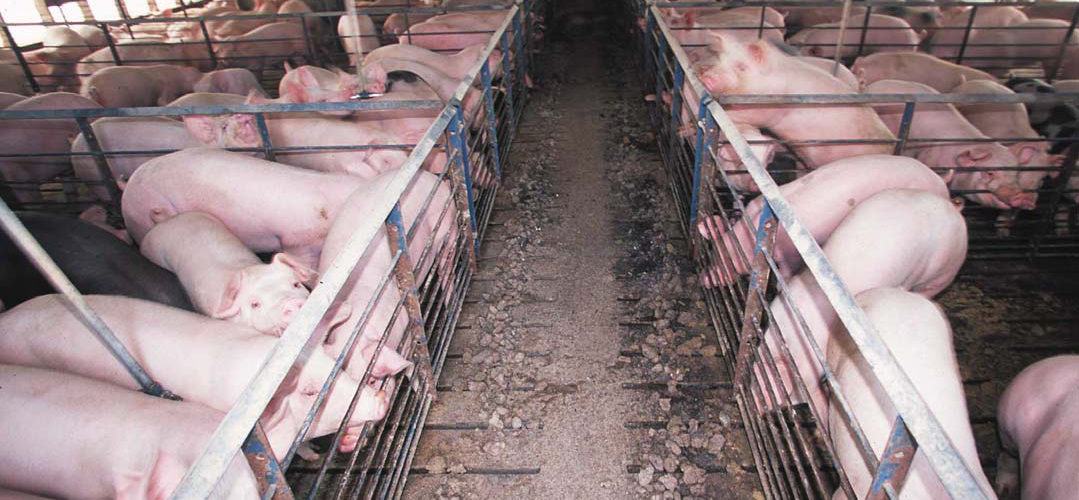
Pigs destined for the American supermarket are not treated well. Sows spend their frequent pregnancies confined to small gestation crates, piglets often have their tails docked, ears notched, and teeth removed without anesthesia, and unsanitary living conditions leave factory-farmed pigs susceptible to a wide range of infections. These are among the reasons that factory-farmed pigs in the U.S. are given almost as many antibiotics as people (27.1 percent for pigs, 27.6 for people). The 75 million factory-farmed pigs consume the same amount of antibiotics as 375 million people.
Related: Stop Eating Like That and Start Eating Like This – Your Guide to Homeostasis Through Diet
Sad Truths
This is not a new problem. Sulfonamides, the first effective antimicrobials, were introduced in 1937, and resistance to that treatment was reported before the end of that same decade. This problem has been happening since the beginning of antimicrobials. Yet here we are, repeating the same process over again.
Depending on your sources, 70 to more than 80 percent of antibiotics sold in the U.S. are destined for food animals. The flagrant use of these drugs has been a huge factor in the development of AR bacteria and the resulting health crises the world faces. If something doesn’t change, these microbes will kill an additional 10 million people a year by 2050. We are perilously close to being out of time.
Sources:
- U.S. pork and the superbug crisis: how higher welfare farming is better for pigs and people – World Animal Protection
- Walmart pork contained bacteria resistant to multiple antibiotics, report says – Food Dive
- Factory Farmed Pigs – National Humane Education Society
- Report: US pigs consume nearly as many antibiotics as people do – CIDRAP
- Origins and Evolution of Antibiotic Resistance – NCBI

Latest posts by Kristina Martin (see all)
- Renewable Energy Reduces Carbon Emissions More Than Nuclear Energy, Says New Study - October 23, 2020
- Chewing Gum is Full of Plastic and Wax - October 14, 2020
- Cannabis Use Increases Need for Painkillers After Surgery, Says Study - October 14, 2020