Johanna Budwig Cured Cancer Naturally and Here’s How

Cancer. The very word causes a recoil, a visceral awareness that our statistical probability of “catching” this “disease” is astronomically high. Current statistics tell us 1 out of 2 men and 1 out of 3 women will be diagnosed with some form of cancer in their lifetime. More than 1 million Americans are diagnosed each year, and this number does not include all forms of cancer.

We run for the cure, we walk for the cure, we donate more than a billion dollars a year to the American Cancer Society in search for a cure, but still no cure is found. There’s no shot, no magic pill, no elixir that will wipe out cancer. Well, actually, there might be one. We do keep hearing about miracle cures from cannabis oil, but it isn’t available to the one million American citizens who will be diagnosed with cancer this year. Big Pharma has not yet figured out how they can package and sell it without decimating their lucrative cancer treatment income. So the cancer industry chugs along, with annual spending on medical care for cancer treatment totaling around 125 billion a year. Big business. Very big business. Through this conventional treatment, how many will die horrible, painful deaths, their bodies as ravaged by the “treatment” as by the disease? And why? Because there is no cure for cancer? Actually there is.

Johanna Budwig

“I have the answer to cancer, but American doctors won’t listen. They come here and observe my methods and are impressed. Then they want to make a special deal so they can take it home and make a lot of money. I won’t do it, so I’m blackballed in every country.” These are the words of Johanna Budwig. No, she was not a charlatan or a quack. Johanna Budwig was a German scientist, a six time nominee for the Nobel Prize, who held two doctorates, one in medicine and one in pharmaceutical chemistry. She also studied biochemistry, physics, and psychology. Johanna Budwig found the cure for cancer in 1951.

Budwig had been appointed by her government to lead research into the process of hardening oils into solids–in other words, how to make margarine. Through this work, she was the first to discover that trans fatty acids (hydrogenated oils) are detrimental to health. At the same time, she discovered how to cure cancer, along with other diseases including diabetes, liver dysfunctions, cardiovascular problems, and arthritis.

Budwig discovered that cancer cells are simply cells that did not have the nutrients needed at a molecular level (with the right photons and neutrons) to properly mature. She also discovered that unlike the red blood cells of healthy people, the red blood cells of cancer patients did not contain a fatty layer. This discovery led to her cure, a cure with a 90% success rate. (It is good to note that many of her cancer patients were stage 4, sent to her after failed surgery and radiation. One can’t help but wonder if she would have achieved a 100% success rate with early state cancer or even late state cancer without earlier conventional treatment. )

She cured cancer through diet and nutrition. Her diet is a nutritionally dense , additive free, diet without animal products with the exception of quark (a cheese) or cottage cheese that is mixed with flaxseed oil. This mixture of oil and protein gives the body the needed nutrition to heal itself on a molecular level. Cancer cells are sloughed off or absorbed and the body is restored to health within three months.

Budwig wrote and published six books and many articles. She would have contributed more, had she not spent many exhaustive years in litigation with margarine companies and was restricted through the courts, at times, from publishing.

Further Reading:
Recommended Supplements:
Sources:
  • Cancer Facts
  • Halme, Erkki, The Role of Polyunsaturated Fatty Acids in Overcoming Cancer and Immunological Factors in General, Townsend Letter for Doctors & Patients. Oct 90, Issue 87, p 710-711.
  • Cartmell, John W., Cancer: A Patient’s Perspective, Frontier Perspectives, Fall 97, Vol.6, Issue 2, p66, 4p.
  • Lake, Rhody, Famous Cancer Cures, Alive: Canada’s Natural Health & Wellness Magazine. Apr1998, Issue 186, p72-74. 3p.
  •  Roehm, Dan C., The Biologic Electron, Townsend Letter for Doctors & Patients, July 90, Issue 84, p 480, 3p.
  •  Dr. Johanna Budwig, a Remarkable Scientist, Alive: Canada’s Natural Health & Wellness Magazine. May2004, Issue 259, p170-170. 1p. , Database: Alt HealthWatch


How to Cook Kale

Reprinted with permission from Experience Life Magazine.

(DrFrankLipman – Cary Neff) Kale, with its frilly leaves and rich colors, is a gorgeous plant. Although officially a “dark leafy green,” it also comes in vibrant purples and dramatic winter whites. And kale’s beauty runs deep: It is packed with powerful phytonutrients, minerals and fiber.

Kale’s complex flavor wins it fans at breakfast, lunch and dinner. It boasts deep, earthy flavors that can range from rich and meaty to herbaceous and slightly bitter. It tastes supremely healthy — in a good way.

Kale belongs to the Brassica family, which also includes cabbage, broccoli, cauliflower, Brussels sprouts, kohlrabi and collards. It is an offshoot of wild cabbage, which originated in Asia Minor.

The ancient Greeks and Romans grew kale in their gardens. Europeans brought kale to the Americas in the 1600s. During WWII, it was a recommended plant for Victory Gardens because it provided so many nutrients. And today, this leafy green is enjoying a revival, particularly among the health-inclined.

Kale is easy to find, and it’s a cinch to work into virtually any style of cooking. Read on for more about kale, as well as a few ways to start experimenting with it.

Nutrition Know-How

  • Three servings of leafy greens each day has been found to slow cognitive loss by 40 percent.
  • Kale is packed with phytochemicals like sulfur-containing glucosinolates and isothiocyanates that help ward off cancer.
  • The fiber in kale helps absorb and sweep out DNA-damaging chemicals and other toxins that enter our bodies.
  • Open-leafed plants in the cabbage family, like kale, have higher amounts of vitamins C and A and carotenoids than plants whose leaves don’t see the sun. Carotenoids are powerful antioxidants that also support proper functioning of the immune and reproductive systems and lower the risk of cataracts.
  • Kale is an excellent source of minerals, including calcium, and manganese, a mineral the body requires for many physiological functions.
  • One cup of kale provides 1,300 percent of the recommended daily allowance of vitamin K, which is important for healthy blood coagulation and maintaining bone mass.

Shopping Tips

  • For optimum nutrition, buy kale in season. A light frost sweetens kale, so depending on where you live, fall or winter is the perfect time to enjoy it.
  • Choose kale from organic, biodynamic or responsible local growers when possible. Greens grown in better-managed soils help you net maximum flavor and nutrition and minimize exposure to pesticides.
  • Whenever you shop for kale, buy lots of it because it cooks down dramatically.
  • Keep blanched or precooked leftovers on hand to add to the week’s breakfasts, lunches and dinners.

Kitchen Tricks

Washing: Avoid washing kale until just before use, since it will hasten spoilage.

Cutting: To make cutting easier, remove any thick stems (just hold the kale upside down by the stems and pull the leaves off), then stack large greens on top of one another, roll them into tight bundles and slice into desired widths. The stems, finely chopped, can be used in soups.

Blanching: Blanching reduces bitterness and softens thick greens, which is useful if you want to follow up with a quick sauté or freeze the greens for later use. To blanch kale, stir leaves into boiling water for a minute or two, drain, then immediately run under cold water.

Braising: Braising tenderizes and adds flavor. To braise, slow cook 1 pound of greens in a ½ to ¾ cup of seasoned cooking liquid (chicken or vegetable stock or wine) or water for about 20 minutes or until greens are tender and ready to eat.

Sneak-It-In Strategies

  • Blend a few chopped-up young kale leaves (but not the stems) into fruit smoothies. It’s a great way to get more greens into the diets of the veggie-averse, especially kids.
  • Chop, cook and mix kale with grains to add nutrients and flavor to dishes like barley risotto or rice pilaf.
  • Blanched and frozen kale can be crumbled into soups, stews, beans and pasta sauces.
  • Substitute sautéed kale for cooked spinach in spanakopita, on pizza, or wherever you typically use greens.
  • Whip up a quick summer kale sauté with garlic, olive oil, tomatoes and basil.

Recipes: Kale 3 Ways

Incredibly versatile, kale varieties can be used interchangeably in most recipes, including these classic, easy preparations.

Crispy Kale Chips With Sea Salt

An indulgent side dish for dinner — or a healthier snack alternative to chips. Roasting brings out smoky, buttery flavors and creates an irresistible, melt-in-your-
mouth texture.

Roasting to the point of crispness at high heat does involve some nutritional sacrifices, but it’s such a simple and delicious preparation (and one that has earned kale so many new fans), it’s worth making now and then. You can also cook longer at a lower temperature, if you prefer. And if you’re not afraid of fat, you can be more generous with the oil. For a twist, substitute Cajun spice or lemon pepper for the salt.

Serves two:

4 cups kale (1 large bunch)
1 tbs. extra-virgin olive oil
1 tsp. sea salt

  • Preheat oven to 375 degrees F. Line a baking sheet with parchment paper.
  • Wash the kale. Fold each leaf in half and tear or cut out the tough stem, then stack and slice into manageable-size pieces.
  • Toss pieces in a bowl with olive oil until coated, then arrange in a single layer on a baking sheet.
  • Roast for five minutes, then turn carefully with metal tongs and roast another seven to 10 minutes until kale begins turning brown, crisp and brittle.  Remove from oven and sprinkle with sea salt. Serve promptly.

Asian Greens

This quick sauté works well with kale or virtually any dark leafy green (spinach, Swiss chard, collards, dandelion greens, etc.) to create a healthy, delicious side dish.  By varying the seasonings (subbing in chili-garlic sauce, curry paste or peanut sauce for the soy sauce, for example), you can create an eclectic array of variations.

This basic preparation (sans seasonings) can also work to prep kale for using in other recipes, including a delicious egg scramble (see Web Extra for recipe).

For another classic preparation, sauté kale with small amounts of bacon for flavor, then lightly braise in vegetable stock to soften.

Serves eight:

12 cups kale (3 large bunches)
1 tbs. sesame oil
1 cup diced yellow onions
2 tsp. minced fresh garlic
1 tsp. grated fresh ginger
2 cups vegetable stock
1 tbs. tamari soy sauce
1/8 tsp. ground black pepper

  • Wash kale, remove stems and cut into 1-inch squares.
  • Heat a large sauté pan over medium-high heat and add the olive oil to just coat the bottom of the pan. Add onions and garlic and sauté for one to two minutes. Stir in kale, ginger and vegetable stock.
  • Cook until the kale starts to wilt, about two minutes. Stir in tamari soy sauce and pepper. Remove from heat and serve.

Raw Kale Salad

Combining finely chopped kale with lemon and olive oil — then gently massaging them together — breaks down kale’s stiffness and bitterness, leaving you with tender greens bursting with flavor. Don’t skimp on the chopping: Not having to chew through large chunks of raw kale will increase your eating pleasure.

Serves four:

1 large bunch of kale, stems removed and thinly sliced
1/4 cup lemon juice
1/4 cup olive oil
1 minced garlic clove
1/8 tsp. sea salt
1/4 cup toasted walnuts
1/2 cup golden raisins
1/2 cup chopped kalamata olives
1 tbs. finely shredded basil

  • Place the kale in mixing bowl. Add the lemon juice, oil, garlic and salt. Massage the kale to soften for about one minute.
  • Add remaining ingredients and toss to combine.
  • Allow the salad to rest and soften for about 15 minutes before serving.

Chef Cary Neff is the author of the New York Times bestseller Conscious Cuisine (Sourcebooks, 2002).

Kale Glossary

A quick overview of the most common types of kale:

Green Kale: With vibrant green wrinkly leaves, this is the most common kale found in grocery stores, and you can add it to just about anything!

Red Kale: Similar in texture and flavor to leafy green kale, red varieties — which are actually more purple — add a splash of exotic color, whether raw or cooked.

Tuscan Kale: Discovered in Italy in the 19th century, Tuscan kale (also called dinosaur kale or lacinato kale) has deep green, smooth stems and a rugged, wrinkly texture. It’s great for braising or sautéing and it’s terrific finely shredded and tossed into stir-fries.

Ornamental Kale: Also known as salad savoy, ornamental kale — often green, purple, pink or white — is popular in flower gardens and makes a great garnish. But it’s edible too, as long as it hasn’t been sprayed with pesticides. It’s best harvested when still small and tender.

WEB EXTRA

More Kale Cooking Tips

  • Blend a few chopped-up young kale leaves — but not the stems or very thick leaves — into fruit smoothies. It’s a great way to sneak greens into the diets of the veggie-averse, especially kids.
  • Add kale to breakfast egg dishes. Try an omelet with par-cooked potatoes, caramelized onions and steamed kale — or a scramble made with tomatoes, bell peppers, green onion and kale sprinkled with feta cheese.
  • Whip up a quick summer kale sauté with garlic, olive oil, tomatoes and basil. Sauté kale with small amounts of bacon for flavor, then lightly braise it in vegetable stock to soften. Great with roasted turkey, meatloaf or grilled tofu.
  • Chop, cook and mix kale with grains to add nutrients and flavor to dishes like barley risotto or rice pilaf.
  • Kale is wonderful in miso soup or tossed with rice noodles.
  • Kale’s earthy flavor pairs well with hearty meats, beans and sausages. I particularly like kale with braised pork. I often substitute sautéed kale for cooked spinach in spanakopita, on pizza, or layered with ricotta cheese in calzone.
  • Blanched and frozen kale is great to have on hand. If you gently break it in the bag, it can be easily added to simmering marinara sauce, soups, stews and beans.

WEB EXTRA

Kale, Mushroom and Cream Cheese Scramble

Conscious Cuisine®

Sautéed, steamed or braised kale (especially refrigerated leftovers) is an easy and delectable addition to your breakfast eggs — or just about any other meal.

Serves one: 

1/2 tsp. olive oil
1/4 cup julienned kale
1/4 cup diced fresh shiitake mushrooms
1 tbs. finely chopped green onion
1/4 cup small diced tomatoes
2 eggs, lightly whipped
1 tbs. milk
1/8 tsp. sea salt
1/8 tsp. freshly ground black pepper
1 tbs. cream cheese

  • Heat a sauté pan over medium heat and add olive oil. Add vegetables and sauté until they begin to sweat, about five minutes.
  • Whip the eggs with the milk and season with salt and pepper. Slowly pour into the pan with vegetables. With a heat-resistant spatula, gently push one edge of the egg into the center of the pan, while tilting the pan to allow the uncooked egg to flow in underneath. Repeat with the other edges, until there’s no liquid left.
  • Turn off the heat and add the cream cheese, gently stirring and turning the egg until all the uncooked parts become firm. Place on plate and serve with fresh fruit.

Reprinted with permission from Experience Life Magazine.


More Bad News For Sugar – Research Confirms it is a Leading Cause of Heart Disease

(NaturalNews – John Phillip) Just in case you needed yet another reason to stay away from added dietary sugar sources, nutritional scientists now confirm that our obsession with consuming sweets is killing us by dramatically increasing risk of death from cardiovascular disease and heart attack. A host of known risk factors including elevated blood pressure and triglycerides, along with cholesterol abnormalities such as oxidized LDL cholesterol and poor HDL/LDL cholesterol ratios are all attributable to a diet filled with empty calories fueled by sugar consumption. Interestingly, researchers have determined that the increase in cardiovascular risk factors is not attributable to weight gain commonly associated with excess sugar intake; sugar directly raises heart disease risk independent of weight gain.

A research study team from New Zealand’s University of Otago, publishing in The American Journal of Clinical Nutrition, has conducted a review and meta-analysis of a large cohort of dietary studies comparing the effects of higher and lower added sugar consumption on blood pressure and lipids, both of which are important cardiovascular risk determinants. Lead study author, Dr. Lisa Te Morenga and her students have uncovered solid and documented evidence that eating sugar has a direct effect on risk factors for heart disease, and is likely to negatively impact blood pressure and blood lipids. Dr. Te Morenga noted, “Our analysis confirmed that sugars contribute to cardiovascular risk, independent of the effect of sugars on body weight.”

Sugar and refined carbohydrates increase risk of hypertension and cholesterol abnormalities

The scientists analyzed a total of 49 nutritional intervention trials conducted between 1965 and 2013. Comparing diets where the only intended differences were the amount of sugars and non-sugar carbohydrates consumed by the participants allowed for the measurement of the effects of these diets on lipids and blood pressure. 37 trials reported the effects of dietary sugars on lipid metabolism while another 12 yielded results on blood pressure. The team then pooled the available data to determine the impact on measurable risk factors that affect human health.

The team noted that some of the data provided by the studies was skewed as the research was funded by the food/sugar industries. When they factored out those biased results, they found a startling pool of data conclusively demonstrating the negative impact of high-sugar diets on cardio-metabolic risk factors. Small increases in blood pressure, as little as 20 mm Hg systolic and diastolic, can double the risk of a heart attack, while changes to cholesterol metabolism can alter the delicate endothelial lining of the arteries affecting plaque formation and blood clotting.

While the food industry and media outlets continue to promote a wide spectrum of processed, sugar packed foods as a means to boost their bottom line profit margins, millions of uninformed people continue to consume 156 pounds of added sugar each year. Recently, sugar has been making news as it has been associated with increased risk of many forms of cancer, as well as stroke and Alzheimer’s dementia. The evidence should be clear to any health-minded individual — eliminate all sources of empty sugar and refined food products in favor of foods in their natural form to dramatically lower the risk of heart disease and most chronic illnesses.

Sources for this article include:
http://ajcn.nutrition.org/content/early/2014/05/07/ajcn.113.081521
http://www.eurekalert.org/pub_releases/2014-05/uoo-sii051414.php
http://www.sciencedaily.com/releases/2014/05/140515095633.htm


Why Your Couch Is Killing You

A flame-retardant chemical known as chlorinated tris (TDCIPP) was removed from children’s pajamas in the 1970s amid concerns that it may cause cancer, but now it’s a ubiquitous addition to couch cushions across the US.

It can easily migrate from the foam and into household dust, which children often pick up on their hands and transfer into their mouths. A new study by scientists at the Environmental Working Group (EWG) and Duke University revealed just how ubiquitous this chemical actually is, as they found traces (and more) of TDCIPP in every study participant tested.

Children May Have Fives Times More Flame-Retardant Chemicals Than Their Moms

Aside from finding TDCIPP in 100 percent of study participants, the researchers found the average concentration in children was close to five times that of their moms.1 High levels of flame-retardant chemicals used to make FireMaster flame-retardant products were also detected.

Children are thought to have higher exposures to many types of chemicals because they spend more time on the floor, where contaminated dust settles, and also put their hands in their mouths more often than adults.

Since these toxins are not chemically bound to the plastics, foam, fabrics, and other materials to which they’re added, they easily leach out into your home where they accumulate in household dust.2 As reported by EWG:3

A study of house dust collected in California homes in 2006 and in 2011 found 41 different fire retardant chemicals in at least half of the samples. The same study reported significantly higher levels of Firemaster ® 550 compounds in 2011 compared to 2006, indicating increasing use.

The levels of TDCIPP in some house dust exceeded the U.S. Environmental Protection Agency’s health risk guidelines.”

The Duke researchers revealed in a separate study that children who wash their hands at least five times a day have 30 percent to 50 percent lower levels of flame retardants on their hands than children who wash their hands less frequently.4

Unfortunately, even though children are among those most at risk from flame-retardant chemicals’ ability to disrupt and harm development, products intended for kids and babies are among those most likely to be doused in flame-retardant chemicals.

For instance, such chemicals were detected in 60 percent of 2011 car seats tested by The Ecology Center,5 most likely in the polyurethane foam. A separate study in Environmental Science & Technology6 also detected flame-retardant chemicals in 80 percent of the following children’s products tested:

Nursing pillows Baby carriers Car seats
Changing table pads High chairs Strollers
Bassinets Portable cribs Walkers
Baby tub inserts and bath slings Glider rockers Sleeping wedges

Couch Cushions and Mattresses Are Among the Worst Offenders

In 1975, California Technical Bulletin 117 (TB117) was passed. It requires furniture sold in California to withstand a 12-second exposure to a small flame without igniting.

Because of California’s economic importance, the requirement became more or less a national standard, with large amounts of flame-retardant chemicals added to household goods.

Research published in Environmental Science & Technology revealed that 85 percent of couch foam samples tested contained chemical flame retardants.7The samples came from more than 100 couches purchased from 1985 to 2010.

As of July 1, 2007, all US mattresses are required to be highly flame retardant as well, to the extent that they won’t catch on fire if exposed to a blowtorch. This means that the manufacturers are also dousing them with highly toxic flame-retardant chemicals, which do NOT have to be disclosed in any way.

If you want to avoid flame retardants in your mattress, you can have a licensed health care provider write you a prescription for a chemical-free mattress, which can then be ordered without flame retardants from certain retailers.

You can also find certain natural mattresses on the market that don’t contain them. For instance, most wool mattresses do not have flame-retardant chemicals added because wool is a natural flame retardant.

Given the blatant dangers posed by flame retardants, in late November 2013 California’s governor ordered that TB117 be rewritten to ensure fire safety without the use of these chemicals. Starting in January 2014, furniture manufacturers began producing furniture that’s not required to use flame-retardant chemicals, and full compliance is expected by January 2015.

Unfortunately, the updated law only states that the chemicals are no longer required; it doesn’t ban them outright. This means that some companies may continue to use them, and if you’re in the market for new furniture, you’ll need to ask for that made without flame-retardant chemicals.

What Are the Health Risks of Flame-Retardant Chemicals?

Flame-retardant chemicals have been linked to serious health risks, including infertility, birth defects, neurodevelopmental delays, reduced IQ scores and behavioral problems in children, hormone disruptions, and various forms of cancer.

The risks may be especially dangerous to children, as research revealed that children born to women who were exposed to high levels of flame-retardant chemicals called polybrominated diphenyl ethers (PBDEs) during pregnancy had, on average, a 4.5 point decrease in IQ.8 Such children are also more prone to hyperactivity disorders.

PBDEs were voluntarily withdrawn from the American market in 2004, but there are still many products on the market that were manufactured before that time – and these products can continue to release PBDEs into your environment.

Previous research has suggested PBDEs may also lead to decreases in TSH (thyroid-stimulating hormone).9 When present with normal T4 levels, low TSH is typically a sign that you’re developing hyperthyroidism, which can have significant ramifications both for you and your unborn child if you’re pregnant.

And these chemicals aren’t only dangerous when they transfer into your household dust and indoor air. Ironically, when and if they do catch fire, these chemicals outgas toxins into your air that may kill you faster than “regular” smoke alone. When on fire, objects doused in flame retardants (yes, they can still catch fire) give off higher levels of carbon monoxide, soot, and smoke than untreated objects. These three things are more likely to kill a person in a fire than burns, which means flame-retardant chemicals may actually make fires more deadly.

Flame-retardant chemicals belong to the same class of chemicals as DDT and PCBs (organohalogens), and like the former, they too build up in the environment. These chemicals also react with other toxins as they burn to produce cancer-causing dioxins and furans. This helps explain why female firefighters aged 40 to 50 are six times more likely to develop breast cancer than the national average, likely due to California’s early use of flame-retardant chemicals. Firefighters of both genders also have higher rates of cancer, in part because of the high levels of dioxins and furans they’re exposed to when flame-retardant chemicals burn.

Flame-Retardant Furniture Probably Won’t Save Your Life in a Fire…

Flame-retardant chemicals were developed in the 1970s, when 40 percent of Americans smoked and cigarettes were a major cause of fires. The tobacco industry, under increasing pressure to make fire-safe cigarettes, resisted the push for self-extinguishing cigarettes and instead created a fake front group called the National Association of State Fire Marshals. The group pushed for federal standards for fire-retardant furniture… and their efforts paid off.

The chemical industry claims that fire-retardant furniture increases escape time in a fire by 15-fold. In reality, this claim came from a study using powerful, NASA-style flame retardants, which did give an extra 15 seconds of escape time. This is not the same type of chemical used in most furniture, and government and independent studies show that the most widely used flame-retardant chemicals provide no benefit for people while increasing the amounts of toxic chemicals in smoke. Drops in fire-related deaths in recent decades are not related to the use of flame-retardant chemicals, but instead are due to newer construction codes, sprinkler systems, fire alarms, and self-extinguishing cigarettes.

Reduce Your Family’s Exposure to Flame Retardants

There’s a good chance flame-retardant chemicals are lurking in your home right now. Until these chemicals are removed from use entirely, tips you can use to reduce your exposure around your home include:10

  • Be especially careful with polyurethane foam products manufactured prior to 2005, such as upholstered furniture, mattresses, and pillows, as these are most likely to contain PBDEs. If you have any of these in your home, inspect them carefully and replace ripped covers and/or any foam that appears to be breaking down. Also, avoid reupholstering furniture by yourself, as the reupholstering process increases your risk of exposure.
  • Older carpet padding is another major source of PBDEs, so take precautions when removing old carpet. You’ll want to isolate your work area from the rest of your house to avoid spreading it around, and use a HEPA filter vacuum to clean up.
  • You probably also have older sources of the PBDEs known as Deca in your home, and these are so toxic they are banned in several states. Deca PBDEs can be found in electronics like TVs, cell phones, kitchen appliances, fans, toner cartridges, and more. It’s a good idea to wash your hands after handling such items, especially before eating, and at the very least be sure you don’t let infants mouth any of these items (like your TV remote control or cell phone).
  • As you replace PBDE-containing items around your home, select those that contain naturally less flammable materials, such as leather, wool, and cotton.
  • Look for organic and “green” building materials, carpeting, baby items, mattresses, and upholstery, which will be free from these toxic chemicals and help reduce your overall exposure. Furniture products filled with cotton, wool, or polyester tend to be safer than chemical-treated foam; some products also state that they are “flame-retardant free.”
  • PBDEs are often found in household dust, so clean up with a HEPA-filter vacuum and/or a wet mop often.

Another Way Your Couch Can Kill You That Has Nothing to Do with Chemicals…

Flame-retardant chemicals are only one major health risk linked to sitting on your couch. The other? Sitting in and of itself, assuming it’s done excessively (and most people sit excessively). One 2012 analysis that looked at the findings from 18 studies found that those who sat for the longest periods of time were twice as likely to have diabetes or heart disease compared to those who sat the least.11 Sitting for extended periods of time also increases your risk for premature death, and separate research found that women who sat for more than seven hours a day had a 47 percent higher risk of depression than women who sat for four hours or less per day.12

Even temporary vigorous exercise can’t completely compensate for the damage incurred by prolonged daily sitting. In fact, it’s becoming increasingly clear that staying active—and by that I mean engaging in virtually any physical movement—as much as possible, throughout the day, is critical for health and longevity. So keep in mind that your couch can kill in one of two ways… via chemical exposures and by seducing you into too much sitting.

Of course, you may also be doing a lot of sitting elsewhere, like at your office desk or in your car. The following videos, featuring Jill Rodriguez, offer a series of helpful intermittent movement beginner and advanced exercises you can do right at your desk (or virtually anywhere). For a demonstration of each technique, please see the corresponding video in the two tables below. I suggest taking a break to do one set of three exercises anywhere from once every 15 minutes to once per hour throughout your day. For even more suggestions, please refer to my previous article on intermittent movement.

Technique #1: Standing Neck-Stretch: Hold for 20 seconds on each side.

Technique #2: Shoulder Blade Squeeze: Round your shoulders, then pull them back and pull down. Repeat for 20-30 seconds.

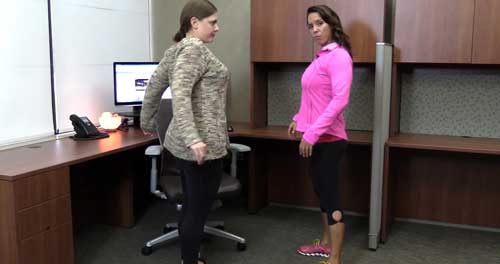
Technique #3: Standing Hip Stretch: Holding on to your desk, cross your left leg over your right thigh and “sit down” by bending your right leg. Repeat on the other side.

Technique #4: The Windmill: Stand with feet shoulder-width apart, then pivot your feet to the right. Push your hip out to the left. Raising your left arm skyward, and your right arm toward the floor, lower your body toward the floor while looking up, and then raise your torso back to standing position. Repeat on the other side.

Technique #5: Side Lunge: Starting with your feet together, take a medium step sideways, and bend down as if you’re about to sit. Use your arms for balance by reaching out in front of you. Return to starting position, and repeat 10-20 times. Repeat on the other side.

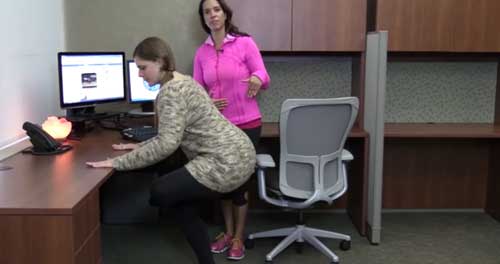
Technique #6: Desk Push-Up: Place hands a little wider than shoulder-width apart on your desk. Come up on your toes to make it easier to tip forward. Do 10 repetitions.

Technique #7: Squat to Chair: With your feet shoulder-width apart, sit down, reaching forward with your hands, and stand back up in quick succession. Do 15-20 repetitions.

Technique #8: Single Leg Dead Lift: Place your right hand on your desk, and place your weight on your right leg. Fold your torso forward, while simultaneously lifting your left leg backward. Do 10 repetitions on each side.

Technique #9: Mountain Climber: Get into a push-up position on the floor. Pull your right knee forward to touch your right wrist or arm, then return to push-up position. Repeat on the other side. Try to pick up the pace, and do 20 quick repetitions.

Standing Neck Stretch Shoulder Blade Squeezes Standing/Seated Hip Stretch

Windmill Side Lunge Push up
Squat to Chair Single Leg Dead Lift Mountain Climber
Related Reading:
Related Products:


What’s the Deal with Citric Acid: The One Ingredient Found in Almost Every Food Product You Buy

(NaturalNews – Zach C. Miller) Ever wondered why citric acid is listed in almost every food or drink ingredient label? This little product is found in everything from iced tea to hummus and organic salsa. Let’s take a look at what citric acid is and what it’s used for so universally in the food industries.

Citric acid defined

When I first scanned an ingredient label and saw citric acid, I pictured lemon or lime juice extract or something benign and citrus. But actually, modern-day citric acid is made by fermenting glucose. Citric acid appears as a white, powdery substance which tastes similar to lemon juice. It is made by fermenting Aspergillus niger mold, which produces citric acid as a byproduct of metabolism. This peculiar and cheap method of acquiring inexpensive citric acid (as opposed to squeezing actual lemons and limes which is too expensive) was discovered in 1917 by American food chemist James Currie.

Why is it used in so many foods?

Citric acid is used as both a flavor enhancer and a preservative ingredient. It provides a tart, citrus taste to foods to give a more potent flavor, while at the same time balancing the pH of foods and increasing acidity levels to preserve it for longer. In short, it increases the acidity of a microbe’s environment, making it harder for mold or bacteria to survive and reproduce. So it makes sense that citric acid is found in so many modern products when you consider the positive attributes it provides. But these positives don’t come without a price, as you’ll see below.

The problems with citric acid

The problem with citric acid is that it can potentially be produced with GMOs. Citric acid is made with the use of sugar beets or corn, which, if you follow the GMO issue, you know that these two are some of the biggest offenders of GMO foods in the US. There are also some GM versions of A. niger which are used to produce citric acid.

There are also other health implications that can arise from consuming citric acid separate from the GMO issue. Citric acid has been known to irritate the digestive system (ascorbic acid has similar attributes), causing heartburn and damage to the mucous membrane of the stomach. The eyes, skin and respiratory organs can also suffer scratchy, itchy sensations from overconsumption of citric acid. There have also been European studies which suggest that citric acid could be responsible for promoting tooth decay as well.

And so far you will not find cautionary statements of any kind on any products warning you about citric acid. If you choose to try and avoid citric acid, good luck; you’ll find it in almost every food product imaginable, organic or not.

Sources for this article include:
http://www.sciencedaily.com
http://www.alive.com
http://girlmeetsnourishment.com
http://science.naturalnews.com


Mental Health, Physical Health & B Vitamins – Nature’s Valium

If you feel stressed out, anxious, irritable, tired, run down, cranky, muddled, or confused, you may need to up your intake of B vitamins. If your intake is low, deficient or depleted, you will feel an instant boost in energy and well-being.

Vitamins are molecules that work as catalysts for chemical reactions within the body. The B vitamins are often found together, working work together to perform various functions. They help carbohydrates break down to glucose, the process whereby our cells produce energy, and they aid in the breakdown of fats and proteins, providing fuel or the proper function of our nervous system and brain. B vitamins are essential for neurotransmitters and nerve tissue. They help our bodies form red blood cells and regulate homocysteine levels. Folic acid (B9) and B12 are essential for normal, healthy, fetal development.

For proper B vitamin production and assimilation, one must have a healthy gut. Please check out How To Heal Your Gut for more information on that.

B Vitamin Deficiency

B vitamin deficiencies affect every system in the body. Mild deficiencies can affect mood and health, can cause inflammation and a host of other symptoms both physical and cognitive. Severe deficiencies can be life-threatening or be causal factors for serious conditions including anemia, heart disease, depression, pellagra, dementia, paranoia, and delusion.

B vitamins are nature’s valium; they assist with sleep, mood stabilization, and cognition. They are a standard treatment for PMS and for those suffering from irritability, anxiety, or depression. B vitamins are also gaining recognition as a treatment for stuttering, with favorable results for about 30% of cases.

Vitamin Deficiency What It Can Help Sources
Vitamin B1 (thiamin)
Integral to converting simple carbohydrates to glucose. It is vital to the nervous system and brain and helps make new cells. B1 is found in nearly all foods but is often destroyed by processing.
Deficiency can cause irritability, confusion, and weight loss.Affects the heart, the nervous system, and digestive system. Deficiency is linked to neuritis, Alzheimer’s, Parkinson’s, alcohol-related brain disease, and beriberi. Severe deficiency can be fatal. Digestive problems including poor appetite, ulcerative colitis, and ongoing diarrhea. Increase mental acuity. A lot of B1 is used to process alcohol, therefore take B complex after drinking. Vegetables: asparagus, brussel sprouts, green peas, beet greens, spinach, sweet potato.
Beans & Legumes: navy, black, pinto, lima, kidney, lentils, peanuts.
Whole grains: unpolished rice, barley, oats
Seeds & Nuts: sunflower seeds, sesame seeds, flax seeds
Fruits: watermelon, oranges
Other Foods: liver
Vitamin B2 (riboflavin)
Helps make red blood cells and is believed to help incorporate iron into the red blood cells.
Mild deficiency results in cracked lips, swelling and inflammation of the mouth, throat, and tongue as well as inflammation of the skin. Impaired blood cell production, impaired iron absorption. A deficiency may be associated with cataracts and Parkinson’s Reduces homocysteine levels, iron deficiency anemia, hypertension Vegetables: Beet greens , spinach, asparagus, crimini mushrooms, collard greens, sweet potato, green peas.
Other Foods: eggs, turkey, tempeh, sardines, tuna
Vitamin B3  (niacin)
Needed to convert fats, carbohydrates, and proteins into energy. B3 is also an important dietary antioxidant.
Mild deficiency causes fatigue, indigestion, vomiting, canker sores, and depression. Severe deficiency causes pellagra, a disease that can be fatal. A deficiency may be associated with Reynaud’s disease,schizophrenia, and Type 1 diabetes Lowers LDL cholesterol, raises HDL cholesterol, lowers triglycerides, reduces hardening of the arteries, and reduces risk of a second heart attack. Vegetables: asparagus, crimini mushrooms, potatoes, sweet potato, green peas
Animal Protein: tuna, chicken, turkey, salmon, lamb, beef, sardines, shrimp
Nuts and Seeds: peanuts, sunflower seeds
Other: brown rice, barley
Vitamin B5 (pantothenic acid)
Critical for manufacturing red blood cells and sex hormones.
Deficiency causes depression and irritability, vomiting, and fatigue. Helps reduce triglycerides. Vegetables: avocado, crimini and shitake mushrooms, sweet potato, green peas
Vitamin B6 (pyridoxine and other forms)
Helps to form hemoglobin, is needed to metabolize carbohydrates and for   neurotransmitters and the immune system
Deficiency causes depression and cognitive problems, skin inflammation, burning feet, sore tongue, anemia, and chronic inflammation of the body. Severe deficiency can lead to convulsions. Liver detox, PMS, depression, immune system function. Vegetables: sweet potatoes, potatoes, spinach, cabbage, turnip greens, garlic, winter squash, bok choy, bell peppers, avocado, green peas.
Animal Protein: tuna, chicken, turkey, beef, salmon.             Beans and Legumes: lentils, lima beans, pinto beans. Other Foods: banana, sunflower seeds
Vitamin B7 (biotin–often just called biotin)
Essential for carbohydrate and fat metabolism and for neurotransmitters, tissue, bone marrow, sweat glands, skin, hair, and more.
Deficiency causes nausea, muscle pain, anemia, seizures, and depression. A deficiency interferes with other B vitamins’ ability to help the nervous system function properly. Cradle cap, diabetes, hair loss, fatigue, rashes, and brittle nails. Vegetables: sweet potatoes, onions tomatoes, carrots
Grains: oats
Nuts: peanuts, almonds, walnuts
Other Foods: eggs, salmon, bananas
Vitamin B9 (folate–folic acid)
Necessary for fetal development, red blood cell development and control of homocysteine.
Deficiency can cause sterility and infertility, anemia, osteoporosis, dementia, and cancer. Essential to prevent birth defects. Irritability, general, mental or physical fatigue, forgetfulness, confusion, periodontal disease. Helps prevent homocysteine build up. Helps prevent dementia. Vegetables: asparagus, spinach, turnip greens, broccoli, Romaine lettuce, bok choy, cauliflower, green peas, avocados, leeks, fennel, summer squash, brussel sprouts
Beans: lentils, pinto, garbanzo, black, navy, kidney
Other: papaya, quinoa
Vitamin B12 (cyanocobalamin )
Helps  make red blood cells, DNA, nerve tissue, neurotransmitters.
Deficiency affects balance, causes weakness and fatigue, numbness and tingling in extremities. Severe deficiency can lead to pernicious anemia, paranoia, confusion, depression, delusions, and memory loss. Reduces homocysteine levels. Treats depression. Animal Protein: sardines, salmon, tuna, cod, lamb, shrimp, scallops, beef, yogurt, milk

Supplementation

B vitamins are water soluble. Unlike fat-soluble vitamins, they are not stored in the body, with the exception of B12, which is stored in the liver. Due to this lack of retention, it is important to provide the body with these vitamins on a daily basis.

Update: Sciences is discovering that a healthy gut microbiome produces many of the B vitamins we need. Again, see How To Heal Your Gut.

B vitamins are nature’s Valium; they assist with sleep, mood stabilization, and cognition. They are a standard treatment for PMS and for those suffering from irritability, anxiety, or depression. B vitamins are also gaining recognition as a treatment for stuttering, with favorable results for about 30% of cases.

A healthy, diverse diet that includes plenty of vegetables, legumes, and animal protein should provide all of the B vitamins needed, however, our ability to metabolize B vitamins can be impaired with age, with digestive disorders, with alcohol consumption, with pharmaceuticals, and by certain health conditions. Celiac disease and Crohn’s disease for example, seriously hamper the body’s ability to absorb B12.  At 50 years of age and older, supplementation with a good whole food complex B vitamin should be seriously considered.

Vegetarians, especially vegans, face a serious challenge in acquiring enough B12 through their diet. Supplementation is strongly recommended.

Studies conducted more than 20 years ago warned that long term use of one B vitamin may result in a deficiency of other B vitamins. It is best to take B complex vitamins to avoid this possibility. Though this caution should be widely known, medical doctors routinely prescribe one B vitamin, such a B6 or B12.

When gut health is not optimal, vitamin B is not assimilated properly. If you have a B vitamin deficiency or just find yourself needing them regularly, check out Gluten, Candida, Leaky Gut Syndrome, and Autoimmune Diseases and The Power of Our Hormones and How To Balance Them.

Related Products:
Recommended Reading:
Sources:


What We Should Know About Our Lymphatic System

When you hear the term “circulatory system”, what comes to mind? Most of us think of the vascular system, the amazing array of arteries, veins, and capillaries through which each of our hearts pump 1,900 gallons of blood each day, in a circular loop. Few of us think of the other circulatory system–though it is twice as large as the vascular system. This second circulatory system, the lymphatic system, is just as vital to our health as the vascular system. When the lymphatic system is not working properly, our bodies cannot remove toxins; fight viral, fungal, and bacterial disease; or regulate the amount of fluid in our tissues.

Our two circulatory systems work together. Dr. John Douillard, DC, describes the lymphatic system in these terms: “It is like the drains in your house and the blood is like the faucets,” an apt description. The lymphatic system is also the filtration system and the factory that matures and differentiates lymphocytes (white blood cells, which fight disease).

Lymphatic vessels are found in all tissues of the body except for the central nervous system, the bone marrow, and tissues without blood vessels such as cartilage. It is a complex system that includes organs, nodes, and vessels that perform three primary functions:

  • Fluid balance
  • Fat Absorption
  • Immunological Defense

Fluid Balance

When the heart pumps blood, the blood travels through arteries to arterioles (arterial capillaries), which connect to venules (capillaries of the veins). The blood then begins its journey back to the heart. But the vascular system is not a closed system. When the blood reaches the capillaries, fluid is released from the thin-walled capillaries and flows into all of the tissues in the body. This fluid, called interstitial fluid, bathes the tissues with nutrients and gases as it washes over the cells.

The cells absorb nutrients and oxygen and release their waste products back into the interstitial fluid. Ninety percent of the interstitial fluid is reabsorbed by the venous capillaries, to recombine with the blood and flow back to the heart. The other 10% of the interstitial fluid (2-3 liters a day), along with proteins and other particles too large to pass through the capillary walls, is taken up by the lymphatic system. This fluid, now called lymph, flows through the lymphatic system and is filtered through the lymph nodes before being returned, ultimately, to the bloodstream.

Removal of the cells’ waste is critical. If the waste is not removed, cells quickly die. If the lymphatic system is not working properly, interstitial fluid builds up in the tissues, proteins are not properly returned to the bloodstream, large particles such as bacteria are not removed, all of the waste is not removed, and edema (swelling of the tissues—especially swelling in the feet and hands) results.

Fat Absorption

The villi in the small intestines are tiny projections that facilitate absorption of nutrients from our food. Each villus contains capillaries from the venous system and the lymphatic system. While the nutrients are passed into the bloodstream, fats and fatty acids are absorbed by specialized lymphatic vessels. The lymphatic system carries the fats and fatty acids through its system until emptying them, along with lymphatic fluid, directly into the blood.

Immunological Defense

The lymph nodes, the spleen, and the thymus gland work together to defend the body from foreign invaders and pathogens.

Lymph nodes are encapsulated tissue situated in many parts of the body. The nodes have a blood supply, entering through an artery and exiting through a vein. The node receives blood plasma and checks it for foreign invaders. If needed, the node creates lymphocytes which go to the bloodstream to fight the foreign cells. The nodes also filter and purify the lymph fluid so that the fluid is clean when it is returned to the bloodstream.

Tonsils, adenoids, and Peyer’s patches are collections of lymph nodes strategically placed to fight foreign invaders. Tonsils fight disease at the throat, adenoids protect the body from inhaled pathogens, while Peyer’s patches protect the interior of the small intestines.

The spleen also contains lymph nodules. Although the spleen is a part of the lymphatic system, it filters blood, not lymph. But as the blood is filtered through the spleen, pathogens trigger a response from the lymph nodules. The spleen filters out and removes the dead, red blood cells from the blood along with foreign invaders.

Thymus

Lymphocytes, which originate in the bone marrow, reach maturity and differentiation in the thymus gland. Many remain in the thymus gland, but others move throughout the lymphatic system, the peripheral tissues, and the blood. These are the cells that control immune reactions, and combat viruses and cancer cells.

Appendix

The appendix is also comprised of lymphatic tissue. Though it does not appear to have a lymphatic function; we do finally understand its purpose. The appendix stores bacteria for the gut. If the gut bacteria is compromised, the appendix releases bacteria to begin the process of repopulation.

Circulation of Lymph

The lymphatic vessels have valves (much like vascular veins) to keep the fluid moving in the right direction and the vessels themselves help move fluid forward. The lymphatic system doesn’t have a big pump like a heart to force fluid through the vessels. Instead, our bodies rely on our muscles to move the fluid. Our diaphragms and rib cage as well as the blood pumping through our bodies, do assist in this movement. But body movement and exercise is the primary method of moving lymph. A sedentary lifestyle decreases lymph flow by 94%.

Why Is It Important To Move Our Lymph?

Lymph contains lymphocytes, (white blood cells: T-cells, B-cells, and natural killer cells) that seek out and kill pathogens. As the fluid is filtered through the nodes, a concentration of lymphocytes clean up the fluid before it is returned to the blood.

If the fluid is backed up and not flowing properly, it becomes viscous. The flowing fluid can thicken until it becomes the consistency of cottage cheese. Fluids and waste is not properly drained from the cells, bacteria and other foreign invaders are not properly filtered and destroyed, and disease, including cancer, may result.

How to Move Lymph Through the Body and Assist the Lymphatic System

The major way to move lymph through the body is through movement of any kind. Walking, bending, stretching–any and all movement will assist with lymphatic movement. To really get it moving, bounce. Jump up and down, jump rope, or for the best result, bounce on a rebounder for 15-20 minutes a day. (See the link below.)

You will also benefit from massage, including self massage. (See the link below.) This will assist with flow and move any viscous fluid through the system. Find a massage therapist who is certified in lymphatic massage.

Be sure to hydrate well with clean (preferably spring) water.

Beets, berries, and cherries all stimulate the lymphatic system. A healthy diet consisting of 80% raw vegetables and fruits supports healthy lymphatic function as well as general health.

One of Ayurveda medicine’s most popular blood purifiers, Manjistha, is known to be an excellent lymphatic tonic. Astragalus, echinacea, goldenseal, pokeroot, or wild indigo root tea are recommended. Detoxifying the blood, hot and cold hydrotherapy, candida cleansing, and rebounding are important components to detoxifying the lymph.

So get off the couch, jump up and down, and eat right to detox your lymphatic system. It’s the least you can do for a system that works so hard to protect you.

Recommended Supplements:
Further Reading:

Sources: