Americans – Why Do You Keep Refrigerating Your Eggs?

(Dr. Mercola) If you’re an American, you probably store eggs in the refrigerator – and wouldn’t think of doing it any other way.

Yet, the US is one of the only countries where chicken eggs are kept refrigerated. In much of Europe, for instance, eggs are often stored right on the counter, at room temperature.

But then, US eggs would be illegal in Europe due to an egg-washing process that may actually make them more susceptible to contamination with bacteria like Salmonella.

In the US, Eggs Are Refrigerated to Help Reduce Salmonella Risks

If an egg is infected with salmonella, the bacteria will multiply more quickly if the egg is stored at room temperature instead of in the refrigerator, particularly if they’re stored for longer than 21 days.1 This is why, in the US, public health agencies advise keeping your eggs in the fridge.

And the truth is, the way most eggs are raised in the US – in industrial concentrated animal feeding operations or CAFOs – the risk of salmonella contamination rises.

In CAFOs, egg-laying hens are often crammed into tiny quarters with less space to stand upon than the computer screen you are looking at. Disease is rampant, and the birds ARE filthy — not because of their nature, but because we have removed them from their natural habitat and compromised their innate resistance to disease.

Eggs from such large flocks (30,000 birds or more… and some actually housemillions of hens) and eggs from caged hens have many times more salmonella bacteria than eggs from smaller flocks, organically fed and free-ranging flocks.

They’re also more likely to be antibiotic-resistant strains, due to the flock’s routine exposure to such drugs. It is because of these disease-promoting practices that the US also employs egg washing – a technique that’s actually banned in Europe.

Why Are American Eggs Washed, When Egg Washing Is Banned in Much of Europe?

When you have eggs from tens of thousands of chickens – or more — all under one roof, there’s a good chance they’re going to get feces and other contaminants on them. The US solution, rather than reducing the size of the flocks and ensuring better sanitation and access to the outdoors, is to wash the eggs. But this isn’t as innocuous as it sounds.

As the eggs are scrubbed, rinsed, dried, and spritzed with a chlorine mist, its protective cuticle may be compromised. This is a natural barrier that comes from the mother hen that lays the egg, and it acts as a shield against bacteria.

It even contains antimicrobial properties. US egg-washing strips this natural protectant from the egg, which may actually make it more likely to become contaminated. According to European Union (EU) guidelines:

“Such damage may favor trans-shell contamination with bacteria and moisture loss and thereby increase the risk to consumers, particularly if subsequent drying and storage conditions are not optimal.”

Industrial egg washing, by the way, is banned in much of Europe, not only because of potential damage to the eggs’ cuticles but also because it might allow for more “sloppy” egg-producing practices. The chief executive of Britain’s Egg Industry Council told Forbes:2

In Europe, the understanding is that [prohibiting the washing and cleaning of eggs] actually encourages good husbandry on farms. It’s in the farmers’ best interests then to produce the cleanest eggs possible, as no one is going to buy their eggs if they’re dirty.”

In the US, of course, you’d have no way of knowing whether your bright-white grocery-store eggs were covered in filth before they arrived in your kitchen. Plus, about 10 percent of US eggs are treated with mineral or vegetable oil, basically as a way to “replace” the protective cuticle that’s just been washed off.

Unfortunately, since an eggshell contains approximately 7,500 pores or openings, once the natural cuticle has been removed what’s put ON your egg goes INTO your egg. Meaning, whatever the eggshell comes into contact with can cross over this semi-permeable membrane and end up in your scrambled eggs, from chlorine to mineral oil to dish soap — to salmonella.

The Other Reason Why the EU Recommends Constant Room Temperature Egg Storage

European egg marketing regulations state that storing eggs in cold storage and then leaving them out at room temperature could lead to condensation, which could promote the growth of bacteria on the shell that could probably get into the egg as well. As io9 reported, the EU therefore advises storing eggs at a constant non-refrigerated temperature:3

EU guidelines therefore stipulate that eggs should be transported and stored at as constant a temperature as possible – a temperature between 66.2 °F and 69.8°F in the winter and between 69.8°F and 73.4°F in the summer.”

So, despite what you may have heard, eggs that are fresh and have an intact cuticle do not need to be refrigerated, as long as you are going to consume them within a relatively short period of time.

In the US, refrigeration of eggs became the cultural norm when mass production caused eggs to travel long distances and sit in storage for weeks to months before arriving at your superstore. The general lack of cleanliness of CAFOs has increased the likelihood that your eggs have come into contact with pathogens, amplifying the need for disinfection and refrigeration.

So, IF your eggs are very fresh, and IF their cuticle is intact, you do not have to refrigerate them. According to Hilary Thesmar, director of the American Egg Board’s Egg Safety Center:4

“The bottom line is shelf life. The shelf life for an unrefrigerated egg is 7 to 10 days and for refrigerated, it’s 30 to 45 days. A good rule of thumb is one day at room temperature is equal to one week under refrigeration.”

Eggs purchased from grocery stores are typically already three weeks old, or older. USDA-certified eggs must have a pack date on the carton, and a sell-by date. Realize that the eggs were often laid many days prior to the pack date.

Most grocery-store eggs in the US should not be left unrefrigerated because they’ve had their cuticles essentially washed off. If your eggs are fresh from the organic farm, with intact cuticles, and will be consumed within a few days, you can simply leave them on the counter or in a cool cupboard.

Are US Organic Eggs Washed?

Organic flocks are typically much smaller than the massive commercial flocks (typically by an order or two of magnitude) where bacteria flourish, which is part of the reason why eggs from truly organic free-range chickens are FAR less likely to contain dangerous bacteria such as salmonella. Their nutrient content is also much higher than commercially raised eggs, which is most likely the result of the differences in diet between organic free ranging, pastured hens and commercially farmed hens.

As far as washing, detergents and other chemicals used for “wet cleaning” organic eggs must either be non-synthetic or among the allowed synthetics on the National List of allowed non-agricultural substances, which can include chlorine, ozone, hydrogen peroxide, vinegar, and others. Some farmers report rinsing eggs very quickly in water, just to dislodge any debris, and believe this is adequate. Others use a dry brushing process — no liquids at all — just a brush, sandpaper, or a loofah sponge.

Since most organic egg producers are typically interested in producing high-quality eggs, many of them—especially small, local farming operations—have implemented gentle washing methods that don’t compromise the cuticle. However, you certainly can’t tell by looking at them what type of washing process they may have gone through. The only way to know if your eggs have been washed or oiled (and using what agents) is to ask the producer — and the only way to do that is to buy from small local farmers you have direct contact with.

Locally Raised Eggs Are Usually Best

The key here is to buy your eggs locally; this is typically even preferable to organic eggs from the grocery store. About the only time I purchase eggs from the store is when I am travelling or for some reason I miss my local egg pickup. Finding high-quality organic eggs locally is getting easier, as virtually every rural area has individuals with chickens. If you live in an urban area, visiting the local health food stores is typically the quickest route to finding the high-quality local egg sources.

Farmers markets and food coops are another great way to meet the people who produce your food. With face-to-face contact, you can get your questions answered and know exactly what you’re buying. Better yet, visit the farm — ask for a tour. If they have nothing to hide, they should be eager to show you their operation.

Eggs ARE a Highly Nutritious Food

The issue of whether or not to refrigerate your eggs becomes a moot point if you’ve been scared into believing that eggs are bad for your health. I want to address this briefly, as there is a major misconception that you must avoid foods like eggs and saturated fat to protect your heart. Eggs are an incredible source of high-quality protein and fat—nutrients that many are deficient in. And I believe eggs are a nearly ideal fuel source for most of us. The evidence clearly shows that eggs are one of the most healthful foods you can eat, and can actually help prevent disease, including heart disease. For example, previous studies have found that:

  • Consumption of more than six eggs per week does not increase the risk of stroke and ischemic stroke5
  • Eating two eggs a day does not adversely affect endothelial function (an aggregate measure of cardiac risk) in healthy adults, supporting the view that dietary cholesterol may be less detrimental to cardiovascular health than previously thought6
  • Proteins in cooked eggs are converted by gastrointestinal enzymes, producing peptides that act as ACE inhibitors (common prescription medications for lowering blood pressure)7
  • A survey of South Carolina adults found no correlation of blood cholesterol levels with “bad” dietary habits, such as use of red meat, animal fats, fried foods, butter, eggs, whole milk, bacon, sausage, and cheese8

As for how to eat your eggs for optimal health, ideally the yolks should be consumed raw, as the heat will damage many of the highly perishable nutrients in the yolk. Additionally, the cholesterol in the yolk can be oxidized with high temperatures, especially when it is in contact with the iron present in the whites and cooked, as in scrambled eggs, and such oxidation contributes to chronic inflammation in your body.

However, if you’re eating raw eggs, they MUST be organic pastured eggs. You do not want to consume conventionally raised eggs raw, as they’re much more likely to be contaminated with pathogens. The next best option to raw is to eat them soft-boiled or gently cooked “sunny side up” with very runny yolks. One final caveat: I would strongly encourage you to avoid all omega-3 eggs, as they typically come from chickens that are fed poor-quality sources of omega-3 fats that are already oxidized. Omega-3 eggs are also more likely to perish faster than non-omega-3 eggs.



Shiitake Mushrooms Can Help Prevent Cervical Cancer, Study Finds

(NaturalNews – Michael Ravensthorpe) For centuries, shiitake mushrooms (Lentinula edodes) have been utilized as a medicine in their native East Asia. Traditional Chinese medicine, for instance, would commonly prescribe shiitake for people suffering from upper respiratory disease, poor blood circulation and fatigue. In Japan, shiitake were beloved for their anti-aging properties. And Europeans, who have rigorously studied shiitake under the microscope since they first arrived on the continent, appreciate their impressive cholesterol lowering and weight loss properties.

However, an American study published in the Cancer Prevention Research journal has also found that a compound present in shiitake mushrooms can suppress the rate of cervical cancer growth, making them a viable alternative for aggressive and unnatural allopathic cancer treatments.

AHCC vs. HPV

According to the study authors, shiitake mushrooms contain an alpha-glucan called active hexose correlated compound (AHCC), which is a mixture of amino acids, polysaccharides and minerals. This compound, which appears to be unique to shiitake, is well known for its anti-tumor benefits. With this information in mind, the researchers sought to determine whether AHCC could also eradicate human papillomavirus (HPV), an extremely common sexually-transmitted infection which, if left untreated, can cause women to develop cervical cancer.

For the study, the researchers treated two cervical cancer cells (SiHa [HPV 16/18 positive] and C-33A [HPV negative]) in vitro with a 0.42 mg/mL dose of AHCC, then incubated them for 72 hours. Two additional trials followed: one in which the same AHCC dose was repeated once every 24 hours for one week, and another in which mice suffering from HPV were fed a 50 mg/kg dose of AHCC daily for the same period.

The results showed that AHCC suppressed HPV in all three trials. In the first trial, the AHCC suppressed HPV expression during the first 24 hours, but the HPV came back with a vengeance during the next 24 hours. Fortunately, continuous in vitro exposure — such as that experienced in the other two trials — resulted in sustained HPV suppression. Specifically, sustained AHCC treatment resulted in an overall 15.9 percent decrease in HPV activity compared to the control groups.

“[T]hese data suggest daily dosing of AHCC will eradicate HPV 16/18 infections and may have a role in the prevention of HPV-related cervical cancer,” concluded Dr. Judith Smith, lead researcher, and scientist at the University of Texas. “Furthermore, there is a potential for the addition of AHCC to primary treatment regimens for cervical cancer, which may potentially improve response rates and prevent recurrence.”

Dr. Smith’s findings were presented at the Society of Gynecological Oncology’s 45th Annual Meeting on Women’s Cancer in Tampa, Florida in March 2014.

Sources for this article include:


Two States Ready to Fight for GMO Labeling in November While Industry Pushes Bill to Remove State Rights

(Dr. Mercola) The pesticide and junk food industries continue to cause harm, even deaths, while destroying our rights and indemnifying themselves from liability.

That’s the take-home message from the September 8 article in The Progressive,1 which recounts the travails of residents in Cedar Valley, Oregon. It’s also the take-home message of other related news. And yet there’s hope…

A group of residents of the Cedar Valley area near Gold Beach in Curry County, Oregon say their properties were doused with pesticides by a helicopter aiming for privately-owned timberlands last October,” the featured article states.

In what has been called a ‘severe sanction,’ the pesticide applicator and the aerial spray company he owns have been fined $10,000 each by the state and had their pesticide licenses suspended for a year for providing false information that misled investigators.

But at least one of those affected says this basically amounts to a big traffic ticket, when instead he believes the incident should be considered an act of ‘criminal trespass’ linked to 45 illness reports.”

‘Right to Farm’ Laws Protect Big Ag from Legal Action

At present, the “Farm and Forest Practices Act” prevents the residents from suing for damages. But 17 of those affected by the pesticide dousing are now challenging the constitutionality of that law.

While originally intended to protect small farmers from frivolous nuisance lawsuits by suburban neighbors, today, many of these laws do little more than shield large corporations from being held accountable for large-scale environmental and human harm.

Small farms have been replaced with gigantic warehouse-style factory farms that produce toxic waste on a scale that is simply incomparable to a regular family-run farm.

Yet you still cannot sue them for damages as long as they’re following “generally accepted” farming or foresting practices—including aerial pesticide applications, even though in this case people were doused in their own backyards!

Moreover, Oregon’s Right to Farm law contains a provision stating that if you sue and lose the case, then you are responsible for paying the defendant’s legal fees. This is another effective dissuasion strategy that coddles big industry while leaving regular folk to suffer without effective recourse.

Residents Exposed to Toxic Agent Orange Ingredient

Two residents reporting health problems in this case include John Burns, who is the assistant chief of the local volunteer fire department, and his neighbor, James Welsh.

According to Burns, a total of 45 people have suffered health effects from the exposure. While Burns began feeling progressively worse as the day wore on, Welsh was immediately struck will nausea and breathing problems when the chemicals rained down on him.

Welsh, who had a preexisting heart condition, rapidly deteriorated after the exposure, and died in April. That exposure, it turned out, was a mix of 2,4-D—which was a major ingredient in Agent Orange—and triclopyr, plus an adjuvant.

One of the ingredients was applied “at a rate above the maximum allowed by the label instructions,” according to the Oregon Department of Agriculture.2 As reported in the featured article:

The pesticide spray over Cedar Valley is certainly not the first residential exposure due to aerial pesticide application. Residents of the Triangle Lake area in Lane County say they have been exposed to aerial pesticide drift multiple times in recent years, especially in 2011, as CMD has reported.

Urine tests performed by scientists at Emory University in spring 2011 confirmed 2,4-D in 100 percent of their urine samples and the weedkiller atrazine in most.”

Cedar Valley Residents Challenge ‘Right-to-Farm’ Law

The law firm Craig Law Center has taken on Cedar Valley’s case, challenging the “Right to Farm” law. According to the featured article:

Crag attorney Chris Winter said he was interested in the case because he became ‘concerned that people weren’t able to defend their property rights against toxic chemicals.’

The lawsuit challenges ‘right-to-farm’ under the under the clause of the state constitution that guarantees that every individual will have a legal remedy for the violation of any fundamental legal right…

Winter said, ‘Because toxic chemicals and aerial application are so risky, courts have said there’s a higher standard of care, more than just being reasonably prudent, but being careful that nothing gets on neighbors’ property.’

But because of the ‘right-to-farm’ law, citizens still can’t sue. That means courts have ‘tipped in favor of chemical companies and applicators.’

Winter says that the plaintiffs hope to change the ‘Right to Farm and Forest Law,’ but that additional changes are needed to address structural problems in the state’s regulatory system, like ‘basic standards and guidelines for how pesticides are applied.’”

Judge Declares Idaho’s ‘Ag-Gag’ Law Potentially Unconstitutional

In related, but slightly more optimistic news, a federal judge has ruled that Idaho’s Bill 13373–dubbed the “ag-gag law,” as it criminalizes the secret filming of agricultural practices—may in fact be unconstitutional.

The bill was hastily signed into law in February, after footage of animal abuse occurring in a confined animal feeding operation (CAFO) was aired on TV. The law was quickly challenged by the Animal Legal Defense Fund (ALDF), alleging that politicians ignored the First Amendment simply to protect corporate interests. As reported by the Courthouse News Service:4

Gov. C.L. ‘Butch’ Otter and Attorney General Lawrence Wasden moved to dismiss the complaint in April… but US District Judge B. Lynn Winmill… said the opponents may have a case: First Amendment and equal protection clause.

While the protection of private property is a valid concern, it does not necessarily justify the restriction of free speech, the court found.

‘The First Amendment requires more than the invocation of a significant government interest; it requires that the restriction’s benefits be balanced against the burden on protected speech,’ Winmill wrote. ‘The state therefore must justify a need to serve its interests in protecting private property through targeting protected speech.’”

This is good news, as this law is all about protecting the status quo of industrial farming; turning it into a crime to expose the horrors, cruelties, and dangers associated with big agricultural business… Time will tell if the “ag-gag rule” will be repealed, but at least the issue will be addressed in a court of law.

Help Vermont Defend America’s First No-Strings GMO Labeling Law!

Speaking of courts of law… The Grocery Manufacturers Association of America (GMA), which consists primarily of pesticide producers and junk food manufacturers, is suing Vermont in an effort to overturn H.112—the first no-strings-attached GMO labeling in the US.5, 6, 7 H. 112 was passed by an overwhelming margin,8 and Governor Peter Shumlin signed the historic bill into law on May 8 this year.

The law will require food manufacturers to label genetically engineered (GE) foods sold in Vermont, and prohibits them from labeling foods with GE ingredients as “natural” or “all natural.” The GMA’s lawsuit claims that their members are going to end hunger with their pesticide-laden GMOs, but we already know that the problem with hunger is not production, it’s distribution. There’s more than enough food to go around; it’s just poorly distributed.

Besides, must Americans be kept in the dark about what we’re eating in order for the chemical technology industry to be able to “save the world” with its genetically engineered grains? To help Vermont defend its GMO labeling law against these multi-national giants, please consider making a donation to the Organic Consumers Fund, which has been set up to raise funds for this purpose. The fund has also pledged to help Oregon and Colorado pass their respective GMO labeling initiatives this November.

Beware the ‘DARK’ Act…

The GMA, whose 300-plus members include Monsanto, Coca-Cola, and General Mills, is also pushing a Congressional bill called the “Safe and Accurate Food Labeling Act of 2014.9 The bill, dubbed the “DARK” (Denying Americans the Right to Know) Act, would actually preempt all states from passing GMO labeling laws.10 It would also bar states from enacting laws that make it illegal for food companies to misrepresent their products by labeling GE ingredients as “natural.” Last but not least, the DARK Act would also limit the FDA’s power to force food companies to disclose GE ingredients.

Does any of this make you warm and fuzzy inside? Are these the actions of companies that have your best interest at heart? I would say no. They are trying to HIDE the presence of genetically engineered ingredients, and are pulling out ALL the stops to do so! Ask yourself, why? These companies—the very ones providing much of our food—are actually trying to take awayindividual state’s rights, just to ensure certain food ingredients remain hidden! Curiously enough, Monsanto is more than willing to “support” GMO labeling in other countries.

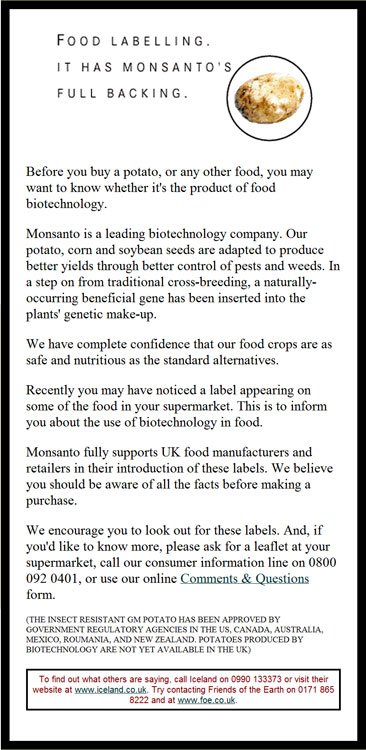
Here’s a Monsanto ad from the UK, letting British consumers know how much the company supports the mandatory labeling of their goods—even urging Britons to seek such labels out—ostensibly because Monsanto believes “you should be aware of all the facts before making a decision.” What’s the difference between British shoppers and American shoppers? Why does Monsanto support one nation’s right to know but not another? It’s time to put an end to this hypocritical charade and label foods in the US, as has been done in 64 other countries across the globe already!

American state rights were encouraged by our constitution, and the constitution was meant to prevent federal superpowers becoming corrupted and creating an authoritarian, fascist federal government. Sadly, we’ve watched our individual and state rights deteriorate over many decades, succumbing to these enormous industry powers, and this is probably one of the biggest, most blatant overreaches yet, proving that corporate interests are ruling the roost on Capital Hill. As stated by Marni Karlin, director of legislative and legal affairs for Organic Trade Association:11

Consumers, particularly the eight out of ten American families who buy organic products, want to know what is in their food. Rep. Pompeo’s bill ignores this consumer demand for information. Instead, it ties the hands of state governments, the US Department of Agriculture, and the Food and Drug Administration concerning GMO labeling. It is fatally flawed.”

What Happens in Oregon and Colorado in November Could Make or Break the GMO Labeling Movement

In addition to all this legal wrangling, opponents of GMO labeling spent more than $27 million on lobbying in the first six months of this year alone. This is about three times more than they spent during all of 2013, when they shelled out $9.3 million.12 Among the biggest spenders on anti-labeling lobbying were the Grocery Manufacturers Association (GMA) and major food makers such as Coca-Cola Co and PepsiCo Inc., along with chemical industry heavyweights like Monsanto and DuPont.

Undoubtedly, they are well aware that November is going to be a crucial turning-point for the GMO labeling movement. Both Colorado and Oregon have GMO labeling on their November ballots, and it’s absolutely imperative that we make a strong push to make sure these ballots succeed. So please, consider making a generous donation to the Organic Consumers Fund.

I know, it’s an uphill battle, but persistence pays! We cannot and will not give up now. During last year’s I-522 ballot campaign to label GMOs in Washington State, the Grocery Manufacturers Association (GMA) came up with a devious, and illegal, money-laundering scheme to protect the identity of members who donated funds to the opposing campaign. Unfortunately, this illegal move helped the GMA defeat I-522 by a mere one percent margin—ONE PERCENT!

Fortunately, the GMA was caught, and sued by Attorney General Bob Ferguson, who accused them of intentional money laundering and violating state campaign disclosure laws. They had to resort to illegal activity to beat us by one percent the last time… With that in mind, I am firmly convinced that we CAN win in both Colorado and Oregon. But it will take effort. And money, to make sure all the voters are informed enough to make a sound decision. It’s time for truth in labeling. Together, we can make it happen.

I recently named the GMA “the most evil corporation on the planet,” considering the fact that it consists primarily of pesticide producers and junk food manufacturers who are going to great lengths to violate some of your most basic rights—just to ensure that subsidized, genetically engineered and chemical-dependent, highly processed junk food remains the status quo.

The insanity has gone far enough. It’s time to unite and fight back, which is why I encourage you to boycott every single product owned by members of the GMA, including natural and organic brands. To learn more about this boycott, and the traitor brands that are included, please visit TheBoycottList.org. I also encourage you to donate to the Organic Consumers Fund. Your donation will help fight the GMA lawsuit in Vermont, and also help win the GMO labeling ballot initiative in Oregon in November.

Voting with your pocketbook, at every meal, matters. It makes a huge difference. By boycotting GMA Member Traitor Brands, you can help level the playing field, and help take back control of our food supply. And as always, continue educating yourself about genetically engineered foods, and share what you’ve learned with family and friends.

Recommended Supplements (These supplements help detoxify GMOs):

Further Reading:


Triglycerides in Junk Food are the Chemical Equivalent of ‘Hard Drugs’ for the Brain

(NaturalNews – Ethan A. Huff) Millions of Americans who claim to be opposed to drug use are actually heavy drug users themselves, according to a new study out of France. Researchers from the University of Paris’ Functional and Adaptive Biology laboratory recently found that triglycerides, a type of fat often found in junk foods, act on the brain in the same manner as many street drugs, exposing an epidemic of inadvertent drug addiction via the standard American diet.

Serge Luquet and his team, publishing their findings in the April 15, 2014, issue of the journal Molecular Psychiatry, tested the effects of triglycerides on mice. Having previously learned that these lipid compounds stimulate certain areas of the brain associated with pleasure and reward, the team decided to see how mice reacted to having a steady supply of triglycerides infused directly into their brains.

A body conditioned to high fat intake will constantly seek it out like a drug fix

Compared to mice not receiving the triglycerides, the test mice were less motivated than control mice to seek out more food, indicating a dose-response effect from consuming the fats. All the mice were allowed to access special levers that dispensed various food rewards, but those mice given the triglycerides were less likely to have brain activity telling them to eat more.

On the flip side, the mice not given triglycerides were found to be much more compulsive when it came to getting their food. Much in the same way that drug addicts have to constantly seek out their next “fix” in order to function, the control mice, who like all mice naturally desire high-fat, high-sugar foods, tended toward obsessively craving the food rewards.

“[T]riglycerides, fatty substances from food, may act in our brains directly on the reward circuit, the same circuit that is involved in drug addiction,” reads a summary of the report.

Brain responds to fat intake the same way it responds to hard drugs

Using a fluorescence microscope to analyze the mice’s individual brain activity, the research team was able to ascertain a specific enzyme in the brain that decomposes triglycerides, producing feelings of pleasure and satisfaction. When this enzyme is removed or deactivated, as the researchers did with the test mice, the desire for fatty foods becomes insatiable, much in the same way that a drug addict goes through withdrawals when cut off from his preferred substances.

Interestingly, the infused mice tended toward reduced physical activity and decreased likelihood of balancing a diet of both high-fat foods and simpler foods, compared to control mice who were obsessed with trying to gain access to the fats.

Many obese people are ‘drug’ addicts to triglycerides, unhealthy foods

In the end, this constant desire for fatty foods can lead to binge eating and gluttony, which in turn results in obesity for many people. Not surprisingly, obese individuals tend to have excessively high levels of triglycerides in both their blood and brain, and are typically more sedentary than the average person.

“[W]ith obesity, blood (and therefore brain) triglyceride levels are higher than average,” reads a ScienceDaily.com summary of the study’s outcomes. “So obesity is often associated with overconsumption of sugary, fatty foods. … At high triglyceride contents, the brain adapts to obtain its reward, similar to the mechanisms observed when people consume drugs.”

You can read a full press release of the study here:
http://www2.cnrs.fr.

Sources for this article include:
http://www.sciencedaily.com
http://www2.cnrs.fr


Zero-Calorie Sweeteners May Trigger Blood Sugar Risk By Screwing With Gut Bacteria

Artificial sweeteners don’t have calories — so why are these mice getting fat?

(Cornucopia – The Verge – Arielle Duhaime-Ross) When artificial sweeteners are in the news, it’s rarely positive. In the last few years, sweeteners have been linked to everything from Type 2 diabetes to cardiovascular disease, high blood pressure, and stroke. Still, products like Splenda and Sweet‘N Low remain a cornerstone of many a weight-loss strategy, mostly because doctors don’t quite understand how sweeteners contribute to disease. That may soon change, however, as results from a study, published today in Nature, point to a possible mechanism behind these adverse health effects.

“Our results suggest that in a subset of individuals, artificial sweeteners may affect the composition and function of the gut microbiome” in a way that would lead to high blood-sugar levels, said Eran Elinav, an immunologist at the Weizmann Institute of Health in Israel and a co-author of the study, during a press conference yesterday. This, the researchers say, is bad for human health because when sugar levels are high in the blood, the body can’t break it down, so it ends up being stored as fat.

To reach these conclusions, Elinav and his team first tested the effect of three common artificial sweeteners — aspartame, sucralose, saccharin — on rodents. They found that each of the sweeteners induced a change in blood sugar levels that surpassed that of the mice who consumed actual sugar. And later tests involving the main sweetening agent in Sweet‘N Low, saccharin, yielded similar results in both lean and obese mice.

But mammals don’t actually digest artificial sweeteners — that’s why they’re “calorie-free” — so the reasons why these mice were experiencing blood-glucose alterations was still mysterious, Elinav said. Still, the researchers had an idea: maybe the bacteria that lived in the guts of the mice were interacting with the sweeteners.

So the researchers performed several experiments to test their idea. In one, they gave antibiotics to mice who had been fed sweeteners regularly. Antibiotics kill gut bacteria, and when these mice had their microbial guests cleaned out, their blood sugar levels went back to normal. In another experiment, the scientists transplanted feces — a rich source of gut microbes — from sweetener-fed mice into rodents that had never consumed artificial sweeteners. The procedure caused the recipient mice to experience oddly high blood glucose, like the mice in the sweetener group. Finally, Elinav and his colleagues used genetic analysis to reveal that alterations in the composition of microbial colonies were also accompanied by changes in bacterial function — changes that could very well explain why the mice were experiencing such high blood sugar.

But findings in mice aren’t nearly as convincing as findings in people, so the researchers set out to investigate human sweetener consumption. In the first experiment, the researchers analyzed the blood-sugar levels and gut bacteria colonies of 381 participants. And, as expected, Elinav and his colleagues found that people who consumed sweeteners in large quantities also showed disturbances in several metabolic parameters — including increased weight — as well as distinct microbial changes in their guts.

The results from the second, much smaller human experiment might actually be the most illuminating.

“We followed for a single week a group of seven human volunteers who do not consume sweeteners as part of their normal diet,” Elinav said. During that period, the researchers gave them a single dose of saccharin, and monitored their vitals. After just four days, half the participants showed microbial alterations and increases in blood sugar levels, he explained, “while the other subset had no meaningful effect immediately following the consumption of sweeteners.”

In other words: some people are more susceptible to the effects of artificial sweetener than others.

A causal link

The handful of studies suggest that consuming non-caloric artificial sweeteners boosts the risk glucose intolerance in both humans and mice, as a result of changes in gut microbe function, the researchers wrote in their report. Yet, because of the preliminary nature of their results and the small number of human participants involved, they stopped short of suggesting that people change their eating habits. “By no means are we prepared to make recommendations as to the use and dosage of artificial sweeteners based on the results of this study,” said Eran Segal, a study co-author also at the Weizmann Institute of Health.

Other researchers, however, were more forthcoming.

“People need to be much more mindful of what they are eating and drinking and make efforts to avoid products that have added sweeteners in any form” said Susan Swithers, a behavioral neuroscientist at Purdue University who wasn’t part of the Nature study, in an email to The Verge. The studies showed not only a causal link between the changes in the gut and artificial sweeteners, but that the observed changes happen quickly, she wrote.

Not everyone agrees with the design the researchers used to address the question about artificial sweeteners and weight gain. Christopher Gardner, a food scientist at Stanford University who didn’t participate in the study, says that the fact that the researchers gave the FDA’s maximal acceptable daily intake of saccharin to the human participants — about 5 mg / kg body weight per day — isn’t ideal. In a real-life setting, that dose would be the equivalent to a 150-pound person consuming 42 12-ounce sodas per day, or 8.5 packets of pink Sweet ‘n Low per day. “That may be ‘acceptable’ according to some set of guidelines,” Gardner wrote in an email, “but it should be noted that realistically this is a very high dose they are using and one that wouldn’t be consumed by a typical consumer.”

Still, the idea that we might finally have an explanation for the adverse health effects seen in certain sweetener studies is worth paying attention to. Should the findings prove reproducible, doctors will be tasked with understanding why some people are susceptible to microbiome alterations, while others aren’t. And sweetener companies will have to address the criticism — in addition to rethinking their marketing strategies. “The work is important,” Swithers said, “because it underscores the role that artificial sweeteners may play in contributing to the very problems they were designed to help.”


How to Cook Kale

Reprinted with permission from Experience Life Magazine.

(DrFrankLipman – Cary Neff) Kale, with its frilly leaves and rich colors, is a gorgeous plant. Although officially a “dark leafy green,” it also comes in vibrant purples and dramatic winter whites. And kale’s beauty runs deep: It is packed with powerful phytonutrients, minerals and fiber.

Kale’s complex flavor wins it fans at breakfast, lunch and dinner. It boasts deep, earthy flavors that can range from rich and meaty to herbaceous and slightly bitter. It tastes supremely healthy — in a good way.

Kale belongs to the Brassica family, which also includes cabbage, broccoli, cauliflower, Brussels sprouts, kohlrabi and collards. It is an offshoot of wild cabbage, which originated in Asia Minor.

The ancient Greeks and Romans grew kale in their gardens. Europeans brought kale to the Americas in the 1600s. During WWII, it was a recommended plant for Victory Gardens because it provided so many nutrients. And today, this leafy green is enjoying a revival, particularly among the health-inclined.

Kale is easy to find, and it’s a cinch to work into virtually any style of cooking. Read on for more about kale, as well as a few ways to start experimenting with it.

Nutrition Know-How

  • Three servings of leafy greens each day has been found to slow cognitive loss by 40 percent.
  • Kale is packed with phytochemicals like sulfur-containing glucosinolates and isothiocyanates that help ward off cancer.
  • The fiber in kale helps absorb and sweep out DNA-damaging chemicals and other toxins that enter our bodies.
  • Open-leafed plants in the cabbage family, like kale, have higher amounts of vitamins C and A and carotenoids than plants whose leaves don’t see the sun. Carotenoids are powerful antioxidants that also support proper functioning of the immune and reproductive systems and lower the risk of cataracts.
  • Kale is an excellent source of minerals, including calcium, and manganese, a mineral the body requires for many physiological functions.
  • One cup of kale provides 1,300 percent of the recommended daily allowance of vitamin K, which is important for healthy blood coagulation and maintaining bone mass.

Shopping Tips

  • For optimum nutrition, buy kale in season. A light frost sweetens kale, so depending on where you live, fall or winter is the perfect time to enjoy it.
  • Choose kale from organic, biodynamic or responsible local growers when possible. Greens grown in better-managed soils help you net maximum flavor and nutrition and minimize exposure to pesticides.
  • Whenever you shop for kale, buy lots of it because it cooks down dramatically.
  • Keep blanched or precooked leftovers on hand to add to the week’s breakfasts, lunches and dinners.

Kitchen Tricks

Washing: Avoid washing kale until just before use, since it will hasten spoilage.

Cutting: To make cutting easier, remove any thick stems (just hold the kale upside down by the stems and pull the leaves off), then stack large greens on top of one another, roll them into tight bundles and slice into desired widths. The stems, finely chopped, can be used in soups.

Blanching: Blanching reduces bitterness and softens thick greens, which is useful if you want to follow up with a quick sauté or freeze the greens for later use. To blanch kale, stir leaves into boiling water for a minute or two, drain, then immediately run under cold water.

Braising: Braising tenderizes and adds flavor. To braise, slow cook 1 pound of greens in a ½ to ¾ cup of seasoned cooking liquid (chicken or vegetable stock or wine) or water for about 20 minutes or until greens are tender and ready to eat.

Sneak-It-In Strategies

  • Blend a few chopped-up young kale leaves (but not the stems) into fruit smoothies. It’s a great way to get more greens into the diets of the veggie-averse, especially kids.
  • Chop, cook and mix kale with grains to add nutrients and flavor to dishes like barley risotto or rice pilaf.
  • Blanched and frozen kale can be crumbled into soups, stews, beans and pasta sauces.
  • Substitute sautéed kale for cooked spinach in spanakopita, on pizza, or wherever you typically use greens.
  • Whip up a quick summer kale sauté with garlic, olive oil, tomatoes and basil.

Recipes: Kale 3 Ways

Incredibly versatile, kale varieties can be used interchangeably in most recipes, including these classic, easy preparations.

Crispy Kale Chips With Sea Salt

An indulgent side dish for dinner — or a healthier snack alternative to chips. Roasting brings out smoky, buttery flavors and creates an irresistible, melt-in-your-
mouth texture.

Roasting to the point of crispness at high heat does involve some nutritional sacrifices, but it’s such a simple and delicious preparation (and one that has earned kale so many new fans), it’s worth making now and then. You can also cook longer at a lower temperature, if you prefer. And if you’re not afraid of fat, you can be more generous with the oil. For a twist, substitute Cajun spice or lemon pepper for the salt.

Serves two:

4 cups kale (1 large bunch)
1 tbs. extra-virgin olive oil
1 tsp. sea salt

  • Preheat oven to 375 degrees F. Line a baking sheet with parchment paper.
  • Wash the kale. Fold each leaf in half and tear or cut out the tough stem, then stack and slice into manageable-size pieces.
  • Toss pieces in a bowl with olive oil until coated, then arrange in a single layer on a baking sheet.
  • Roast for five minutes, then turn carefully with metal tongs and roast another seven to 10 minutes until kale begins turning brown, crisp and brittle.  Remove from oven and sprinkle with sea salt. Serve promptly.

Asian Greens

This quick sauté works well with kale or virtually any dark leafy green (spinach, Swiss chard, collards, dandelion greens, etc.) to create a healthy, delicious side dish.  By varying the seasonings (subbing in chili-garlic sauce, curry paste or peanut sauce for the soy sauce, for example), you can create an eclectic array of variations.

This basic preparation (sans seasonings) can also work to prep kale for using in other recipes, including a delicious egg scramble (see Web Extra for recipe).

For another classic preparation, sauté kale with small amounts of bacon for flavor, then lightly braise in vegetable stock to soften.

Serves eight:

12 cups kale (3 large bunches)
1 tbs. sesame oil
1 cup diced yellow onions
2 tsp. minced fresh garlic
1 tsp. grated fresh ginger
2 cups vegetable stock
1 tbs. tamari soy sauce
1/8 tsp. ground black pepper

  • Wash kale, remove stems and cut into 1-inch squares.
  • Heat a large sauté pan over medium-high heat and add the olive oil to just coat the bottom of the pan. Add onions and garlic and sauté for one to two minutes. Stir in kale, ginger and vegetable stock.
  • Cook until the kale starts to wilt, about two minutes. Stir in tamari soy sauce and pepper. Remove from heat and serve.

Raw Kale Salad

Combining finely chopped kale with lemon and olive oil — then gently massaging them together — breaks down kale’s stiffness and bitterness, leaving you with tender greens bursting with flavor. Don’t skimp on the chopping: Not having to chew through large chunks of raw kale will increase your eating pleasure.

Serves four:

1 large bunch of kale, stems removed and thinly sliced
1/4 cup lemon juice
1/4 cup olive oil
1 minced garlic clove
1/8 tsp. sea salt
1/4 cup toasted walnuts
1/2 cup golden raisins
1/2 cup chopped kalamata olives
1 tbs. finely shredded basil

  • Place the kale in mixing bowl. Add the lemon juice, oil, garlic and salt. Massage the kale to soften for about one minute.
  • Add remaining ingredients and toss to combine.
  • Allow the salad to rest and soften for about 15 minutes before serving.

Chef Cary Neff is the author of the New York Times bestseller Conscious Cuisine (Sourcebooks, 2002).

Kale Glossary

A quick overview of the most common types of kale:

Green Kale: With vibrant green wrinkly leaves, this is the most common kale found in grocery stores, and you can add it to just about anything!

Red Kale: Similar in texture and flavor to leafy green kale, red varieties — which are actually more purple — add a splash of exotic color, whether raw or cooked.

Tuscan Kale: Discovered in Italy in the 19th century, Tuscan kale (also called dinosaur kale or lacinato kale) has deep green, smooth stems and a rugged, wrinkly texture. It’s great for braising or sautéing and it’s terrific finely shredded and tossed into stir-fries.

Ornamental Kale: Also known as salad savoy, ornamental kale — often green, purple, pink or white — is popular in flower gardens and makes a great garnish. But it’s edible too, as long as it hasn’t been sprayed with pesticides. It’s best harvested when still small and tender.

WEB EXTRA

More Kale Cooking Tips

  • Blend a few chopped-up young kale leaves — but not the stems or very thick leaves — into fruit smoothies. It’s a great way to sneak greens into the diets of the veggie-averse, especially kids.
  • Add kale to breakfast egg dishes. Try an omelet with par-cooked potatoes, caramelized onions and steamed kale — or a scramble made with tomatoes, bell peppers, green onion and kale sprinkled with feta cheese.
  • Whip up a quick summer kale sauté with garlic, olive oil, tomatoes and basil. Sauté kale with small amounts of bacon for flavor, then lightly braise it in vegetable stock to soften. Great with roasted turkey, meatloaf or grilled tofu.
  • Chop, cook and mix kale with grains to add nutrients and flavor to dishes like barley risotto or rice pilaf.
  • Kale is wonderful in miso soup or tossed with rice noodles.
  • Kale’s earthy flavor pairs well with hearty meats, beans and sausages. I particularly like kale with braised pork. I often substitute sautéed kale for cooked spinach in spanakopita, on pizza, or layered with ricotta cheese in calzone.
  • Blanched and frozen kale is great to have on hand. If you gently break it in the bag, it can be easily added to simmering marinara sauce, soups, stews and beans.

WEB EXTRA

Kale, Mushroom and Cream Cheese Scramble

Conscious Cuisine®

Sautéed, steamed or braised kale (especially refrigerated leftovers) is an easy and delectable addition to your breakfast eggs — or just about any other meal.

Serves one: 

1/2 tsp. olive oil
1/4 cup julienned kale
1/4 cup diced fresh shiitake mushrooms
1 tbs. finely chopped green onion
1/4 cup small diced tomatoes
2 eggs, lightly whipped
1 tbs. milk
1/8 tsp. sea salt
1/8 tsp. freshly ground black pepper
1 tbs. cream cheese

  • Heat a sauté pan over medium heat and add olive oil. Add vegetables and sauté until they begin to sweat, about five minutes.
  • Whip the eggs with the milk and season with salt and pepper. Slowly pour into the pan with vegetables. With a heat-resistant spatula, gently push one edge of the egg into the center of the pan, while tilting the pan to allow the uncooked egg to flow in underneath. Repeat with the other edges, until there’s no liquid left.
  • Turn off the heat and add the cream cheese, gently stirring and turning the egg until all the uncooked parts become firm. Place on plate and serve with fresh fruit.

Reprinted with permission from Experience Life Magazine.


More Bad News For Sugar – Research Confirms it is a Leading Cause of Heart Disease

(NaturalNews – John Phillip) Just in case you needed yet another reason to stay away from added dietary sugar sources, nutritional scientists now confirm that our obsession with consuming sweets is killing us by dramatically increasing risk of death from cardiovascular disease and heart attack. A host of known risk factors including elevated blood pressure and triglycerides, along with cholesterol abnormalities such as oxidized LDL cholesterol and poor HDL/LDL cholesterol ratios are all attributable to a diet filled with empty calories fueled by sugar consumption. Interestingly, researchers have determined that the increase in cardiovascular risk factors is not attributable to weight gain commonly associated with excess sugar intake; sugar directly raises heart disease risk independent of weight gain.

A research study team from New Zealand’s University of Otago, publishing in The American Journal of Clinical Nutrition, has conducted a review and meta-analysis of a large cohort of dietary studies comparing the effects of higher and lower added sugar consumption on blood pressure and lipids, both of which are important cardiovascular risk determinants. Lead study author, Dr. Lisa Te Morenga and her students have uncovered solid and documented evidence that eating sugar has a direct effect on risk factors for heart disease, and is likely to negatively impact blood pressure and blood lipids. Dr. Te Morenga noted, “Our analysis confirmed that sugars contribute to cardiovascular risk, independent of the effect of sugars on body weight.”

Sugar and refined carbohydrates increase risk of hypertension and cholesterol abnormalities

The scientists analyzed a total of 49 nutritional intervention trials conducted between 1965 and 2013. Comparing diets where the only intended differences were the amount of sugars and non-sugar carbohydrates consumed by the participants allowed for the measurement of the effects of these diets on lipids and blood pressure. 37 trials reported the effects of dietary sugars on lipid metabolism while another 12 yielded results on blood pressure. The team then pooled the available data to determine the impact on measurable risk factors that affect human health.

The team noted that some of the data provided by the studies was skewed as the research was funded by the food/sugar industries. When they factored out those biased results, they found a startling pool of data conclusively demonstrating the negative impact of high-sugar diets on cardio-metabolic risk factors. Small increases in blood pressure, as little as 20 mm Hg systolic and diastolic, can double the risk of a heart attack, while changes to cholesterol metabolism can alter the delicate endothelial lining of the arteries affecting plaque formation and blood clotting.

While the food industry and media outlets continue to promote a wide spectrum of processed, sugar packed foods as a means to boost their bottom line profit margins, millions of uninformed people continue to consume 156 pounds of added sugar each year. Recently, sugar has been making news as it has been associated with increased risk of many forms of cancer, as well as stroke and Alzheimer’s dementia. The evidence should be clear to any health-minded individual — eliminate all sources of empty sugar and refined food products in favor of foods in their natural form to dramatically lower the risk of heart disease and most chronic illnesses.

Sources for this article include:
http://ajcn.nutrition.org/content/early/2014/05/07/ajcn.113.081521
http://www.eurekalert.org/pub_releases/2014-05/uoo-sii051414.php
http://www.sciencedaily.com/releases/2014/05/140515095633.htm