Non-Alcoholic Fatty Liver Disease is Linked to Brain Shrinkage
Non-alcoholic fatty liver disease (NAFLD), where too much fat accumulates in the liver without alcohol, has now been linked to greater than normal age-related brain shrinkage by a study published in JAMA Neurology. In the study, people with NAFLD from age 60 to 70 saw a reduction of brain volume equivalent to 4.2 years of aging, and patients under 60 averaged a brain volume reduction equivalent to 7.3 years of aging. The connection was notable even after other factors related to brain aging like heart disease, diabetes, blood fat levels, smoking, alcohol consumption, overweight, lack of exercise and menopausal status were accounted for in the study.
The Liver Brain Connection
When the liver isn’t able to properly filter the blood, toxins left behind can accumulate in the brain, causing memory loss, sleep disturbances, and trouble concentrating. The recently published study that found a link between a clearly unhealthy liver and higher levels of brain degeneration measured the overall brain volume of 766 middle-aged men and women with MRI scans and used abdominal CT scans to examine their livers. Nearly twenty percent of those examined had NAFLD. Even after other dementia risk factors were accounted for, research subjects of all ages experienced increased brain aging equivalent to at least a year. Lead author Galit Weinstein from School of Public Health at the University of Haifa concludes, “In turn, if one retains a healthy liver, his/her risk for other diseases, such as diabetes and heart diseases, is also reduced. In this study, we show that keeping a healthy liver may also be linked with a healthier brain.”
How to Support Your Liver
Experts agree that the best way to manage NAFLD is through diet and lifestyle, but what does that mean? This is good news because this means you can do something about it. Not all diets and lifestyles are the same, and recent science has found that environmental factors can also play a role in the development of NAFLD. Yet there are some simple steps and changes you can implement immediately that will decrease your risk of NAFLD and elevate your overall level of health.
First and foremost, when you have or are at risk of developing, NAFLD, sugar is not your friend. Sugar helps fat build up in the liver, and it aggravates a multitude of other problems in the body. It tastes really good. We’re biologically programmed to crave it. It’s probably one of the worst things you can have, especially if you’re at risk for a serious health condition. Consume your sugar in fruit form as the fiber slows the absorption of the sugar, but too much of any one kind of fruit can still lead to issues.
Next, rally your beneficial bacteria. Produce is the best way to give those helpers the fuel they need. That bacteria can then focus on properly digesting fat in the gut, keeping large fat molecules from overwhelming the liver. The key word here is produce. Among other things, fresh, raw vegetables and fruits have fiber, reducing the absorption of harmful lipopolysaccharides and sugars. Organic is also important, as NAFLD and brain cancer have both been linked to glyphosate. While it’s no longer possible to avoid the herbicide completely, organic produce gives you the least amount of exposure. Other liver boosting foods oily fish, avocado, olive oil, and nuts.
Up next? Vitamin c. The liver benefits greatly from vitamin c and its antioxidant properties. A dose as small as 500 mg of the vitamin can help prevent fatty buildup and other liver diseases, like cirrhosis. Turn that dose up to 5,000 mg and the vitamin c begins to flush fat from the liver. If you can get a nutrient from whole food sources, you should, and there are numerous fruits and vegetable rich in vitamin c. Load up on those, or if you prefer to drink your vitamins, check out this super simple lemonade with bonus cranberry action.
Exercise!
Finally, like any good healthy lifestyle advice article says, exercise. The good news here? It doesn’t matter what kind of exercise you chose. Previous studies found that both aerobic and resistance training-based exercise regimens reduce fat in the liver effectively. They also suggest that the intensity and amount of exercise makes a difference, but the best exercise is the one you do and do regularly.
Connections Are Crucial
Everything in life is about connections, yet it can be difficult to fathom just how connected the body really is. Your brain health absolutely depends on your gut. Now we find that your brain health, especially as you age, depends on your liver. And the liver depends on the gut, and how well the microbes there are able to do their job. A healthy gut makes all the other organs and systems it connects to healthier. Fix your gut, fix your health.
Does the simple act of reading that word make you squirm? How often do you find yourself squatting on the porcelain throne, tears streaming down your face, as you strain and push, hoping you aren’t giving birth to hemorrhoids or anal fissures? Do you poop several times a day, or do you go days between the urge?
Are you’re looking for that one thing, that one trick, that one pill that’s going to have you defecating easily without having to change your diet? We highly recommend permanent, well-researched diet changes with lots of raw produce to permanently alleviate constipation, but for those who don’t feel like this is an option, or for those on medications that slow bowel movements, the one you’re looking for is Shillington’s Intestinal Cleanse Formula.
What is Constipation?
Constipation can be defined as having hard, dry, difficult-to-pass stools or by the frequency (or rather infrequency) of passing stools. It can also be indicated by the appearance of the stool and whether the stool is completely evacuated from the rectum after a bowel movement.
You may have heard that it’s within the “healthy range” to have three bowel movements a week or even one a week. We beg to differ. While there will naturally be some variation in frequency, a healthy gut processes food fairly quickly and consistently. A healthy body is efficient when it comes to ridding itself of waste.
Preferably, you want to have a minimum of 1-3 soft, but well-formed, easy to pass bowel movements a day. We contend that the ideal is one bowel movement for every meal. After one eats a meal, the urge for a bowel movement typically comes shortly after food begins to leave the stomach to enter the small intestine. If that sounds like too many, imagine having one bowel movement a week after eating 3 meals a day for 7 days. You’ve been packing that food into your intestines before eliminating any of it. How gross is that? What about 3 day’s worth? That’s still a lot of food waste packed and crammed into your body. Also, when defecation is easy it’s generally very fast. Frequent poopers probably spend less time on the toilet overall than those who need a book to do their business.
Healthy Poop
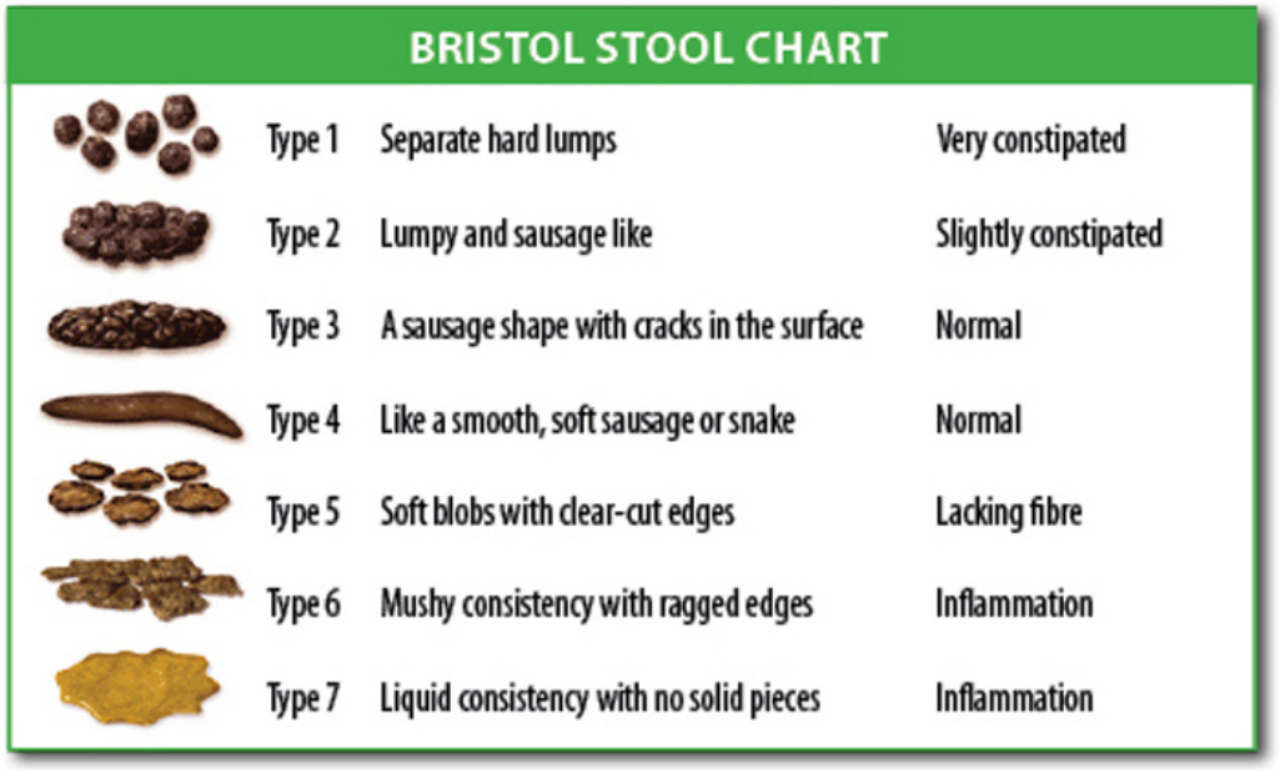
Healthy poop is well-formed but soft. The Bristol Scale offers a visual of normal stool, constipation, and diarrhea. It’s not always accurate; there are other variables thank can affect density and size, but it’s good to know:
Conventional Relief from Constipation
These methods are just a way to treat the symptoms, not the cause.
Glycerin Suppositories
Glycerin suppositories are tapered pieces of hardened glycerin that are inserted into the rectum. Once inside, body heat melts the glycerin, which provides lubricant to aid in passing the bowel movement.
This seemingly innocuous treatment, which has long been prescribed for babies, may not be as benign as once thought. There are drug interactions, allergic reactions, and other side effects with glycerin, and suppositories are known to weaken the bowel muscles if done repeatedly.
Mineral Oil Enemas
Like with suppositories, there are drug interactions, allergic reactions, and other potential side effects with glycerin.
Other Enemas
Enemas are also known to weaken the bowel muscles if done repeatedly. Body Ecology recommends a variety of enemas to cleanse the colon such as enemas with apple cider vinegar, burdock tea, lemon juice, etc, but we do not recommend regular enemas for health maintenance. Instead, we recommend enemas for acute care only, and we recommend cultivating a healthy ecosystem that does not need to be washed away for health reasons.
Herbal Teas Known to Help with Constipation
Spearmint Tea
Senna Tea
Dandelion Tea
Licorice Root
Black Tea
Peppermint
Burdock Root Tea
Green Tea
Clove Tea
Tulsi Tea
Exercise
Exercise is crucial to physical health, and it may also help alleviate your constipation. If you are a couch potato, get up and move. Walk, swim, rebound, squat, get moving. If you can squat, squats can help alleviate constipation and other issues as well. If you can’t squat try laying on the floor, getting up off the floor, lying back down, and repeating while alternating how the legs are used. And of course, there’s yoga! meet Adrian. Then follow her on YouTube and do her 30-day challenge. It’s life-changing. A few weeks later and you will love her and you’ll love yourself for doing it.
Eliminate Chronic Constipation For Good
The two most common causes of constipation are the two things most easily remedied – dehydration and a poor diet. If you want to rid yourself of constipation, you must drink enough water, and you must eat a diet filled with real food, optimally, a diet consisting of 80% fresh, raw, organic produce. Yes, real food, not processed garbage out of a box, a can, a jar, or a plastic tray you pop in the microwave. Ok, maybe it’s not an “easy remedy.”
The Constipation Elimination Diet
The recommended daily intake of water varies with gender, age, and other factors including how much raw produce a person eats. Check out this article at Healthline for more on water intake. An additional way to increase your fluid intake is drinking by cranberry lemonade throughout the day. Cranberry lemonade will also help you detox your liver and kidneys, boost your immune response, and improve all major bodily functions.
Raw produce provides the fiber and bulk to create healthy stools, and it provides the fiber needed for a healthy gut. Beneficial gut bacteria thrive when 80% of your diet is made up of raw, organic, produce. And a healthy gut is essential for overall health, proper digestion, and proper elimination.
If you think the 80% number sounds too difficult, eat one super salad each day filled with a variety of vegetables. Your body will thank you. Not only will you be filling your body with nutrient dense foods, you will be naturally detoxing on an ongoing basis through the food you eat. And in between meals, eat a piece of fresh, raw, organic fruit. For more on diet:
For extra help add several prunes and/or figs to your daily diet.
Posture on the Throne
We weren’t built to poop on a chair. We were built to poop from a squat. You can either squat in the woods or improvise. The knowledge that a squatting position is best for elimination is not news (I learned about it more than 40 years ago). But the idea is gaining in popularity to the point that posture aids, called squatting potties or toilet stools, are now readily available for purchase. Basically, these are footstools designed to raise your feet when you sit on the toilet and slide back out of the way when not in use.
For an immediate fix, try any low footstool you have on hand or make one with books or magazines. The point is to mimic the squatting position, which aligns the large intestine and rectum for ease of elimination.
Invest in a bathroom stool whether constipation is an issue or not. Correct posture will certainly help to avoid straining and aid in proper elimination.
Dr. Shillington offers the Intestinal Detox and the Intestinal Cleanse formulas for detoxifying the bowels. If you need to move your poop, there’s nothing more effective than Shillington’s Intestinal Cleanse formula. It also kills parasites, heals the intestinal tract, and is a healthy means to promote bowel movements for those who have trouble defecating. Shillington’s Intestinal detox draws out old fecal matter from the walls of the intestine, while it removes poisons, toxins, heavy metals such as mercury and lead, and more (heavy metals are another common cause of constipation). Due to the charcoal and clays in the Intestinal Detox, it actually slows things down a bit, and the two also work very well together to heal the gut.
Abzorb is another big recommendation. It’s a systemic enzyme, so the capsule does not release until it is inside the gut. It’s also a probiotic, and an effective one at that. Taken with food Abzorb makes for a very effective digestive aid. Taken without food, Abzorb will begin to clear away old fecal matter, and it offers a host of other benefits (read more about enzymes here).
Sugar Leads to Depression – World’s First Trial Proves Gut and Brain are Linked (Protocol Included)
It’s official. If you’re keeping up with the latest science, you know that the gut is inexorably linked to the brain. This year researchers found a correlation between depression and mood swings in men and high sugar intake.1 Last year a study showed probiotics could help with reducing the risk of depression.2 A growing body of evidence is proving that healthy people’s microbiota has a lot in common with other healthy people’s microbiota, and diseased people’s micro-biota also have common traits.3 They’ve been talking about how the gut may affect the brain and the immune system more and more for the last 20 years. Mainstream medicine is slowly figuring out that our gut’s microflora correlates directly with our health, and sugar and other junk foods do not promote healthy gut bacteria.
World’s First Trial Shows Improving Diet Can Treat Major Depression
Depression is one of the world’s most prevalent and costly medical disorders. It may be surprising to read “World’s First” in regards to a trial study establishing a link between diet and depression, as many would guess that this kind of study has done before. It hasn’t been, but headlines proclaiming that healthier diets may decrease the risk of depression have been appearing in the news more frequently. That is the work of Director of Deakin’s Food and Mood Centre Professor Felice Jacka and her team. She’s published numerous epidemiological (survey-based) studies reporting that eating an unhealthy diet shows you are more likely to be depressed. The studies were based on questionnaires. They were not actual diet experiments. They have simply educated guesses that hadn’t been tested in the real world yet. Until now.
Professor Jacka said the results of her team’s new study may offer a better approach to depression.
We’ve known for some time that there is a clear association between the quality of people’s diets and their risk for depression.
This is the case across countries, cultures and age groups, with healthy diets associated with reduced risk, and unhealthy diets associated with increased risk for depression.
However, this is the first randomised controlled trial to directly test whether improving diet quality can actually treat clinical depression.” – Professor Jacka
The Study Details
Professor Jacka’s team recruited 67 men and women. The participants had severe depression and also reported eating a relatively unhealthy diet. Most of them were taking antidepressants and/or were in regular psychotherapy.
Half of the participants adhered to a Mediterranean diet while they attended dietary support sessions with a nutritionist. The others continued eating as usual (unhealthy), but they were required to attend social support “befriending” sessions. Everyone’s depression symptoms were graded using several different tests.
Encouraged foods included: whole grains, fruits, vegetables, legumes, low-fat/ unsweetened dairy, raw unsalted nuts, lean red meat, chicken, fish, eggs, and olive oil
Beverage information: maximum two sugar-sweetened beverages per week and maximum two alcoholic drinks per day, preferably red wine.
The Study Results
People in the unhealthy diet group improved a statistically insignificant amount, and those in the healthy diet group improved their symptoms with a full third of them fully reversing their depression. It’s also important to note that this was done with conventionally accepted dietary protocols. It should be noted that these “healthy” diets are not that healthy. Imagine the results a more radical approach could have achieved.
How & Why (gut bacteria, B vitamins, etc.)
In another study, scientists from McMaster University wanted to test how mice with different gut bacterial conditions deal with stress.4
The baby mice were stressed from 3 to 21 days old by being separated from their mother for 3 hours each day. This experiment was conducted with mice that had different gut bacterial conditions. One group of mice was grown completely free of bacteria in their guts and kept in a sterile room to prevent bacteria from affecting their behaviors (germ-free mice). The other group were regular mice that were exposed to an ordinary, complex range of bacteria. The last group was a germ-free control group that hadn’t been separated from their mothers. The baby mice with normal gut microbiomes that had been subjected to early-life stress showed an unusual increase in the stress hormone corticosterone. They also exhibited signs of depression as well as anxiety. The germ-free mice, meanwhile, behaved similarly to the control mice, showing no symptoms of anxiety or depression. It is interesting to note that these mice also had elevated levels of corticosterone, just not symptoms of depression. Naturally, the control group showed no elevated stress hormone or altered behavior.”
These results indicate that the bacteria in our environment contribute to our mental health and behavior.
Next, they exposed the germ-free mice to bacteria taken from the stressed group. As the bacterial composition of the germ-free mice changed, so did their metabolic activity and their behavior. After a few weeks, the previously symptom-free mice were now showing signs of depression. Finally, the researchers wanted to see how the control group reacted when they were exposed to bacteria from the stressed mice. In this situation, the mice didn’t start showing symptoms of depression at all.” – IFLS
Our brains are running off of the energy our gut and our lungs are producing. If our gut is producing an unhealthy chemical environment, this effects the whole body including the brain.
Stop eating sugar and processed foods. Yes, the depressed brain wants to reach for the nearest comfort food (donut, pizza, what have you), but the mice have proven that’s probably the last thing you actually need. The brain and the gut are intertwined and cultivating your beneficial bacteria with raw, fresh produce; soaked and sprouted nuts; and antibiotic-free, pasture-raised meats is a necessary part of any healing process. You don’t expect a mechanic to work on your car without tools. Why expect the same from your body?
Most people reading this who are really looking for answers to help with their depression are not going to be able to take on an entirely new lifestyle filled with shopping at farmers markets and cooking all of one’s own food. Think of this is the long-term goal and take baby steps towards being more connected and in touch with your food. Also, check out How I Overcame Depression NaturallyandI’m Depressed.
Stop with the germaphobia
If you carry a small bottle of disinfectant on your keychain or find yourself constantly rubbing your hands together in a strange imitation of someone over a campfire, step away from the sanitizer. You’re doing more harm than good. Most commercial sanitizers contain harmful ingredients like triclosan, parabens, and sulfates. They also contribute to the inability to fight diseases naturally.
Exposure to harmful bacteria teaches the body how to naturally fight infection. It’s why we suggest that small children spend time playing in the dirt. But antibiotics, hand sanitizers, and household cleaners have taken that away from us, along with the beneficial bacteria. Beneficial bacteria is the gatekeeper to the immune system.
Play With Nature, Get Dirty
Speaking of sticking your hands in the dirt…do it. When you’re depressed, the last thing you want to hear s some random person chirping at you about how you should “just go outside…” but seriously…do it. Vitamin D is your friend.
If you’re near water, you’re in luck. Humans respond to water on a primal level.
Exert Yourself
This one is kind of like the go outside one…you gotta do it. Make it something simple. Maybe swap getting in the car for walking somewhere instead. Play your favorite music or enjoy some people watching.
A depressed brain is likely in short supply of feel-good endorphins and neurotransmitters.
Sleep Well
Make yourself go to bed. Stop looking at your phone. In fact, take a cue from babies, nature’s original fussy sleepers. Or at least a cue from their parents – nighttime routine. No, you’re not in a onesie (are you?), but many of the tricks used by hopeful parents can be modified to help you.
Bath, with soothing essential oils (because you’re an adult now!) or other pleasing spa products? Check. Soothing music/white noise/smoothly voiced NPR podcast? Check. A ridiculous book you don’t necessarily want anyone to see you reading? Check. Momma knows best, but you’re still a grown ass adult. Have fun planning a decadent pre-bed routine. Also, check out Insomnia – A Comprehensive Look with Natural Remedies.
Almost everyone in the world who is dealing with chronic health issues or chronic mental issues has an abundance of Candida and heavy metal toxicity, along with a lack of beneficial bacteria. Diet alone can fix this for most people, but when the head is not working well, choices don’t usually go well either. B vitamins can help alleviate depression until the healthy gut microbes develop. Good fats (click here) are a must for people who can’t assimilate Bs properly. For those dealing with depression, a diet rich in B vitamins and healthy fats is a very good start. Supplements can be used to accelerate healing and eliminate all the other ailments and used to kill Candida and promote healthy bacteria.
This is my favorite for killing anything fungal, but it also works on parasites and other pathogens. If you have had yeast infections, athlete’s foot, see floaters, have BO, or eat the way everyone in modern countries do, you’ll want this supplement. There are tons of other choices for killing yeast (click here), but I don’t know of anything that does a better job for the money than SF722. Candida can become fairly immune to many other antimicrobials but studies have shown that this does not happen with SF722.
Probiotics
Probiotics help fix everything int he gut, including breaking down and removing things that shouldn’t be there, like heavy metals. A healthy gut detox the body all the time. Often touted as the cure everything supplement for the well-informed, probiotics are something most everyone is familiar with these days. What most do not know is that the vast majority of probiotic supplements on the market are ineffectual at best, and many actually feed yeast. How the probiotics are processed and preserved make all the difference. It’s not an easy task to produce good probiotics; our stomach acid is designed to kill it. Two of my favorites are FloraMend and Bio-K (the latter is not available in our store, but it is at most health food stores and Whole Foods). I don’t recommend taking a probiotic with antimicrobials. A really good probiotic should come out on top, but you are reducing its effectiveness when you combine it with compounds that kill. For instance, I would take SF722 all day and a probiotic at night and early morning, or vice versa, where I take the probiotic with food and the SF722 late and early. Different digestive issues can favor one over the other so try both ways and see what works for you.
Don’t take them with antimicrobials, and make sure they are high-quality supplements. Anyone without an appendix should take a probiotic every day with every major meal for the rest of their life. Your appendix secretes out beneficial bacteria when you don’t have enough. Take them on an empty stomach as noted or with food to help digest food inside the gut. I recommend mixing it up each day, but I do recommend caution when taking systemic enzymes. Too many systemic enzymes can cause issues, they can start to eat away at the body, so I don’t just grab a big handful like I do with SF722. I personally take 4-6 a day on an empty stomach, and I take more with food as needed.
One antimicrobial you can take with probiotics is olive leaf extract. It’s great for maintenance but it’s not a yeast serial-killer like SF722 (otherwise it would damage the probiotic). It’s a fine supplement, and but it’s not going to do much of anything all by itself. I like Abzorb best right now for a probiotic. For more on systemic enzymes click here.
Magnesium
Magnesium is an old home remedy for all that ails you, including ‘anxiety, apathy, depression, headaches, insecurity, irritability, restlessness, talkativeness, and sulkiness.’ In 1968, Wacker and Parisi reported that magnesium deficiency could cause depression, behavioral disturbances, headaches, muscle cramps, seizures, ataxia, psychosis, and irritability – all reversible with magnesium repletion.” – Psychology Today
A small study reported that over-the-counter magnesium tablets significantly improve depression in just a couple of weeks.11
Magnesium is a foundational supplement, like calcium. In the modern world, there is a tendency to become deficient in this vital mineral, and this effects every single function of the body! Not having enough magnesium is like not having enough oil in the car. Something is going to break down sooner or later, and in the meaning time, things will not be running as well as they should.
Poop Easy
For some, the gut needs more help to eliminate properly. Everyone should defecateonce for every meal, and maybe once or twice more for those who also snack on lots of calories throughout the day like I do. Shillington’s Intestinal Cleanse is the best I know of for healing the gut, killing parasites that may reside within, and getting the bowels regular. Shillington’s Intestinal Detox helps eliminate heavy metals and anything positively charged (like most pathogens), and it slows down and firms up stools. It also helps heal the gut and rebuild a healthy biofilm. Together the two supplements have synergistic properties, and they can be taken together to help balance the gut. It’s a very effective combination, but if the budget is tight, get the one that suits your needs. Note that if you have chronic constipation and have not tried magnesium yet, Shillington’s Intestinal Cleanse may not be necessary with a good magnesium supplement.
Conclusion
We rely on bacteria to survive and yet many aspire to live in an antibacterial world. We know certain heavy metals are incredibly toxic to us, but we excuse them in vaccinations and light bulbs and sushi. Most of us know that fresh, raw vegetables pull our heavy metal toxins, but we grow conventional vegetables with such a heavy toxic load that they no longer have their natural chelation properties. For most people, when it’s all said and done, our physical well being affects our mental well being more than anything else in our lives. Our entire body is built on what we eat. Our heart, our gallbladder, our appendix, our fingers, our eyes, our noise, our brain – they all need the right nutrition to function properly. Nothing in the body gets healthy and stays healthy for long without fixing the gut first, and that includes the brain. If you’re looking for the easiest thing you can do, a little baby-step just to get you started, get the SF722 and Abzorb and some B vitamins. I can’t stress enough how much almost everyone in any modern country could use SF722 to help fix the gut. Get some sunlight or a D vitamin and some good fats. Start squatting every day, just a few to start with and build up daily. And get into some nature, be it walking or gardening or whatever. Another good option would be CBD oil. It’s showing a lot of promise with depression.
Fungal Infections – How to Eliminate Yeast, Candida, and Mold Infections For Good
Most, maybe all of you reading this, have Candida, even if you’re perfectly healthy. You have other fungi too. We all do. When the gut is healthy some fungus and lots of bacterial microbes live in harmony with us. Like bacteria, there will always be some fungi within us. Candida likes the human body. It’s the most common infectious fungus, typically responsible for oral thrush, skin rashes, eczema, psoriasis, athlete’s foot, vaginal yeast infections, and so much more. It’s one of our main microbes. Studies show that up to 90% of the population has Candida Albicans within them, but some (like me) suspect it’s closer to 100%.
Candida albicans is by far the most commonly known, accounting for about 50% of all cases of recognized fungal infections around the world. There is also Candida tropicalis, Candida glabrata, Candida parapsilosis, Candida krusei, Candida lusitaniae, and probably more, but let’s just call it all “Candida” for simplicity’s sake.
The most important point you should take away from this article is that Candida is not the “bad guys” any more than bacteria or other microbes are. With few exceptions, pathogens are simply responding to their environment. We understand this concept in biology well, but this concept gets ignored regarding the human body as it relates to disease. The fact is that the microbes all around our body are primarily based on the eco-system inside our gut, which is dictated primarily by the food they have to eat, i.e., the food we eat. You can take the nicest, friendliest bacteria from the gut, place it in a sanitized petri dish, introduce some sanitary junk food with simple sugars, and those bacteria are not going to look or act like our friendly little symbiotic fellows much longer. Microbes are very good at evolving to their environment, and we have a lot of different kinds. Even if you’re missing most of the beneficial bacteria that you should have, you still have a huge array of symbiotic microbes.
Candida and Bacteria
This single-cell organism, Candida, reproduces asexually and thrives on dead tissue, scar tissue, dead and decaying cells of any kind, and simple sugars from food. On that note, most all pathogens prefer to feed on simple sugars and dead or decaying cells. They are our garbage collectors. The problem is that their mere presence causes irritation (for various reasons, including gasses they release). This irritation leads to damage, so if a colony of a certain type of microbes has enough to eat in an area where they should not be, this can damage the area, giving the microbes more food, thus the vicious cycle of disease.2
Pathogens like simple sugars the best,1 but when they don’t get as much as they are used to they tend to get irritated and then turn hostile. This causes more nearby cell damage and decay which hurts us and feeds them.
When the body is in homeostasis, the microbes are balanced and the gut is healthy. When the gut is healthy, the gut doesn’t leak the wrong things into the body.
Gut Balance
When we eat foods that are best for us (like raw vegetables and herbs) the most beneficial microflora go to work. Happy with plenty of food and reproducing, they crowd out everyone else, and these guys help regulate and even produce lots of vitamins hormones as they break down protein molecules. Proteins that have not been digested thoroughly by our gut bacteria will not be digested well by us. These proteins entering the body will be looked at as “foreign proteins” which is antigenic to the body (causes immune response).3
Many of the bacteria that harm us tend to move quickly and come across as generally more agitated under a microscope. Healthy gut bacteria under a microscope look like a decent bunch of fairly slow moving microbes, just doing their thing. There are plenty of slow-moving bacteria and amoeba and other pathogens that move slowly, but looking at good bacteria, you can visually see how they can gently protect the body and crowd out or at least slow down pathogenic proliferation. Gut bacteria and mouth bacteria have a lot in common and bio-dentistry is on to this.
Check out the different behaviors of bacteria and other pathogens under a microscope. A fun experiment is to eat some raw vegetables like a salad, and then take a large saliva sample, put it under the lens in a petri dish, and find the bacteria swimming around in your mouth. See how fast they move. See how many there are. Now drink some soda or something else terrible, and get it all in your gums and everything. If you’re a smoker, do that too. In 10 minutes take another sample. The microbes are different. They’re fast and they seem angry. If you like videos, here’s a video. Note what they say about diet. I find it both wonderful and frustrating how close conventional wisdom has gotten to understanding the impact food plays on our microbes.
But we live in an antibacterial world. And while superbugs are coming to destroy us all, we’ve done a remarkable job of killing off and suppressing bacteria, for both good and bad. I had the urge to type “both good and bad bacteria,” but that’s the misnomer. Microbes are not good or bad (though for simplicity’s sake I will refer to them this way). The “bad” bacteria are just doing their job, and the beneficial bacteria that are friendly to us can mutate and become pathogenic under poor-health circumstances.
Just a quick, barely relevant fact: There are many strains of e. Coli and salmonella that we know of that often exist in our gut and cause us no harm.7 The pathogenic, virulent forms are a result of factory farming. 8 These two superbugs that kill us so often are a result of some badass e. Coli or salmonella that was actually tough enough to survive and escape the incredibly acidic and antimicrobial environment of a factory-farmed cow or chicken, respectively. It’s not only metaphoric of how our gut works. Consider the parallels between how microbes adapt and our justice system, or our drug wars, or how we fight terrorism. We as humans behave like microbes in a myriad of ways. We could learn a lot…
Also, our fruit has much more sugar in it than it used to. Even if one never eats refined foods we get more sugar from fresh fruit than we ever would have in nature before we started selectively breeding our food (hybridization). In other words, even if you’re eating the perfect modern paleo diet, you’re not eating like a paleo at all, unless your bananas look more like this:
So, as a population, we eat fruit with tons of easily absorbed sugar, we eat refined foods, and we do lots of stuff to kill our gut flora, like GMOs, antibiotics, pesticides, and herbicides, etc. But Candida is really hard to kill. We often eliminate most or all of the microbes in our gut and much around our body with antibiotics, but Candida spores cannot be killed so easily. They wait, dormant, patient, just lying around for up to 6 months.4,5 These spores will survive anything we try to do to get rid of them. As soon as they sense a hospitable environment (food, i.e. sugar) they will come to life and proliferate.6
What Causes An Overabundance of Candida?
You get the idea by now, but mostly, it’s an overall poor diet with too much sugar. At least 95% of the problem is sugar. Refined foods are sugar to the body. But there are a lot of other things we do that allow Candida to flourish and run our lives:
Chemical birth control
NSAID pain relievers
Steroids
Factory farmed meat
Chronic constipation
Alcohol
Recreational drugs
Mercury toxicity (like dental fillings)
Other heavy toxicity (like from vaccines)
Extreme stress
Vitamin and mineral deficiencies
Here’s How Candida Takes Over
Candida is hanging out in the gut of a person. Said person eats a bunch of nasty food with toxins that kill our most beneficial flora, along with refined foods that quickly break down into simple sugars that do an efficient job of feeding pathogenic microbes. The person gets sick. The person takes antibiotics. The prescriptions may also kill off the Candida in the gut too, but not the spores. Said person then, hopefully feeling better by now, eats as he or she normally eats. Candida reactivates its lifecycle. They proliferate with little to no competition. Once that Candida is feeling crowded and has outgrown its home in the gut, Candida will grow out of its simple single-cell yeast form and into a filamentous, mycelial, virulent fungal form, growing root-like tentacles (hyphae) that drill deep into the mucosal lining of the gut, poking “holes” into already an irritated and inflamed, gut lining, resulting in a leaky gut.9,10 (Click here for more on mycelial fungi.) Now Candida and all kinds of other crap (excuse the pun) can leak into the bloodstream and travel throughout the body. Candida can infect every organ of the body. When it takes the fungal form, it creates a toxic biofilm that protects itself against things that would normally kill it (like antibiotics). It may or may not be Candida that is causing what ails you, but there is at least a very good chance that Candida opened the door to the pathogen at some point.
When Candida makes its escape, it proliferates into the bloodstream, and consequently, all around the body. If you smashed your elbow in a football injury 17 years ago there is still a tiny bit of scar tissue there, and that’s one of the places that Candida will set up a home outside the gut. When they don’t have sugar they will feed off of scar tissue and other “dead” cells.
Now the body is overwhelmed. The Candida will travel all over the body, but it will usually be eliminated from the blood fairly quickly. Maybe said person goes and gets a blood test, but you can read here why tests for Candida aren’t very accurate. The toxins that Candida leave behind get filtered out by the liver, eventually, hopefully, but the virulent Candida itself will be purged from the blood as the body’s immune system goes into high gear. Now the body has satellite infections of Candida all over, spread throughout. Every ache we have from an old injury is most likely hurting when there is pathogenic activity. When we wake up in the morning we are at our most achy in large part because of reduced blood flow and movement leading to more pathogenic activity. And again, this is a good thing in a balanced body, as they are taking out the garbage.
Picture that body full of Candida satellite infections. If the person eats sugars the Candida get fed, gets happy, proliferates, probably does another bloodstream ride to spread out, and that’s that. When one restricts the sugar, what do Candida eat? Us. Dead or weak cells. It kinda hurts. Feed the Candida another burst of sugar (or toxic food that damages the cells enough to feed the Candida that way), and the Candida leaves us alone for a bit. This is obviously overly simplistic, but it should show how easily and symbiotically Candida can cause poor food cravings.
There are antifungal drugs that can kill off Candida, but again, not the spores. Once those spores are all over the body, they will stay hanging around for up to six months, waiting for food.
This same sort of thing happens with other pathogens too, but Candida is the key. It literally opens the doors for other pathogens (and food particles that needed more digestion, and lots of other “crap”) by creating the holes in the gut. Other things can create this extra permeability as well, but Candida opens the gut fast and typically does it often.
Candida and Wheat
Candida causes lots of unexpected and fascinating problems that connect a lot of dots for those with chronic health issues. Take wheat for instance. A protein found in Candida called HWP-1 is identical or highly homologous (nearly identical) to two gluten proteins, alpha gliadin and gamma-gliadin. These proteins are known to stimulate immune cell responses in people with celiac disease. In other words, Candida, the yeast responsible for oral thrush and vaginal infections (and so much more), contains the same protein sequence as wheat gluten and therefore could trigger celiac disease.
It gets worse. The gluten protein is similar to protein structures in the nervous system and the thyroid tissue. The body will turn on these proteins shortly after it begins reacting to gluten. This is the essence of chronic autoimmune disease.
How To Know if You Have Candida
This is a hard one for most people to swallow, but if you’re sick, you’ve got Candida. As we’ve established, it’s not about “catching it.” If the gut is not balanced the gut has an abundance of Candida and other less-than-beneficial microbes. If any of the following pertain to you, Candida or not, it’s time to balance the gut by fixing the diet.
Allergies
Skin issues
White tongue
Floaters in vision
Itchy feet or hands or ears
Prone to any other infections
The allergies concept is especially hard for many, but it’s true. If you have food or seasonal allergies, stop blaming genetics and accept that the body’s biology is out of balance. For more on this, check out Candida Overgrowth Symptoms.
How to Prevent Candida Overgrowth
First of all, stop thinking of microbes as the bad guys. That’s not the case, not at all. Think of them more like humans. Picture yourself as you grow up in the worst war-torn part of the world you can imagine. Drone strikes, little food, toxic water, and a brain that functions half as well as yours does. How would you react to your environment? What’s the best way to fix the problem? Fix the environment. And it’s also the only way to prevent the problem in the first place.
Drink lots of water, and feed the body foods that the friendliest microbes love. Flushing the body is critical because there are lots of gasses and other toxic substances that accumulate in the body with an abundance of Candida. It slows the bodily systems, causing sluggish liver and kidney functionality.
Here are three articles on diet. The information will prevent Candida infestations in the body, as well as any other pathogen, and in most cases, with patience, this diet/lifestyle will eliminate Candida and other diseases as well.
The first one has my salad and cranberry-lemonade recipe. I suggest everyone eat and drink like that every single day.
The Best Supplements for Killing Candida, Yeast, Molds, Other Funghis
First and foremost, just pack the gut with good food. Eat a big salad. Picture the intestinal tract and imagine it being packed full of vegetables and herbs. If you’re one of those health-food hating virulent microbes, you’re at least not going to be reproducing while you’re being squeezed out by salad and salad loving microbes.
Cut out all refined foods because they feed pathogens. Cut out all toxic foods because they kill the good guys and damage the gut which feeds the pathogens. If you suffer from allergies, you eat too much sugar and/or refined foods (or drink alcohol regularly). Cut out the sugar and the allergies go away. See the above articles for more on diet. Most people don’t need supplements and can get rid of every single health issue they have with just diet. On the other hand, with the intense sugar cravings that Candida causes, supplements can not only speed up the process of getting well, they can balance a person’s body just enough to help ensure better choices are made and the supplements also compensate for the bad choices. But therein lies the rub. Most people are just looking for that one supplement that’s going to ease some of the pain their lifestyle causes. And while that one supplement should be SF722, in my opinion, the most common way someone uses such a supplement is to take enough to feel the pain relief they seek while they keep making poor food choices until more pain relief in one form or another is needed. The only difference between supplements and prescriptions in the way most people use them is that supplements don’t have the toxic side effects. But my point is that without the right diet, just consuming supplements will not create homeostasis. That said, here are the top supplements to take for Candida control:
This is my favorite for killing anything fungal. There are tons of other choices (click here), but I don’t know of anything that does a better job for the money than SF722. Candida can become fairly immune to many other antimicrobials but studies have shown that this does not happen with SF722. SF722 is antimicrobial so it can kill some of the good guys, but it doesn’t seem like it’s very good at killing bacteria compared to some other compounds. This is a benefit when dealing with Candida.
How to Take SF722
I’ve known people that take more than 60 in a day. It can acidify the body temporarily, but the acids are dispelled easily and Candida doesn’t like acidity (I wonder how many people will feel the need to check on this fact). Obviously, you want a slightly alkaline body for health, but Candida is not one of the ones that like acidic environments. The bottle says to do 15 (5×3) and I recommend moving up in dosage if need be, depending on the die-off symptoms. Take it until Candida symptoms are gone, and then have it on hand to compensate future indulgences with poor food or drink choices. I usually take 20 when I eat at a restaurant.
Berberine
Goldenseal (Hydrastis canadensis), barberry (Berberis vulgaris), Oregon grape (Berberis aquifolium), and goldthread (Coptis chinensis) contain the broad-spectrum antibiotic alkaloid berberine. Berberine is effective against pathogens including bacteria, protozoa, and fungi. Berberine has been proven in some studies to be stronger than many common antibiotics.
How to Take Berberine
Take it separately from probiotics, and follow the instructions. I tend to always take twice as much as they recommend, but I also weight 220 pounds. There should not be a need for high doses while taking the other supplements.
Oil of Oregano
Oil of Oregano is one of nature’s most powerful antibiotic supplements, but I don’t think it’s all that great against Candida. Plus, it works so well that the body can’t maintain healthy bacteria. It’s a great supplement to have on hand, but it is one I reserve for the acutest cases where killing the bad guys is the primary and urgent focus.
Probiotics
Often touted as the cure everything supplement for the well-informed, probiotics are something most everyone is familiar with these days. What most do not know is that the vast majority of probiotic supplements on the market are ineffectual at best, and many actually feed yeast. How the probiotics are processed and preserved make all the difference. It’s not an easy task to produce good probiotics; our stomach acid is designed to kill it. Two of my favorite are FloraMend and Bio-K (the latter is not available in our store, but it is at most health food stores and Whole Foods). I don’t recommend taking a probiotic with antimicrobials. A really good probiotic should come out on top, but you are reducing its effectiveness when you combine it with compounds that kill. For instance, I would take SF722 all day and a probiotic at night and early morning, or vice versa, where I take the probiotic with food and the SF722 late and early. Different digestive issues can favor one over the other so try both ways and see what works for you.
How to Take Probiotics
Don’t take them with antimicrobials, and make sure they are high-quality supplements. Anyone without an appendix should take a probiotic every day with every major meal for the rest of their life. Your appendix secretes out beneficial bacteria when you don’t have enough.
One antimicrobial you can take with probiotics is Olive Leaf Extract. It’s great for maintenance but it’s not a yeast serial-killer like SF722 (otherwise it would damage the probiotic). It’s a fine supplement, but it’s not going to do much of anything all by itself.
Systemic Enzymes
I am in love with a fairly new supplement called Abzorb. It’s one of the only four I regularly take (I’ll mention the other three as well in a moment).
As we age, our pancreas produces fewer enzymes for the body. We need enzymes to survive. We need enzymes to do everything, not just break down proteins. If you are healthy, you have an abundance of healthy enzymatic activity. When enzymatic production yields are low enough, the body will break down within hours with a heart attack or a stroke. They are the catalyst for almost anything the happens at a molecular level in the body. Without enzymes, we would not be able to do anything with our vitamins and minerals.
Enzymes break down proteins. They do this with foreign proteins (which those with Candida issue have in abundance) and fibrin, the protein that makes up scar tissue. Fibrin feeds Candida and other pathogens if you didn’t skip all that ecology knowledge up above. These enzymes also reduce toxins in the blood and help balance cholesterol. Our body produces fibrin in response to trauma and enzymes help take it away in time. Anyone working in a morgue can tell you that one of the most obvious differences between a young body and an old body is that the older person has lots of fibrin all over the inside of their body. Strokes, heart attacks, aneurysms, and other often deadly ailments can be attributed directly to this.
Inside the gut, if food is not digested, it rots and feeds pathogens (ever notice how when things rot they smell sickly-sweet?), and Candida makes it hard to digest food properly.
The more enzymes we have to break down food, the better we digest and use the nutrition. Digestive enzymes help digest food in the stomach. Systemic enzymes don’t break open until they reach the gut. So, taken on an empty stomach, the systemic enzymes will go to work to repair the body and kill some viruses while they’re at it (I forgot to mention that enzymes kill viruses).
On the other hand, if you take a systemic enzyme with food, the enzyme will go to work to digest the food inside the gut.
And this brings me to Abzorb. It’s a probiotic and systemic enzyme. If you take it with food it will help you digest the food, and it works very well for this, much better than just taking one or the other. And while the product is more affordable than some of my other favorite probiotics, I find this probiotic is just as effective at colonizing in the gut. Usually, you need to spend considerable money on probiotics and enzymes for quality, but Abzorb is affordable. It is very effective, and you get two very important and synergistic supplements in one.
How to Take Systemic Enzymes
Take them on an empty stomach as noted or with food to help digest food inside the gut. I recommend mixing it up each day, but I do recommend caution when taking systemic enzymes. Too many systemic enzymes can cause issues, they can start to eat away at the body, so I don’t just grab a big handful like I do with SF722. I personally take 4-6 a day on an empty stomach, and I take more with food as needed.
Magnesium
The byproducts of Candida albicans include ethanol, uric acid and ammonia, acetaldehyde, and about 75 other toxic gases we know of. The big one on the list is acetaldehyde.12 Acetaldehyde is also produced when you drink alcohol, smoke, or breathe in car exhaust. It’s in large part responsible for the “hungover” feeling we get after a night of debauchery.13 Magnesium is required to break down acetaldehyde. It’s unclear if magnesium deficiency can cause more Candida growth in any way, but a lack of this mineral does exacerbate the problems associated with Candida. Without enough magnesium, the body will sustain a lot more damage, which feeds the Candida overgrowth cycle. Candida causes magnesium deficiencies too, and anyone who has Candida overgrowth is low in magnesium.
How to Take Magnesium with Candida Issues
Candida causes the body to require more magnesium than the recommended daily dose of 400mg. Often a Candida cleanse can cause the magnesium levels to become dangerously low, and then the individual may suffer from sluggish bowels which just compounds the symptoms of Candida die-off further.
Biotin
Like Magnesium, B vitamins are always low in those dealing with Candida overgrowth. Candida makes it very difficult for good bacteria to give us the b vitamins we need to make good decisions. Impulse control is severely hampered when there aren’t enough Bs. Too much fungi = not enough good bacteria = not enough b vitamins = poor food choices.
But biotin has a trick up its sleeve that causes it to make this list. Biotin is a coenzyme and a B vitamin. It is also known as vitamin H and vitamin B7. Because biotin is present in so many different kinds of foods, a serious deficiency is rare. But those who have had health issue due to Candida for a long enough period of time are likely going to be low in all Bs including B7. And B7 actually inhibits Candida from transforming into its mycelial, pathogenic form.
How to Take Biotin
With B vitamins it’s usually best to take a complex, not a single B. If one takes too much of one B vitamins it can inhibit the assimilation of other Bs and throw all the vitamins out of whack. Another option is chlorella, which has lots of B vitamins, including biotin, and it kills Candida in some other ways too.
I wanted to keep this article a bit more specific and focused. But the reality is, if you suffer from an abundance of Candida, you also suffer from many other pathogens. And the aforementioned salads can take care of the vitamin and mineral need. For people who need to heal their gut, I recommend a healthy diet void of refined and processed foods, salads every day, and the following supplements:
The first three should be plenty for most people, but for really prominent fungal issues or for impatient people with a bigger budget I’d recommend all of them. For more on diet, including salad recipes, check out:
Total Nutrition Formula is my multi-vitamin/mineral formula. I take it once a week, but I used took it every day with smoothies. Now I eat enough salads I don’t feel the need for it as much. It has chlorella and spirulina and lots of other good stuff. Spirulina isn’t a big Candida killer but it goes hand-in-hand with chlorella, so I figured I’d add it in. A study in 2001 found that spirulina supports our beneficial microflora which leads to less Candida,13 and an experiment from 2010 shows that spirulina enhances immune system response to Candida and other pathogens. 14 It’s said that chlorella does a similar number on Candida, and it’s rich in B vitamins including biotin, and I also read somewhere about how chlorella can break down the cell walls of fungi, but I cannot find that anywhere.
I always have SF722 on hand but I don’t take it very often. I take Abzorb in the mornings on an empty stomach, 3-4, and I take 1-2 with every cooked meal I have when I remember. I also take Liquid Light every now and then, just when I have a feeling I need a mineral boost.
When I was smoking marijuana I constantly sipped on Mother Earth Cider. It kept me from getting sick. Now I just sip once or twice a day. Just read the ingredients and you’ll see why. This is by far my favorite supplement on the market, but it’s not here as a Candida fighter. I’m sure it does a little, but not like the aforementioned.
Conclusion
Two other big causes of Candida overgrowth that we did not touch include vaccines and amalgams. The damage these medical products cause will feed Candida indefinitely. If you have heavy metal toxicity, the only thing I would do differently in this protocol is to add the Total Nutrition Formula and take additional chlorella and spirulina daily. It’s hard to eat too much of these seaweeds, and they have tons and tons of benefits, so get them in you any way you can. I think they’re disgusting so I prefer tablets or strong smoothie concoctions to bury the taste.
Sugar Industry Has Had Evidence Linking Sugar to Heart Disease for Nearly Half a Century
Project 259 is a study that linked sucrose, a common sugar product, to heart disease and bladder cancer and would have revolutionized the way we think about sugar in regards to our health. Or at least it would have…if the sugar industry hadn’t stopped funding it halfway through the project in 1971. The project was discovered by a team of researchers at the University of California San Francisco who have been in the news for other reports on the sugar industry’s unsavory practices.
Details of the Project
Project 259 was launched by the Sugar Research Foundation in 1968. The project was in two halves, and only one of them was completed. The finished portion of the project looked at rat’s gut bacteria after rats consumed sucrose compared to starch. Early results showed that the sucrose caused gut microbes to throw off those rodent metabolisms, increasing their levels of triglycerides. Elevated triglycerides clog arteries and increase a person’s predisposition for cardiovascular disease. Project 259 also found that in a comparison to high-starch diet, a high-sugar diet boosts the activity of beta-glucuronidase, an enzyme linked to bladder cancer, when compared to a starch diet.
These discoveries were reported to Sugar Research Foundation in 1970. The results accompanied a request for 12 additional weeks of funding to finish the second half of the project, which was outlined as a deeper look at the effects of starch. Within a month, the Vice President of the Sugar Research Foundation declared these findings as nil and the additional funding never materialized. Project 259 was abandoned in 1971.
The sugar industry does not see this as a story. According to Courtney Gaine, the president and CEO of the Sugar Association, “They never called us. We would have let them look at the archives. I would let them look tomorrow. The story we have in our archives is a lot better than the story they’ve been telling,” She asserts that this study was lost in a bureaucratic shuffle, and emphasizes the industry’s ongoing interest in negative claims.
The sugar industry has a vested interest in controlling the story of sugar and health’s relationship. More than anything, Project 259 disrupts a narrative that was already being put into place. The same researchers who found this study also uncovered a letter in the Harvard library that revealed the truth of that. Two prominent and now deceased Harvard researchers, Harvard nutritionists, Dr. Fredrick Stare and Mark Hegsted, were responsible for disproving studies that implicated sugar and concluded that there was only one dietary modification — changing fat and cholesterol intake — that could prevent coronary heart disease. Their work was published in 1967 and didn’t require disclosure of industry funds, although these newly found records state that the sugar industry trade group initiated and paid for the studies, examined drafts, and laid out a clear objective to protect sugar’s reputation in the public eye. Yes, the sugar industry wants to know about negative studies but not to offer an informed choice.
Sugar (especially the way we process and refine it) is more detrimental to the human body than anyone had previously thought, but what would our quality of life look like if this study was published? What would our sweetener options even look like?
Rates of heart disease, the number one cause of death in the world, would be far less than they currently are, and the ripple effects from consuming less sugar would be huge. Would we be facing the same level of antibiotic-resistant bacteria crises? While the majority of the blame for that coming storm can be placed at the factory farming industry’s doorstep, sugar feeds infection like no other food. Would doctors and dentists need to prescribe antibiotics at the rate they currently do?
This is all speculation. Infuriating speculation, at that, as that potential future is gone.
Not everyone who has heart disease has a history of heart disease in their family, but through the over-consumption of sugar, we have bred that predisposition into millions of people’s genetics. Anger and outrage are a daily occurrence in the current news cycles though and making this another cause for anger doesn’t send a strong enough message.
What if you stopped and said no more to products with large quantities of added sugar? Chose a different salad dressing or committed to figuring out a quick and tomato sauce recipe that kept you from reaching for the sugar-laden, jarred version on the shelf? Instead of choosing foods that create problems while willfully ignoring them, dictate your own health and choose foods that heal.
Why the U.S. Washes and Refrigerates Eggs, & Why Other Countries Don’t
American eggs are federally required to be washed and sanitized and then refrigerated. There are a few reasons for this, but the main reason is that our factory farms are disgusting. In Europe, eggs sold in supermarkets are not legally allowed to be washed.
I live in Mexico and one of the first things I noticed at the grocery stores here is that they do not refrigerate the eggs. They’re sold on a shelf with dry goods generally, like sugar or canned milk products. There are many options from tiny spotted ones to big brown ones, but they’re unwashed and unchilled. – Lily Da Vine
The FDA states that eggs must be sterilized and chilled to reduce the likelihood of salmonella infections. Much of the world focuses on, and/or legislated to place emphasis on, producing cleaner eggs. American chicken factories, on the other hand, are legendarily filthy, and we don’t seem motivated to change that.
Abysmal factory farming conditions are what create the problematic salmonella superbug (the same is true for eColi). Eggs become contaminated with salmonella in one of two ways, by either contaminating the egg internally upon production (due to a chicken with infected ovaries), or when the egg becomes in contact with contaminated chicken manure, and salmonella sticks to the porous shell.
https://www.youtube.com/watch?v=Xbqv1SuQJ0s
So the United States, in typical fashion, has decided that instead of regulating the farms to produce healthier food, we need to wash, sanitize, and cook our eggs. If you like raw eggs, be sure they aren’t factory farmed, and especially not American factory-farmed!
So what about real farm fresh eggs from a healthy farm where the eggs have room to run around, and they all get a healthy natural diet? Those eggs should be gently cleaned off, but not washed or made wet. There is a protective coating around the eggs that you want to preserve. If the eggs do get washed they should then be refrigerated or used shortly thereafter.
If you can’t produce your own eggs try finding a local farmer who does not wash or chill their eggs, and simply leaves them on the counter when you get home. Wash them just before you use them (if you want).
Other Common Egg Questions: Shell and Yolk Color
The color of the yolks are determined by diet and the freshness of the egg. Hens that get a variety of foods including lots of plants, alfalfa, bugs, for instance, are healthier than hens that have a restricted diet. Healthy chickens have a darker yellow-orange yolk. Factory farmed chickens in the United States typically have diets of wheat, barley, or white corn which produces pale yellow yolks.
Shells are different colors because different chickens lay different eggs.
…egg color is determined by the genetics of the hens. The breed of the hen will indicate what color eggs she will produce. For example, Leghorn chickens lay white eggs while Orpington’s lay brown eggs and Ameraucana produce blue eggs. An Olive Egger, a chicken that lays olive green eggs, is the product of a cross between a hen and rooster that are from a brown egg and a blue egg laying breed. An interesting tip is to look at the chicken’s ear lobes; typically those with white ear lobes produce white eggs.” – Michigan State
Foods That Increase and Decrease Sex Drive – Manage Your Libido Naturally
There are a variety of things that can impact a man’s sex drive: stress, performance anxiety, relationship problems, health conditions, and food consumption are just a few.
Some libido inhibitors are difficult to manage, but fortunately, the majority of situations call for quick, simple, and natural methods to increase sexual appetite.
For example, a couple of changes to your diet can greatly enhance your libido.
Food has a very powerful influence on our bodies. It can either help or hinder the body’s functionality.
When it comes to sex, there are a couple of significant ways your diet will impact your performance:
Blood flow: Erections are caused by relaxed muscles that allow for greater blood flow to the penis. Therefore, it is important to look for foods that increase, not decrease, blood flow.
Testosterone: Testosterone is one of the primary ingredients in a man’s libido. Any foods that impact hormone levels will also impact sex drive.
Emotions: Stress and anxiety often inhibit libido. Foods that have a calming effect on the brain will improve the quality of sex.
Foods That Increase Libido
If you are looking for a natural way to ignite the spark, add these delicacies to your shopping cart.
Bananas are high in potassium. Potassium is needed to balance out an abundance of sodium, which decreases blood flow.
Potatoes
Potatoes are another food with significant amounts of potassium, aiding blood circulation.
Fatty fish
Omega-3 fatty acids found in foods like wild salmon, sardines, and tuna increase dopamine production. Not only does dopamine improve circulation, but it also makes you feel more relaxed—and sex more enjoyable.
Dark chocolate
Dark chocolate increase levels of serotonin and dopamine, which makes you happier and less anxious.
Pumpkin seeds
The tryptophan in pumpkin seeds also increases serotonin production, meaning the decreased stress makes your performance even better.
Oysters
The zinc in oysters increases testosterone levels and enhances physical performance.
Pesto
The pine nuts in pesto are rich in testosterone-producing zinc.
Foods That Decrease Libido
If you want the most healthy sex life possible, avoid these foods whenever possible.
Related:
Food
Why it’s Bad
Diet soda
The aspartame in diet soda decreases serotonin production—and libido.
Microwave popcorn
The acid found in the lining of the popcorn bag can kill your sex drive and cause long-term damage to your prostate.
Alcohol
Alcohol is a well-known depressant that inhibits the ability to establish and maintain an erection.
Soy
Soy can decrease sperm count and negatively impact libido.
Sugar
Sugar can deplete testosterone levels, causing your interest in sex to wane.
Licorice
The glycyrrhizic acid in licorice also decreases testosterone production.
Mint
Menthol is another inhibitor of testosterone production.
Eating a nutritious diet is essential for maintaining overall health, and sexual health is no exception.
What are your favorite libido-enhancing foods? What do you try to stay away from? Sound off in the comments section!