Inexpensive, Easy Detox – The One Gallon Challenge

You’ve heard of the ice bucket challenge, and maybe even the Ferguson Challenge. Here’s a new challenge: the one gallon challenge. Drink a gallon of cranberry lemonade a day, sweetened with stevia, and spiced with cayenne. This is one of the best ways to detoxify and clean out your system.

There’s more.

Exercise. Sweat. Get your heart rate going. Deep, heavy breathing helps detoxify the body. Exercise vigorously for 20 minutes a day. If you have access to a sauna, especially one of a non-toxic variety, use it! A steam room is great, too, as long as the water is purified, with the fluoride and other chemicals removed.

Rebounding

There is one specific exercise that can help this detox in an unusual way—bouncing. Rebounding on a trampoline, jumping rope, or jogging while ensuring that you’re running with good form (not heel striking) all help circulate your lymph. Do one of these activities for at least 20 minutes a day. Of course, if done vigorously enough to induce heavy breathing and to work up a sweat, the bouncing activities count as the exercise for the day.

Eat. This isn’t a fast. You can detoxify without fasting. You are welcome to fast if you want to and you know your body can handle it, but it’s not necessary in order to receive amazing benefits. Eat produce, salads and fruits. A serious detox is a good time to avoid pretty much anything else and just focus on produce. If the body is very toxic or so sick that it cannot get nutrition out of food, it is a good time to juice. Otherwise, we recommend eating whole, unadulterated vegetables and fruits in order to get the fiber and many other benefits that are lost when juicing.

If the gut is out of balance, i.e. Candida overgrowth and/or an abundance of bad bacteria, eat lots of garlic with those salads, and take a high quality probiotic and some undecylenic acid or oil of oregano. (When taking oil of oregano, do not take it with probiotics as it will kill the beneficial bacteria}.

Cranberry Lemonade Recipe

  • Glass gallon jar
  • Safe, clean, spring water or distilled water
  • 1 cup of organic cranberry juice, not from concentrate
  • 3 organic fresh lemons
  • A citrus juicer
  • Liquid stevia
  • Liquid cayenne

Fill the jar to about 85% capacity with spring water (or distilled water). Squeeze the lemons and pour the juice into the water. Add cranberry juice. Add stevia to taste and then add cayenne to taste. The amount of cayenne used is up to you, but the more the better.

If you don’t have access to a good spring water source, use other clean drinking water that does not have fluoride. If you don’t have access to organic lemons, use conventional. If there are no fresh lemons, use bottle lemon juice. If you can’t get cranberry juice that is not from concentrate, get the reconstituted kind (just don’t get any kind of cranberry juice that has any other ingredients like sweeteners or other juices). If you can’t stand cayenne, don’t use it. No glass jar? Use plastic. No excuses.

If you have powdered cayenne and/or powdered stevia, I recommend using a blender to mix some of the liquid with the powders so they don’t settle later.

Drinking a gallon of water a day makes an amazing difference to your health and your appearance (google gallon a day water before and after). Drinking this much fluid flushes the organs and the lymph nodes, hydrates the skin, and helps the body to rebuild cells and regenerate in ways that most people do not get to experience. The cranberry and the lemon help flush the liver and the kidneys even more, and in my experience it’s a lot easier to drink a gallon of cranberry lemonade than it is to drink a gallon of plain water. And cayenne has a ton of amazing health benefits. For more, check out, Cayenne – Natures Miracle Medicine.

How long should you do this for? I challenge you to ten days. But do it as long as you like. While produce should always be the staple of any healthy diet, no matter what you’re eating, your body will always benefit from this gallon of hydration a day.

Please use common sense with this. If you do not follow a healthy diet with lots of produce, the amount of liquid consumed on this regimen can deplete the body of much needed minerals. Do not attempt to drink a gallon of anything in one sitting. This has been known to kill people, even with just water. If you have kidney problems, this may be the best thing for you. On the other hand, depending on your health issues, it may overload the kidneys. I find that smaller people who weigh less than 120 pounds can see the benefits at 1/2 to 1/3 of a gallon. Your health is in your hands. Again, please use good judgment.

If you’ve got a bit of money and you’re willing to take this detox program to a whole other level, consider detoxifying the blood, killing parasites, and balancing the body’s ecosystem. Shillington’s Blood Detox, MicroDefense – Pure Encapsulations, and will detoxify the blood and kill parasites. SF722 will kill Candida (yeast). Shillington’s Intestinal Cleanse will clean out the colon, and FloraMend will restore beneficial bacteria.

If Candida is an issue for you, as it is for most, check out How to Cure Candida.

Recommended Supplements:
Further Reading:


Top 10 Destructive Nutrition Lies Ever Told

(Dr. Mercola) There is no shortage of health advice out there, and no shortage of bad advice to go along with it. Some misguided notions are harmless—but others are outright dangerous and can lead you down the road to chronic health problems and may even trim years off your life.

It is critically important to decipher fact from fiction. Many nutrition myths get repeated over and over until they are mistaken for truth, especially when perpetually spread by public health authorities.

But the good news is that slowly, the real truth finally appears to be reaching mainstream audiences, as evidenced by the eagerness of satirists to take a jab at the food industry, as in the clever Coca-Cola parody featured above.

In an article addressing destructive nutrition lies, Kris Gunnars of Authority Nutrition1 is among those admirably trying to bust the dangerous dietary myths that continue being spread by so many nutritionists. I agree with the majority of his points, but have added a few others that I believe to be important. Read on for my own top 10 list, which builds upon his.

Lie #1: Breakfast Is the Healthiest Meal of the Day, and You Should Eat Many Small Meals a Day

There is now a good deal of research supporting the health benefits of intermittent fasting—which is what you are really doing whenever you zip out of the house in the morning without breakfast.

Recent studies suggest that intermittent fasting can provide the same health benefits as constant calorie restriction which many studies have shown to dramatically increase life span in animals. It may also be helpful for those who cannot successfully reduce their everyday calorie intake.

Besides turning you into an efficient fat burner, intermittent fasting can also boost your level of human growth hormone production (aka the “fitness hormone”) by as much as 1,200 percent for women and 2,000 percent for men.

Intermittent fasting and continuous calorie restriction have both been shown to produce weight loss and improve metabolic risk markers. However, intermittent fasting tends to be slightly more effective for reducing insulin resistance.

Other benefits include reducing inflammation, improving blood pressure, and increased lean body mass. Intermittent fasting can also improve your brain function by increasing levels of BDNF, a protein that protects your brain cells from the changes associated with Alzheimer’s and Parkinson’s disease.

There are several types of intermittent fasting to choose from, so I recommend experimenting to see what style works best for you. One of the easiest, however, is to simply skip breakfast, and limit your eating to a narrow window of time each day—say between 11am and 7pm, to start. You can review my more comprehensive article on intermittent fasting for more details.

The advice to “eat six small meals per day” comes from seemingly logical principles (portion control, keeping your energy up, stabilizing blood sugar, etc.), but in reality, eating this way has not been shown to provide these benefits. We seem to need periods of fasting for optimal metabolic function.

And if you think about it, our ancient ancestors never had access to a grocery store 24/7 and they went through regular periods of feast and famine. The problem is that most of us are in 24/7 feast mode. Implementing intermittent fasting is the quickest way I know of to jump start your body into burning fat as its primary fuel again.

Lie #2: Saturated Fat Causes Heart Disease

The dangerous recommendation to avoid saturated fat, which arose from anunproven hypothesis from the mid-1950s, has been harming people’s health for about 40 years now. As recently as 2002, the “expert” Food & Nutrition Board issued the following misguided statement, which epitomizes this myth:

“Saturated fats and dietary cholesterol have no known beneficial role in preventing chronic disease and are not required at any level in the diet.”

Similarly, the National Academies’ Institute of Medicine recommends that adults get 45-65 percent of their calories from carbohydrates, 20-35 percent from fat, and 10-35 percent from protein. This is the polar opposite of an ideal fat to carb ratio and virtually guarantees you a heightened risk of disease.

Most people benefit from a diet where 50-85 percent of daily calories are derived from healthful fats. However, you need very few, if any, carbohydrates for optimal health. Although that amount of fat may seem like a lot, fat is very calorie-dense, and will therefore still constitute the smallest amount, in terms of volume, on your plate.

The truth is, saturated fats from animal and vegetable sources provide the building blocks for your cell membranes and a variety of hormones and hormone-like substances, without which your body cannot function optimally.

Fats also serve as carriers for the fat-soluble vitamins A, D, E, and K and are required for converting carotene into vitamin A, absorbing minerals, and a host of other important biological processes. Saturated fat is also the preferred fuel for your heart! Good sources of healthy fats to add to your diet include:

Avocados Butter made from raw grass-fed organic milk Raw dairy Organic pastured egg yolks
Coconuts and coconut oil Unheated organic nut oils Raw nuts, especially macadamia, and raw seeds Grass-fed and finished meats

Lie #3: High Omega-6 Seed and Vegetable Oils Are Good for You

Of all the health-destroying foods on the market, those made with highly processed vegetable and seed oils are some of the worst. When consumed in large amounts, as they are by most Americans, they seriously distort your important omega-3 to omega-6 ratio. In a perfect world, this ratio is 1:1—but the average American is getting 20 to 50 times more omega-6 fats than omega-3 fats. Excessive omega-6 fats from processed foods significantly increase your risk for heart disease, cancer, Alzheimer’s, diabetes, rheumatoid arthritis, and many other illnesses.

The cholesterol found in arterial plaque is oxidized, damaged cholesterol, which your immune system identifies as bacteria. In response, your immune system sends out macrophages to attack it, which creates inflammation inside your artery walls. A major factor driving heart disease is this oxidized cholesterol, which you introduce into your body every time you consume vegetable oils, or foods cooked in them.

Many vegetable and seed oils are also genetically engineered, which only compounds their health risk. More than 90 percent of US canola oil is GE. So what’s the best oil to cook with? Of all the available oils, coconut oil is the one of choice for cooking because it’s close to a completely saturated fat—meaning, much less susceptible to heat damage. And coconut oil is one of the most nutritionally beneficial fats. For more information about coconut oil, please see our special report. Olive oil, while certainly a healthful oil, is easily damaged by heat and is best reserved for drizzling cold over salad.

Lie #4: Artificial Sweeteners Are Safe Sugar Replacements for Diabetics, and Help Promote Weight Loss

Most people use artificial sweeteners to lose weight and/or because they are diabetic and need to avoid sugar. The irony is that nearly all of the studies to date show that artificial sweeteners cause even MORE weight gainthan caloric sweeteners. Studies also show that artificial sweeteners can be worse than sugar for diabetics.

In 2005, data gathered from the 25-year long San Antonio Heart Study showed that drinking dietsoft drinks increased the likelihood of serious weight gain much more so than regular soda.2 On average, each diet soda the participants consumed per day increased their risk of becoming overweight by 65 percent within the next seven to eight years and made them 41 percent more likely to become obese. There are several possible reasons for this, such as:

  • Sweet taste alone appears to increase hunger, regardless of caloric content
  • Artificial sweeteners appear to perpetuate a craving for sweets, and overall sugar consumption is therefore not reduced, leading to further problems with weight control3
  • Artificial sweeteners may disrupt your body’s natural ability to “count calories,” as evidenced by multiple studies. For example, a Purdue University study found that rats fed artificially sweetened liquids ate more high-calorie food than rats fed high-caloric sweetened liquids4

The list of health risks associated with artificial sweeteners, particularly aspartame, continues to expand. I maintain an ongoing list of studies related to the detrimental effects of aspartame, which I recommend you review for yourself if you are still on the fence. I invite you to watch my aspartame video, as well.

Lie #5: Soy Is a Health Food

The meteoric rise of soy as a “health food” is a perfect example of how a brilliant marketing strategy can fool millions. But make no mistake—unfermented soy products are NOT healthful additions to your diet, regardless of your age or gender. I am not opposed to all soy—properly fermented and preferably organic soy, such as tempeh, miso, and natto, offer great health benefits, courtesy of the beneficial bacteria (probiotics) the fermentation process produces.

Thousands of studies have linked unfermented soy to a number of health problems, however. More than 90 percent of American soy crops are also genetically engineered, which only compounds its health risks.5 If you find this information startling, then I would encourage you to review some of the articles on my Soy Page. The following table lists a number of the damaging health effects science has linked to unfermented soy:

Breast cancer Brain damage and cognitive impairment Heart disease
Thyroid disorders Kidney stones Immune dysfunction
Severe, potentially fatal food allergies Malnutrition Digestive problems
Problems with pregnancy and breastfeeding Reproductive disorders and impaired fertility Developmental abnormalities in infants

Lie #6: Whole Grains Are Good for Everyone

The use of whole grains is an easy subject to get confused about, especially for those with a passion for health and nutrition. For the longest time, we’ve been told that whole grains are highly beneficial. Unfortunately, ALL grains can elevate your insulin and leptin levels, even whole grains and organic varieties—and elevated insulin/leptin increases your risk of chronic disease. This is especially true if you already struggle with insulin/leptin resistance, which would manifest as high blood pressure, distorted cholesterol ratios, being overweight, or diabetes).

It has been my experience that more than 85 percent of Americans have trouble controlling their insulin and leptin levels and have one or more of the symptoms listed above. You may be one of those if you struggle to maintain an ideal body weight and body composition, tend to accumulate fat around you belly, or have a suboptimal lipid profile. In fact, insulin/leptin dysregulation is a common indicator for many of the diseases so prevalent today, such as diabetes, heart disease, dementia, and cancer.

Many whole grains also contain gluten, which is a common trigger for allergies and sensitivities. Subclinical gluten intolerance is far more common than you might think, with symptoms that are not always obvious. I strongly recommend eliminating or at least restricting grains from your diet, as well as sugars/fructose, especially if you have any of the conditions listed above. As a general rule, the higher your insulin levels are, the greater your grain restriction should be.

Lie #7: Genetically Engineered Foods Are Safe and Comparable to Conventional Foods

Genetic engineering (GE) of our food may be the most dangerous aspect of our food supply todayI strongly recommend that you avoid ALL GE foods. Since more than 90 percent of the corn and 95 percent of the soy grown in the US are GE, then you can count on virtually every processed food having at least one GE component if it doesn’t bear the “USDA 100% Organic” or non-GMO label.  Perhaps the most dangerous aspect of them is that the crops are saturated with one of the most dangerous herbicides on the market, glyphosate, to the tune of nearly a billion pounds per year. This toxic chemical can’t be washed off as it becomes integrated into nearly every cell of the plant, and then gets transferred into your body.

No one knows exactly what will be the ultimate impact of these foods on your health, particularly over the long term. Animal studies have pointed to increased disease, infertility, and birth defects as the top contenders. The first-ever lifetime feeding study showed a dramatic increase in organ damage, cancer, and reduced lifespan. It’s important to realize that, unless you’re buying all organic food or growing your own, you’re probably consuming GE foods on a daily basis. In order to avoid as many GE foods as possible, be aware that the following common crops are likely to be GE unless otherwise labeled:

Corn Canola Alfalfa
Soy Cottonseed Sugar from sugar beets
Zucchini Crookneck squash Hawaiian papaya

Lie #8: Eggs Are Bad for Your Heart

Eggs are one of the most demonized foods in the US… thanks to the cholesterol myth. The misguided belief that cholesterol, such as in egg yolks, will give you heart disease is simply untrue (see Lie #1). Studies have shown that eggs do NOT have a detrimental impact on cholesterol levels and are actually one of the most healthful foods you can eat. In one Yale study,6 participants were asked to consume two eggs daily for six weeks. Researchers found that this egg consumption did not spike cholesterol levels and did not have a negative effect on endothelial function, a measure of cardiac risk.

Choose pasture-raised organic eggs, and avoid “omega-3 eggs” as this is not the proper way to optimize your omega-3 levels. To produce these omega-3 eggs, the hens are usually fed poor-quality sources of omega-3 fats that are already oxidized. Omega-3 eggs are also more perishable than non-omega-3 eggs. Some of the many nutritional benefits of eggs are summarized for you in the table below.

One egg contains six grams of high quality protein and all nine essential amino acids Beneficial for eye health due to lutein and zeaxanthin, antioxidants in your lens and retina that help prevent eye diseases such as macular degeneration and cataracts Good source of choline, a member of the vitamin B family (essential for nervous system, cardiovascular system, and prenatal brain development)
Vitamin D: eggs are one of the few foods that contains naturally occurring vitamin D (24.5 grams) Sulfur (essential component of glutathione, also promotes healthy hair and nails) Many other vitamins and minerals (B vitamins, vitamins A and E, calcium, copper, iodine, iron, magnesium, potassium, selenium, and zinc)

Lie #9: Low-Fat Foods Prevent Obesity and Heart Disease

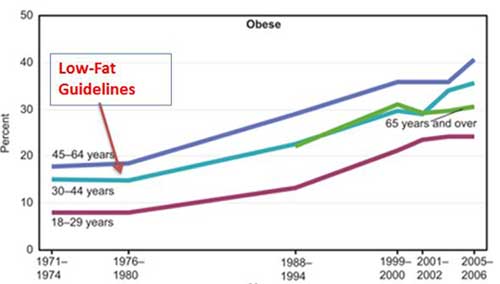
Conventional recommendations over the past 40 years or more have called for drastically decreasing the overall fat in your diet, but this fat aversion is a driving force behind today’s metabolic dysfunction, obesity, and ill health. As discussed earlier, most people need between 50 and 85 percent of their calories from fats—a far cry form the less than 10 percent from saturated fat recommended by the USDA!7 Kris Gunnars stated it quite nicely:8

“The first dietary guidelines for Americans were published in the year 1977, almost at the exact same time the obesity epidemic started. Of course, this doesn’t prove anything (correlation does not equal causation), but it makes sense that this could be more than just a mere coincidence.

The anti-fat message essentially put the blame on saturated fat and cholesterol (harmless), while giving sugar and refined carbs (very unhealthy) a free pass. Since the guidelines were published, many massive studies have been conducted on the low-fat diet. It is no better at preventing heart disease, obesity or cancer than the standard Western diet, which is as unhealthy as a diet can get.”

Let’s face it, if low-fat diets worked, the United States would be the healthiest nation on the planet—folks have been following them since the late 1970s! But if you look at the following graph, you can see that America’s waistline has done nothing but expand since then. There’s no telling how many people have been prematurely killed by following these flawed guidelines. Yet, despite mounting research to the contrary, low-fat diets are stillbeing pushed as “heart healthy” by the majority of nutritionists, cardiologists, and the like.
Lie #10: Carbs Should Be Your Biggest Source of Calories

I have already covered how insulin resistance is a key factor in disease (see Lie #4). A diet high in non-fiber carbohydrates—particularly processed grains and sugar—leads directly to insulin and leptin resistance. When your highest percentage of calories comes from healthful fats, these problems just don’t exist. Most high-carb diets are high in sugar and starch, not vegetables. When the low-fat mantra swept over the country, the high-carb craze soon followed. When fat was removed from foods, something had to be added back in to make foods more palatable—and that something was sugar. Particularly, highly concentrated forms of fructose, such as high fructose corn syrup, which spell metabolic disaster for your body.

With fat being the identified villain (albeit falsely accused), sugar was completely ignored—even though sugar was the realculprit behind inflammation, metabolic dysfunction, diabetes, and heart disease. America’s love of sugar was a boon to the processed food industry—which added fructose to practically everything from soup to nuts… literally. If you want to see what effects this had on the country’s health and belt size, just turn on your national news.

A high-carb diet disrupts your insulin and leptin signaling, and over time may very well result in type 2 diabetes. By contrast, a diet higher in beneficial fats corrects these metabolic issues. Recent research has demonstrated that the ketogenic diet—one marked by carbohydrate restriction and substantial healthful fats—extended the lifespan of mice by 20 percent, because it optimized their insulin sensitivity and other metabolic processes. There is evidence that low carbohydrate diets, combined with appropriate amounts of protein, can even slow down Alzheimer’s disease and cancer.

Now for the #1 Truth…

The more you can eat like your ancestors, the better—fresh whole foods, locally and sustainably raised, and foods that are minimally processed or not processed at all. These are the types of foods that your genes and biochemistry are adapted to and will provide you with the ability to reverse and prevent most diseases. You will find these at your local farmer’s market, food co-op, or in your own backyard garden. And you will be amazed at the positive changes you’ll see in your health when you “clean up” your diet!  Be wary of nutritional advice from mainstream “experts” as it may not be based on science—or based on bad information that is several decades outdated. Truthful, accurate information is your number one weapon in taking control of your health.

Recommended Reading:


An Introduction to Hydroponics – Healthy for Your Body and Good for the Planet

What is hydroponics? Hydroponics is a system that allows plants to be grown indoors, without soil, in a nutrient rich environment.  While this may seem oddly against Mother Nature, the process and result can be incredibly beneficial to both your body and the earth.

Imagine a nondescript inner city building surrounded by old manufacturing facilities and a desolate parking lot. Now picture yourself walking in the door of this building. Rather than finding the tired emptiness expected from the exterior, you are surrounded by floor-to-ceiling, brilliantly lit herbs and leafy greens. Welcome to urban hydroponics and the fantastic array of good deeds it offers.

If you are like many who live in a frozen tundra during the winter months, you will be very pleased to know that perfectly ripened, fresh herbs and greens can be harvested and added to your happy-body salad in the same afternoon. When food is grown around the corner, there is no delay from harvest to table and there is no carbon footprint.

Hydroponic methods do not use pesticides or herbicides, allowing for clean eating and that welcome smile of gratitude from your body. Because of the widespread use of pesticides and herbicides, cross contamination in traditional farming has become a sad reality and something that our lovely organic farmers work hard to control. Hydroponics are grown indoors. Therefore, the cross contamination concern is eliminated.

I had the opportunity to sit down with an expert in the field and President of Garden Fresh Farms, Peter Cordell, to discuss his hydroponics techniques and to learn from his wealth of knowledge.

Do you recall your inner city urban vision? Peter and his business partner, Dave Roeser, have created exactly that reality. Their hydroponic system headquartered in St. Paul Minnesota is an award winning program of ingenuity and hard work.

To give you a better idea of just how this process works, let’s begin with the seed. In the Garden Fresh Farms model, non-GMO seeds are sprouted during what Peter calls the “kindergarten” stage in a traditional bunk bed method.

bunk bed hydroponics

After graduation, the seedlings are placed in tall vertical boards hung from the ceiling and rotated through a 35 day cycle (That’s fast! Want to know why? Nutrients! Stay tuned). Stemmed plants are placed in a rotating barrel to keep them on the straight and narrow. (Much like the plant version of your mom telling you to sit up straight.)

barrel hydroponicshydroponics 2

Now what about those nutrients? Depending on the system and producer, hydroponics may use many different types of nutrient methods. In our example, Peter found that using a clean closed water loop system that involves hundreds of tilapia, fed high quality nutrient rich fish food, is a recipe for both optimal flavor and integrity. His process uses 95% less water than traditional irrigation. A multi-step conversion process ultimately adds nitrogen to the water that hydrates the plant roots, resulting in a highly nutritious and excellent tasting greens.

Now that your visions are inspired, picture a well fed world with the perfect combination of outdoor organic farming and healthy hydroponics.

Intrigued? Do your research. With some well-placed lights and a lot of knowledge, you too may start your own urban farm.


Autism and Vaccines: CDC Whistleblower Exposes Vaccine Dangers, Lies, and Cover-ups

According to a study by Focus Autism Foundation, a CDC whistleblower revealed manipulation of scientific data in regards to the MMR vaccine. There was pressure from the top to get CDC (The Center for Disease Control and Prevention) scientists to support government policies on Vaccine Safety, ignoring and hiding the risks involved.

It turns out that the CDC knew about increased autism rates among African-American Boys who received MMR shot earlier than 36 months.

A top research scientist working for the Centers for Disease Control and Prevention (CDC) played a key role in helping Dr. Brian Hooker of the Focus Autism Foundation uncover data manipulation by the CDC that obscured a higher incidence of autism in African-American boys. The whistleblower came to the attention of Hooker, a PhD in biochemical engineering, after he had made a Freedom of Information Act (FOIA) request for original data on the destefano et al MMR (measles, mumps, rubella) and autism study.” – marketwatch.com

Dr. Hooker stated “The CDC knew about the relationship between the age of first MMR vaccine and autism incidence in African-American boys as early as 2003, but chose to cover it up.”

The whistleblower confirmed this.

The CDC whistleblower informant, who has worked for the government agency for over a decade, remarked to Dr. Hooker in phone calls: “We’ve missed ten years of research because the CDC is so paralyzed right now by anything related to autism. They’re not doing what they should be doing because they’re afraid to look for things that might be associated.” The whistleblower alleges criminal wrongdoing of his supervisors, and he expressed deep regret about his role in helping the CDC hide data.” focusautisminc.org

For those who don’t regularly keep up with vaccine news, this may come as a bit of a shock. Most of us that are in the know are aware of the fact that the CDC and vaccine manufacturers know vaccines can increase the risk for autism and other very serious health issues. That’s not really news. The news here lies in the fact that the CDC has been exposed as the fraudulent special-interest organization that people in natural health have suspected them to be for some time now. There are also, obviously, huge racial issues implied as well.

We at OLM are not saying that vaccines do not have any value. They may. The problem is that it’s naive to believe the powers that be when they tell you that there is nothing wrong with injecting yourself with ingredients known to be very toxic. Furthermore, we at OLM advocate a level of health that builds natural immunity. We do not believe that good health is a crapshoot, a roll of the dice. We know that good health is a result of eating right, exercise, getting plenty of clean nutrition and sunlight, and getting enough sleep. Health cannot be found in a pill bottle or a shot. Nature weeds out the weak. We choose to stay strong, and we choose not to trade one disease for another.

We suspect that this is just the tip of the iceberg, and we will keep you updated.

In the meantime, remember this. When there’s a lot of money involved, there is always corruption. And there is a lot of money in vaccinations.

Further Reading:
Sources:


New Data Reflects the Continued Demand for Farmers Markets

WASHINGTON, August 2, 2014 – The U.S. Department of Agriculture’s (USDA) Agricultural Marketing Service (AMS) Administrator Anne Alonzo announced today that USDA’s National Farmers Market Directory now lists 8,268 markets, an increase of 76 percent since 2008. The data reflects continued demand and growth of farmers markets in every region of the country. Alonzo also announced that AMS is developing three new local food directories that will expand USDA’s support for local and regional foods by providing easy access to the most current information about the local food market.

Alonzo made the announcements at the Dane County Farmers Market in Madison, Wisconsin, the country’s largest producer-only market, where she kicked off the 15th annual “National Farmers Market Week”, from August 3 through 9, 2014.

“The National Farmers Market Directory numbers reflect the continued importance of farmers markets to American agriculture. Since its inception, the directory has proven to be a valuable tool for accessing up-to-date information about local farmers markets,” Alonzo said. “Farmers markets play an extremely important role for both farmers and consumers. They bring urban and rural communities together while creating economic growth and increasing access to fresh, healthy foods.”

The USDA National Farmers Market Directory, available at farmersmarkets.usda.gov, provides information about U.S. farmers market locations, directions, operating times, product offerings, and much more. The data is collected via voluntary self-reporting by operating farmers market managers and is searchable by zip code, product mix, and other criteria. The National Farmers Market Directory receives over 2 million hits annually.<

In addition to USDA’s National Farmers Market Directory, AMS is adding:

  • USDA’s National Community-Supported Agriculture (CSA) Enterprise Directory
    A CSA is a farm or network/association of multiple farms that offer consumers regular deliveries of locally-grown farm products during one or more harvest season(s) on a subscription or membership basis.
  • USDA’s National Food Hub Directory
    A Food Hub is a business or organization that actively manages the aggregation, distribution, and marketing of source-identified food products to multiple buyers from multiple producers, primarily local and regional producers, to strengthen the ability of these producers to satisfy local and regional wholesale, retail, and institutional demand.
  • USDA’s National On-Farm Market Directory
    An On-Farm Market is a farm market managed by a single farm operator that sells agricultural and/or horticultural products directly to consumers from a location on their farm property or on property adjacent to that farm.

USDA invites local food business owners who fall within these categories to list their operational details in the new directories www.usdalocalfooddirectories.com. These new directories will be available online early in 2015, giving potential customers, business partners, and community planners easy, one-stop access to the most current information about different sources of local foods.

2014 Directory Highlights

According to USDA’s 2014 National Farmers Market Directory, the states with the most farmers markets reported are California (764 markets), New York (638 markets), Michigan (339 markets), Ohio (311 markets), Illinois (309 markets), Massachusetts (306 markets), Pennsylvania (297 markets), Wisconsin (295 markets), Virginia (249 markets), and Missouri (245 markets). All geographic regions saw increases in their market listings, with the most growth in the South. The 10 states with the biggest increases in the numbers of farmers markets include Tennessee, Louisiana, Texas, Hawaii, Massachusetts, Arkansas, North Carolina, Montana, Florida and Nebraska.  Five of these states – Tennessee, Louisiana, Texas, Arkansas, and North Carolina – are part of USDA’s StrikeForce for Rural Growth and Opportunity, where USDA has increased investment in rural communities through intensive outreach and stronger partnerships.

Farmers market development is a cornerstone of USDA’s Know Your Farmer, Know Your Food Initiative, which coordinates the Department’s policy, resources, and outreach efforts related to local and regional food systems.  Secretary Vilsack has identified strengthening local food systems as one of the four pillars of USDA’s commitment to rural economic development.

USDA Office of Communications


Growing Boneset for Health Benefits

Boneset (Eupatorium perfoliatum), a member of the aster family, is also known as white Joe-Pye Weed, an herb that has long been used by both Native Americans and European settlers for its healing properties.

The tiny white flowers, which grow in clusters, blossom during the late summer and early fall seasons. Boneset is plentiful in fields and meadows but can be easily cultivated in gardens. A perennial, boneset grows in planting zones 4-8.

Boneset seeds can be grown indoors or outdoors once the last frost has passed. Growing boneset from seeds indoors instead of outdoors offers several advantages: being very tiny in size, the seeds will not be washed away by the rain or eaten by birds, and it will be easier for you to check the moisture level of the soil as the seeds enter the germination stage. The soil should always be kept moist once you plant boneset seeds.

To grow boneset from seeds indoors, start off with using dampened soil in your starting container. Gently tap the seeds into the surface of the damp soil. Do not cover the tiny seeds with a heavy layer of soil. You can either leave the seeds exposed, or covered with a very thin layer of damp soil. Place the starting container close to a window that has southern exposure, for the seeds require sunlight to germinate. Check the soil every 24 hours to make sure it remains damp so the seeds can germinate. If the soil gets dry, lightly water the soil. Once the seeds germinate into plants, they can be transplanted outside once the last frost of the season has passed.

Boneset will grow well in partial shade as well as full sunlight. The plants will grow from 2 – 5′ tall so allow between 18 – 24” of space for each plant. Boneset stalks are sturdy and will not require support of any kind. Water established plants once a week, and twice a week during dry periods.

Boneset tea is a diaphoretic, expectorant, tonic and febrifuge when taken for colds and influenza. As a diaphoretic, boneset produces perspiration, thus causing fevers to pass quickly. It is an expectorant as it removes excess mucus from the bronchial tubes should the patient have difficulty breathing. Boneset has tonic properties that strengthens internal and external tissue, which makes it suitable for healing bruises, cuts and scrapes.

To make boneset tea, use a proportion of one ounce of dried boneset leaves and flowers to a pint of boiled water. Strain the leaves from the tea. Drink 2 to 3 cups of boneset tea a day until the cold or flu has reached its end. The tea will also help individuals with emphysema, asthma, and bronchitis. For use as an internal tonic, mix a teaspoon of boneset powder in a cup of cold water for drinking and take several times a day.

A poultice can also be made from boneset for use on cuts, broken bones, or sprains. Use a tablespoon of dried boneset which has been crushed into powder form – a mortar and pestle can be used for this purpose – and thoroughly blend into a tablespoon of cocoa butter. Alternately, the powdered boneset can also be mixed with some warm water to form a poultice, then applied to sprains, broken bones, arthritic joints, or bruises.

Sources and Further Reading:


Small Family Farmer Fights Back Against Over-reaching Government Forcing her off her Land

(NaturalNews – Julie Wilson) Martha Boneta, operator of a small family farm in Paris, Virginia, achieved success not only for her business but also for small farmers and property owners across the state when the “Boneta Bill” finally became law on July 2.

Despite efforts from local and state government officials, including Fauquier Zoning Administrator Kimberley Johnson, who accused Boneta of violating zoning ordinances, HB-268 passed, which protects traditional farming and agricultural practices against over-regulation on the county level.

Liberty Farm is a small, working 64-acre farm located about an hour outside of Washington D.C. that offers fresh seasonal organic vegetables, fresh and dried herbs, honey and honeybee products, eggs, chicken, duck, turkey, emu, hand-made soaps and sheep wool crafts.

The controversy began in 2012 after a neighbor reported Boneta’s farm and its on-farm store as a “nuisance” following a birthday party that she held for eight 10-year old girls, which led to Fauquier County putting her out of business.

Johnson, the county zoning board administrator, accused Boneta of selling fresh fruit, vegetables, beverages and homemade handicrafts out of her on-site farm store, an action he says violated “modified zoning rules.”

The Star Exponent reports that, under the state’s Right to Farm law, agricultural operations are supposed to be protected against “nuisance law suits, and prevent local governments from using zoning laws to restrict standard farming practices, even if these practices bother adjacent property owners.”

According to Boneta, her zoning administrator went on her Facebook page and saw a birthday party picture of little girls on her farm, and an advertisement that she posted for pumpkin carving in her pumpkin patch. Boneta says she was found in violation of engaging in traditional activities that farmers have engaged in “since forever.”

The consequences for Liberty Farm’s alleged violation carried a penalty of $15,000 per day in fines “based on amendments made to the county’s zoning ordinance,” reported The American Spectator.

Despite maintaining that her retail farm business license was “grandfathered” into any changes made by the county, Boneta was also forced to stop selling vegetables that she had harvested. To prevent the food from being wasted, she donated it to local charities.

Boneta’s story gained national media attention, prompting farmers to stage peaceful “pitchfork protests” outside of the Board of Zoning Appeals building in support of her farm and state property rights.

The Farm-to-Consumer Legal Defense Fund (FTCLDF), of which Boneta is a member, offered her legal aid during her struggle.

In the 2013 session of the General Assembly, Rep. Scott Lingamfelter helped bring justice to Boneta and protect other farmers from similar abuse by spearheading legislation that would strengthen Virginia’s Right to Farm Act.

The “Boneta Bill” passed the House by an “overwhelming margin,” but was killed in a Senate committee. However, grassroots organizations and Boneta’s supporters didn’t give up, but instead returned to the General Assembly in 2014 and “won wide bipartisan approval for legislation protecting the rights of family farmers.”

Backed by the Virginia Farm Bureau and signed into law by Gov. Terry McAuliffe, customary activities at agricultural operations are now protected from local governments unless substantial impacts on public welfare can be proven.

The bill also prohibits localities from requiring special-use permits for farmers wanting to host farm-related activities.

“I am grateful to all the Virginians and legislators from across the Commonwealth who rallied for non-partisan legislation that provides economic opportunity for small family farmers, access to consumers and allows the great traditions of farming in Virginia to flourish,” said Boneta.

“It is gratifying to see the hard work of Virginians, working together across party lines, rewarded by a law that enables family farms to prosper as our Founding Fathers intended.”

Additional sources:
http://theroanokestar.com
http://www.farmtoconsumer.org
http://spectator.org
http://www.dailyprogress.com
http://lis.virginia.gov
http://science.naturalnews.com