Study Finds Girls Now Enter Puberty Even Earlier Than Previously Thought

A new longitudinal1 study found that girls are developing breasts at an increasingly younger age, which is part of a disturbing trend in the sexual development of our children. American girls (and boys) are hitting puberty earlier than ever before, and upward trends in childhood obesity seem to be playing a major role.

You may be shocked by the latest childhood obesity statistics. As reported byHuffington Post:2

  • 17 percent of children and adolescents are now obese
  • Childhood obesity has nearly tripled since 1980
  • Obesity among kids ages two to five has doubled over the past 30 years, and one in five kids is now overweight by age six
  • More than half of obese children were overweight by their second birthday
  • The food industry spends more than $1.8 billion marketing to kids each year3—and what they’re selling is primarily processed food and junk food

Data for the puberty study, published in the November 2013 issue ofPediatrics,4 came from a cohort of more than 1,200 girls in and around San Francisco, Cincinnati, and New York City between the ages of six and eight.

Researchers found some cultural variability, but overall, concluded that girls are entering puberty earlier than in the past. Early sexual maturation is not a recent development, nor is it a phenomenon limited to United States. It is a global phenomenon, especially in developed nations.5

Obesity May Be More Significant for Early Puberty Than Previously Thought

Maturing at a younger age brings many long-term risks, both in terms of physical and mental health.6 The pace of sexual development has generally been attributed to three primary factors, according to the website for Theo Colborn’sOur Stolen Future:7

  1. Obesity
  2. Social factors (such as family environment, stress, overt sexuality in the media, etc.)
  3. Toxic contamination (environmental chemicals and pollutants, hormones and hormone-mimics, pesticides, chemicals in plastics, etc.)

According to the featured study, obesity appears to be the most significant factor driving early puberty—or perhaps it’s just the easiest to quantify. Overweight and obese girls in this study developed breasts about a year earlier than normal-weight girls (age eight versus age nine, respectively).

Obesity exposes girls to higher estrogen levels because estrogen is both produced and stored in fat tissue. Girls carrying excess body fat have more estrogen and leptin, which can lead to insulin resistance and the development of more fat tissue, which produces even more estrogen, a vicious cycle that can eventually result in premature puberty, among other problems.

Boys are not immune to the effects of estrogenic chemicals—males of all species are becoming more female, including human boys. Childhood obesity is a growing epidemic in developed countries and raises your child’s risk for the following serious health concerns, often persisting into adulthood. However, this is just the tip of the iceberg.8

  • Impaired insulin resistance and type 2 diabetes
  • Cardiovascular disease, asthma, and other respiratory problems
  • Fatty liver disease
  • Joint and musculoskeletal problems, and lower extremity fractures9
  • Gallstones and gastroesophageal reflux (GERD)

Obesity and Toxic Environmental Chemicals: Two Sides of Same Coin?

There is mounting scientific evidence that environmental contaminants have hormone-mimicking properties that may play a role in premature sexual development. However, it is difficult to measure these effects, as strong as their theoretical basis may be. In terms of research, it’s much easier to correlate a child’s age of onset of puberty with her body mass index (BMI) than with her level of exposure to plastics or pesticides.

However, the obesity and contamination factors are likely two sides of the same coin, having been linked in multiple scientific studies.

The same chemicals that contribute to precocious puberty are in fact also significant players in obesity, such as phthalates.10111213 Even low levels of toxic chemicals (dioxins, PCBs, BPA, and phthalates) have been shown to cause metabolic changes in mice.

Perhaps the relationship between endocrine-disrupting chemicals and precocious puberty will be clearer in the near future, as the researchers in this latest longitudinal study plan to tackle the chemical exposure issue next.14 For a list of the top 10 chemicals that can potentially cause early puberty in your child, please refer to my previous article on this topic.

The Age of Onset of Puberty Has Dropped Four Years Since 1920

The age of puberty onset for both girls and boys has been steadily dropping throughout recorded history. According to German researchers,15 the onset of puberty for girls has shown the following disturbing trend over the past 150 years:

Age of Onset of Puberty for Girls
Year Average Age (Years)
1860 16.6
1920 14.6
1950 13.1
1980 12.5
2010 10.5

As you can see, the average age for girls has fallen by four years since 1920 and six years over the last century. The statistics for boys parallel those for girls, with a delay of about one year. According to another study in the journal Pediatrics,16 boys are now beginning sexual development anywhere from six months to two years earlier than the medically accepted standard. While some may shrug off the significance of this trend, it actually has quite profound implications as it can adversely affect your child’s physical and emotional development in a number of ways. Premature puberty has both physical and psychosocial implications that may potentially affect your child well into adulthood—in fact, for the rest of his or her life.

The Physical Consequences of Precocious Puberty

Early onset puberty has been found to have a number of problematic effects. In terms of the physical, your child may have increased risk for the following:

  • Hormone-related cancers later in life for girls reaching puberty early, such as breast cancer, due to the early rise in estrogen
  • Some have suggested early puberty may be linked to thyroid abnormalities, brain tumors, and testicular cancer in boys, although these effects have not been proven1718
  • Short stature as adults—once puberty completes, growth generally stops

Far-Reaching Psychological Effects

Perhaps even more concerning are the psychosocial effects of premature puberty. An article containing an extensive review of the literature about the psychosocial effects of precocious puberty reveals just how potentially damaging early sexual development is to your child. When your child’s physical body matures too early, there is not enough time for her mind to adjust to those changes, often producing feelings of fear, confusion, and social isolation.19 The authors explain:

“Early maturation ignites a series of negative environmental responses that influence the course of future development. For example, precocious maturation may cause peers to behave differently towards early maturing girls, which results in social difficulties and feelings of isolation. Early developing girls may seek out friends who are similarly mature or find themselves attracted to older boys, both of which might result in weakening peer relationships.”

As a result of this increased stress, children experiencing early puberty have been shown to have an increased risk for a variety of social, emotional, and behavioral problems, as outlined in the following table. You will see that the effects are truly far reaching and can forever change the course of your child’s life. This is not intended to scare you or bring doom and gloom, but to raise your awareness in the event your child is an early maturer, so that you can provide her the emotional support needed to deal with it. If she reaches puberty ahead of schedule, you will need to be especially aware of and sensitive to her unique developmental needs and challenges.

Depression and Anxiety: There is a link between early menarche and anxiety, especially panic attacks. Panic attacks have been found to occur more frequently among sixth and seventh grade girls who display early sexual development. Early maturers are also more likely to report psychosomatic symptoms, such as headaches, upset stomachs, and sleep disturbances.
Eating Disorders: Early maturing girls are more likely to report body dissatisfaction and poor self-esteem during adolescence and to engage in excessive dieting and disordered eating. Poor body image seems to persist among early maturers even after same-age peers have achieved puberty. Girls may internalize their changing physical appearance as a way that they are “different” from peers, which may manifest as self-consciousness or attempts to “reduce” their changing bodies. Body dissatisfaction seems to be amplified by concurrent life stressors.
Substance Abuse: Early pubertal development is associated with increased (and earlier onset) smoking, drinking, and illegal drug experimentation with increased likelihood of life-long substance abuse. Conversely, late pubertal maturation predicts abstinence well beyond the end of puberty.
Premature Sexual Activity: Girls who experience earlier menarche begin to date before their peers and tend to be sexually active earlier. By the age of18, girls who have experienced early menarche are more than twice as likely to have given birth or terminated a pregnancy than their peers.
Delinquency: Early menarche has been associated with shoplifting, vandalism, fighting, and weapon possession. Early maturation significantly predicts engagement in violent delinquent behavior (such as burglary, fighting, gang membership, and shooting or stabbing another person), according to one study. Girls who develop early can be targeted by other girls for bullying, and by older boys for unwanted sexual attention.20
Reduced Academic Performance: Early maturing girls are more likely to exhibit poor academic performance in high school than on-time or later maturing peers. Conversely, later maturation has been associated with higher grades. Early maturers are more likely to report getting in trouble at school, absenteeism, and truancy. They report less interest in academic subjects and are less likely to pursue college education and tend to have lower-paying jobs. This effect is magnified in girls experiencing extremely early puberty.

Tips for Preventing Obesity and Reducing Exposure to Hormone-Disrupting Chemicals

As you can see, precocious puberty is much more than an incidental trend. You can minimize problems by taking steps to optimize your child’s physical and emotional health, beginning the day she is born—or failing that, beginning today! In addition to avoiding excess sugar, junk food, and toxic products, make sure your children get adequate exercise, which is crucial in preventing them from becoming overweight or obese. Physical activity is important for both physical and mental health.

You can cut back on your family’s exposure to dangerous chemicals by implementing the following 16 guidelines. Pregnant women and women who may become pregnant should pay particular attention to reducing their exposure as much as possible, in order to protect the health of their unborn babies.

  1. Eat fresh, whole, non-GMO, preferably organic produce and free-range, organic meats to reduce your exposure to added hormones, pesticides, and fertilizers. Also, avoid milk and other dairy products that contain the genetically engineered recombinant bovine growth hormone (rBGH or rBST). Processed, prepackaged foods are a major source of soy and chemicals such as BPA and phthalates.
  2. Rather than eating conventional or farm-raised fish, which are often heavily contaminated with PCBs and mercury (which also has hormone-disrupting effects), supplement with a high-quality purified krill oil, or eat fish that is wild-caught and lab tested for purity. Wild-caught Alaskan salmon is about the only fish I eat for these reasons.
  3. Filter your tap water—both for drinking and bathing. In fact, if you can only afford to do one, filtering your bath water may be more important, as your skin absorbs contaminants. To remove the endocrine disrupting herbicide Atrazine, make sure the filter is certified to remove it.
  4. Avoid non-fermented soy, especially if you’re pregnant. Also, never use soy-based infant formula.
  5. Optimize your (and your child’s) vitamin D levels. A 2011 study found that girls who are vitamin D deficient may be more than twice as susceptible to premature puberty as girls with optimal vitamin D levels.
  6. Store your food and beverages in glass rather than plastic containers, and avoid using plastic wrap and canned foods (which are often lined with BPA-containing liners).
  7. Use glass baby bottles and BPA-free Sippy cups for your little ones, and never, ever, ever microwave your child’s food in plastic containers. (It’s best to avoid microwaving food altogether.)
  8. Make sure your baby’s toys are BPA-free, such as pacifiers, teething rings, and anything your child may put in her mouth.
  9. Use only natural cleaning products in your home to avoid phthalates and other toxic ingredients.
  10. Switch over to natural brands of toiletries such as shampoo, toothpaste, deodorant, and cosmetics. Avoid all fluoride-containing products and fluoridated water. The Environmental Working Group’s Skin Deep Database21 is a great resource for finding personal care products that are free of phthalates, parabens, and other potentially dangerous chemicals.
  11. Avoid using artificial air fresheners, dryer sheets, fabric softeners, and synthetic fragrances.
  12. Replace your non-stick pots and pans with ceramic or glass cookware.
  13. When remodeling your home, look for “green,” toxin-free alternatives in lieu of regular paint and vinyl floor coverings.
  14. Replace your vinyl shower curtain with a fabric one.
  15. When buying new products such as furniture, mattresses, and infant cribs, or carpet padding, ask what type of fire retardant it contains. Be mindful of and/or avoid items containing PBDEs, antimony, formaldehyde, boric acid, and other brominated chemicals—all of which can have an adverse effect on your hormones. As you replace these toxic items around your home, select those that contain naturally less flammable materials, such as leather, wool, and cotton.
  16. Avoid stain- and water-resistant clothing, furniture, and carpets to avoid perfluorinated chemicals (PFCs).


Top 10 Destructive Nutrition Lies Ever Told

(Dr. Mercola) There is no shortage of health advice out there, and no shortage of bad advice to go along with it. Some misguided notions are harmless—but others are outright dangerous and can lead you down the road to chronic health problems and may even trim years off your life.

It is critically important to decipher fact from fiction. Many nutrition myths get repeated over and over until they are mistaken for truth, especially when perpetually spread by public health authorities.

But the good news is that slowly, the real truth finally appears to be reaching mainstream audiences, as evidenced by the eagerness of satirists to take a jab at the food industry, as in the clever Coca-Cola parody featured above.

In an article addressing destructive nutrition lies, Kris Gunnars of Authority Nutrition1 is among those admirably trying to bust the dangerous dietary myths that continue being spread by so many nutritionists. I agree with the majority of his points, but have added a few others that I believe to be important. Read on for my own top 10 list, which builds upon his.

Lie #1: Breakfast Is the Healthiest Meal of the Day, and You Should Eat Many Small Meals a Day

There is now a good deal of research supporting the health benefits of intermittent fasting—which is what you are really doing whenever you zip out of the house in the morning without breakfast.

Recent studies suggest that intermittent fasting can provide the same health benefits as constant calorie restriction which many studies have shown to dramatically increase life span in animals. It may also be helpful for those who cannot successfully reduce their everyday calorie intake.

Besides turning you into an efficient fat burner, intermittent fasting can also boost your level of human growth hormone production (aka the “fitness hormone”) by as much as 1,200 percent for women and 2,000 percent for men.

Intermittent fasting and continuous calorie restriction have both been shown to produce weight loss and improve metabolic risk markers. However, intermittent fasting tends to be slightly more effective for reducing insulin resistance.

Other benefits include reducing inflammation, improving blood pressure, and increased lean body mass. Intermittent fasting can also improve your brain function by increasing levels of BDNF, a protein that protects your brain cells from the changes associated with Alzheimer’s and Parkinson’s disease.

There are several types of intermittent fasting to choose from, so I recommend experimenting to see what style works best for you. One of the easiest, however, is to simply skip breakfast, and limit your eating to a narrow window of time each day—say between 11am and 7pm, to start. You can review my more comprehensive article on intermittent fasting for more details.

The advice to “eat six small meals per day” comes from seemingly logical principles (portion control, keeping your energy up, stabilizing blood sugar, etc.), but in reality, eating this way has not been shown to provide these benefits. We seem to need periods of fasting for optimal metabolic function.

And if you think about it, our ancient ancestors never had access to a grocery store 24/7 and they went through regular periods of feast and famine. The problem is that most of us are in 24/7 feast mode. Implementing intermittent fasting is the quickest way I know of to jump start your body into burning fat as its primary fuel again.

Lie #2: Saturated Fat Causes Heart Disease

The dangerous recommendation to avoid saturated fat, which arose from anunproven hypothesis from the mid-1950s, has been harming people’s health for about 40 years now. As recently as 2002, the “expert” Food & Nutrition Board issued the following misguided statement, which epitomizes this myth:

“Saturated fats and dietary cholesterol have no known beneficial role in preventing chronic disease and are not required at any level in the diet.”

Similarly, the National Academies’ Institute of Medicine recommends that adults get 45-65 percent of their calories from carbohydrates, 20-35 percent from fat, and 10-35 percent from protein. This is the polar opposite of an ideal fat to carb ratio and virtually guarantees you a heightened risk of disease.

Most people benefit from a diet where 50-85 percent of daily calories are derived from healthful fats. However, you need very few, if any, carbohydrates for optimal health. Although that amount of fat may seem like a lot, fat is very calorie-dense, and will therefore still constitute the smallest amount, in terms of volume, on your plate.

The truth is, saturated fats from animal and vegetable sources provide the building blocks for your cell membranes and a variety of hormones and hormone-like substances, without which your body cannot function optimally.

Fats also serve as carriers for the fat-soluble vitamins A, D, E, and K and are required for converting carotene into vitamin A, absorbing minerals, and a host of other important biological processes. Saturated fat is also the preferred fuel for your heart! Good sources of healthy fats to add to your diet include:

Avocados Butter made from raw grass-fed organic milk Raw dairy Organic pastured egg yolks
Coconuts and coconut oil Unheated organic nut oils Raw nuts, especially macadamia, and raw seeds Grass-fed and finished meats

Lie #3: High Omega-6 Seed and Vegetable Oils Are Good for You

Of all the health-destroying foods on the market, those made with highly processed vegetable and seed oils are some of the worst. When consumed in large amounts, as they are by most Americans, they seriously distort your important omega-3 to omega-6 ratio. In a perfect world, this ratio is 1:1—but the average American is getting 20 to 50 times more omega-6 fats than omega-3 fats. Excessive omega-6 fats from processed foods significantly increase your risk for heart disease, cancer, Alzheimer’s, diabetes, rheumatoid arthritis, and many other illnesses.

The cholesterol found in arterial plaque is oxidized, damaged cholesterol, which your immune system identifies as bacteria. In response, your immune system sends out macrophages to attack it, which creates inflammation inside your artery walls. A major factor driving heart disease is this oxidized cholesterol, which you introduce into your body every time you consume vegetable oils, or foods cooked in them.

Many vegetable and seed oils are also genetically engineered, which only compounds their health risk. More than 90 percent of US canola oil is GE. So what’s the best oil to cook with? Of all the available oils, coconut oil is the one of choice for cooking because it’s close to a completely saturated fat—meaning, much less susceptible to heat damage. And coconut oil is one of the most nutritionally beneficial fats. For more information about coconut oil, please see our special report. Olive oil, while certainly a healthful oil, is easily damaged by heat and is best reserved for drizzling cold over salad.

Lie #4: Artificial Sweeteners Are Safe Sugar Replacements for Diabetics, and Help Promote Weight Loss

Most people use artificial sweeteners to lose weight and/or because they are diabetic and need to avoid sugar. The irony is that nearly all of the studies to date show that artificial sweeteners cause even MORE weight gainthan caloric sweeteners. Studies also show that artificial sweeteners can be worse than sugar for diabetics.

In 2005, data gathered from the 25-year long San Antonio Heart Study showed that drinking dietsoft drinks increased the likelihood of serious weight gain much more so than regular soda.2 On average, each diet soda the participants consumed per day increased their risk of becoming overweight by 65 percent within the next seven to eight years and made them 41 percent more likely to become obese. There are several possible reasons for this, such as:

  • Sweet taste alone appears to increase hunger, regardless of caloric content
  • Artificial sweeteners appear to perpetuate a craving for sweets, and overall sugar consumption is therefore not reduced, leading to further problems with weight control3
  • Artificial sweeteners may disrupt your body’s natural ability to “count calories,” as evidenced by multiple studies. For example, a Purdue University study found that rats fed artificially sweetened liquids ate more high-calorie food than rats fed high-caloric sweetened liquids4

The list of health risks associated with artificial sweeteners, particularly aspartame, continues to expand. I maintain an ongoing list of studies related to the detrimental effects of aspartame, which I recommend you review for yourself if you are still on the fence. I invite you to watch my aspartame video, as well.

Lie #5: Soy Is a Health Food

The meteoric rise of soy as a “health food” is a perfect example of how a brilliant marketing strategy can fool millions. But make no mistake—unfermented soy products are NOT healthful additions to your diet, regardless of your age or gender. I am not opposed to all soy—properly fermented and preferably organic soy, such as tempeh, miso, and natto, offer great health benefits, courtesy of the beneficial bacteria (probiotics) the fermentation process produces.

Thousands of studies have linked unfermented soy to a number of health problems, however. More than 90 percent of American soy crops are also genetically engineered, which only compounds its health risks.5 If you find this information startling, then I would encourage you to review some of the articles on my Soy Page. The following table lists a number of the damaging health effects science has linked to unfermented soy:

Breast cancer Brain damage and cognitive impairment Heart disease
Thyroid disorders Kidney stones Immune dysfunction
Severe, potentially fatal food allergies Malnutrition Digestive problems
Problems with pregnancy and breastfeeding Reproductive disorders and impaired fertility Developmental abnormalities in infants

Lie #6: Whole Grains Are Good for Everyone

The use of whole grains is an easy subject to get confused about, especially for those with a passion for health and nutrition. For the longest time, we’ve been told that whole grains are highly beneficial. Unfortunately, ALL grains can elevate your insulin and leptin levels, even whole grains and organic varieties—and elevated insulin/leptin increases your risk of chronic disease. This is especially true if you already struggle with insulin/leptin resistance, which would manifest as high blood pressure, distorted cholesterol ratios, being overweight, or diabetes).

It has been my experience that more than 85 percent of Americans have trouble controlling their insulin and leptin levels and have one or more of the symptoms listed above. You may be one of those if you struggle to maintain an ideal body weight and body composition, tend to accumulate fat around you belly, or have a suboptimal lipid profile. In fact, insulin/leptin dysregulation is a common indicator for many of the diseases so prevalent today, such as diabetes, heart disease, dementia, and cancer.

Many whole grains also contain gluten, which is a common trigger for allergies and sensitivities. Subclinical gluten intolerance is far more common than you might think, with symptoms that are not always obvious. I strongly recommend eliminating or at least restricting grains from your diet, as well as sugars/fructose, especially if you have any of the conditions listed above. As a general rule, the higher your insulin levels are, the greater your grain restriction should be.

Lie #7: Genetically Engineered Foods Are Safe and Comparable to Conventional Foods

Genetic engineering (GE) of our food may be the most dangerous aspect of our food supply todayI strongly recommend that you avoid ALL GE foods. Since more than 90 percent of the corn and 95 percent of the soy grown in the US are GE, then you can count on virtually every processed food having at least one GE component if it doesn’t bear the “USDA 100% Organic” or non-GMO label.  Perhaps the most dangerous aspect of them is that the crops are saturated with one of the most dangerous herbicides on the market, glyphosate, to the tune of nearly a billion pounds per year. This toxic chemical can’t be washed off as it becomes integrated into nearly every cell of the plant, and then gets transferred into your body.

No one knows exactly what will be the ultimate impact of these foods on your health, particularly over the long term. Animal studies have pointed to increased disease, infertility, and birth defects as the top contenders. The first-ever lifetime feeding study showed a dramatic increase in organ damage, cancer, and reduced lifespan. It’s important to realize that, unless you’re buying all organic food or growing your own, you’re probably consuming GE foods on a daily basis. In order to avoid as many GE foods as possible, be aware that the following common crops are likely to be GE unless otherwise labeled:

Corn Canola Alfalfa
Soy Cottonseed Sugar from sugar beets
Zucchini Crookneck squash Hawaiian papaya

Lie #8: Eggs Are Bad for Your Heart

Eggs are one of the most demonized foods in the US… thanks to the cholesterol myth. The misguided belief that cholesterol, such as in egg yolks, will give you heart disease is simply untrue (see Lie #1). Studies have shown that eggs do NOT have a detrimental impact on cholesterol levels and are actually one of the most healthful foods you can eat. In one Yale study,6 participants were asked to consume two eggs daily for six weeks. Researchers found that this egg consumption did not spike cholesterol levels and did not have a negative effect on endothelial function, a measure of cardiac risk.

Choose pasture-raised organic eggs, and avoid “omega-3 eggs” as this is not the proper way to optimize your omega-3 levels. To produce these omega-3 eggs, the hens are usually fed poor-quality sources of omega-3 fats that are already oxidized. Omega-3 eggs are also more perishable than non-omega-3 eggs. Some of the many nutritional benefits of eggs are summarized for you in the table below.

One egg contains six grams of high quality protein and all nine essential amino acids Beneficial for eye health due to lutein and zeaxanthin, antioxidants in your lens and retina that help prevent eye diseases such as macular degeneration and cataracts Good source of choline, a member of the vitamin B family (essential for nervous system, cardiovascular system, and prenatal brain development)
Vitamin D: eggs are one of the few foods that contains naturally occurring vitamin D (24.5 grams) Sulfur (essential component of glutathione, also promotes healthy hair and nails) Many other vitamins and minerals (B vitamins, vitamins A and E, calcium, copper, iodine, iron, magnesium, potassium, selenium, and zinc)

Lie #9: Low-Fat Foods Prevent Obesity and Heart Disease

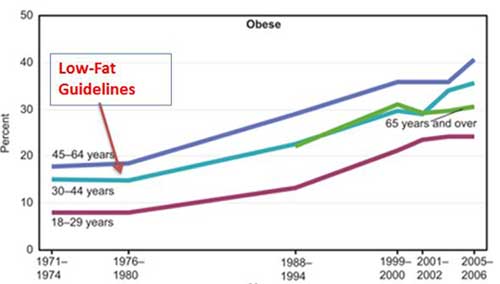
Conventional recommendations over the past 40 years or more have called for drastically decreasing the overall fat in your diet, but this fat aversion is a driving force behind today’s metabolic dysfunction, obesity, and ill health. As discussed earlier, most people need between 50 and 85 percent of their calories from fats—a far cry form the less than 10 percent from saturated fat recommended by the USDA!7 Kris Gunnars stated it quite nicely:8

“The first dietary guidelines for Americans were published in the year 1977, almost at the exact same time the obesity epidemic started. Of course, this doesn’t prove anything (correlation does not equal causation), but it makes sense that this could be more than just a mere coincidence.

The anti-fat message essentially put the blame on saturated fat and cholesterol (harmless), while giving sugar and refined carbs (very unhealthy) a free pass. Since the guidelines were published, many massive studies have been conducted on the low-fat diet. It is no better at preventing heart disease, obesity or cancer than the standard Western diet, which is as unhealthy as a diet can get.”

Let’s face it, if low-fat diets worked, the United States would be the healthiest nation on the planet—folks have been following them since the late 1970s! But if you look at the following graph, you can see that America’s waistline has done nothing but expand since then. There’s no telling how many people have been prematurely killed by following these flawed guidelines. Yet, despite mounting research to the contrary, low-fat diets are stillbeing pushed as “heart healthy” by the majority of nutritionists, cardiologists, and the like.

Lie #10: Carbs Should Be Your Biggest Source of Calories

I have already covered how insulin resistance is a key factor in disease (see Lie #4). A diet high in non-fiber carbohydrates—particularly processed grains and sugar—leads directly to insulin and leptin resistance. When your highest percentage of calories comes from healthful fats, these problems just don’t exist. Most high-carb diets are high in sugar and starch, not vegetables. When the low-fat mantra swept over the country, the high-carb craze soon followed. When fat was removed from foods, something had to be added back in to make foods more palatable—and that something was sugar. Particularly, highly concentrated forms of fructose, such as high fructose corn syrup, which spell metabolic disaster for your body.

With fat being the identified villain (albeit falsely accused), sugar was completely ignored—even though sugar was the realculprit behind inflammation, metabolic dysfunction, diabetes, and heart disease. America’s love of sugar was a boon to the processed food industry—which added fructose to practically everything from soup to nuts… literally. If you want to see what effects this had on the country’s health and belt size, just turn on your national news.

A high-carb diet disrupts your insulin and leptin signaling, and over time may very well result in type 2 diabetes. By contrast, a diet higher in beneficial fats corrects these metabolic issues. Recent research has demonstrated that the ketogenic diet—one marked by carbohydrate restriction and substantial healthful fats—extended the lifespan of mice by 20 percent, because it optimized their insulin sensitivity and other metabolic processes. There is evidence that low carbohydrate diets, combined with appropriate amounts of protein, can even slow down Alzheimer’s disease and cancer.

Now for the #1 Truth…

The more you can eat like your ancestors, the better—fresh whole foods, locally and sustainably raised, and foods that are minimally processed or not processed at all. These are the types of foods that your genes and biochemistry are adapted to and will provide you with the ability to reverse and prevent most diseases. You will find these at your local farmer’s market, food co-op, or in your own backyard garden. And you will be amazed at the positive changes you’ll see in your health when you “clean up” your diet!  Be wary of nutritional advice from mainstream “experts” as it may not be based on science—or based on bad information that is several decades outdated. Truthful, accurate information is your number one weapon in taking control of your health.

Recommended Reading:


Turmeric – Learn More about This Ayurvedic Herb

Way before the advent of synthetic, drug-based medicine, herbs and spices were valued for their medicinal properties. One clear example of this is the use of plants in Ayurvedic medicine in India.

What Is Ayurveda?

Ayurveda, which roughly translates to “The Science of Life,” is an ancient holistic system of natural healing and medicine that goes back thousands of years. It is based on preventative medicine and acknowledges that your senses and your mind greatly influence your physiology.  However, Ayurveda is not just a medicinal system. It also teaches how human beings are an integral part of nature. It emphasizes that you should live in harmony with nature, just as animals and plants do.

Ayurveda has many important components, and one of these is the use of herbs and spices. Herbs are recommended on a regular basis to help build and maintain a healthy physiology. In fact, many Ayurvedic herbs are now known as some of the most potent adaptogens on the planet.

Ayurvedic herbs and spices are greatly valued in Asian traditions and are often incorporated into everyday meals. Fragrant and flavorful varieties like ginger and cardamom are some of the most common examples of Ayurvedic herbs.

This Curry Spice Is One of the Best Ayurvedic Herbs

Turmeric is another Ayurvedic herb that is known for its healing properties and warm peppery flavor. It is the primary spice used for making delicious curry dishes. The use of this herb is said to date back more than 5,000 years. In India, there are tales that suggest that this spice’s usage dates back 10,000 years.

According to historical records, the ancient Polynesians also carried turmeric with them on their voyage across the Pacific to Hawaii. Today, turmeric, or Olena, is still widely used by Hawaiian natives. Meanwhile, in Europe, turmeric has been used as a substitute for saffron, an expensive old world spice.

Turmeric contains a powerful curcuminoid called curcumin, the pigment that gives this spice its lovely yellow-orange color. Curcumin benefits are becoming more and more well-known, leading to the popularity of turmeric and curcumin supplements today.

How to Maximize Your Curcumin Absorption

You can get curcumin simply by adding turmeric in your meals. Use it liberally in your cooking, and its earthy flavor will add a unique taste to your food. It’s best to opt for a pure turmeric powder instead of curry powder, as many curry powders typically have small amounts of curcumin.

It is difficult to absorb curcumin, so it’s important to maximize its bioavailability. Here’s one method: make a microemulsion by mixing one tablespoon of curcumin powder with one or two free-range egg yolks and a teaspoon of melted coconut oil. Afterwards, use a hand blender to emulsify.

Another idea is to put one tablespoon of curcumin powder into a quart of boiling water. Let it boil for 10 minutes, creating a 12 percent solution. Drink the liquid once it’s cooled down. The curcumin will fall out of the solution gradually, so make sure to drink it within four hours. This drink has a woody, earthy flavor.

Remember, though, that the curcumin in turmeric is a very potent yellow dye that may permanently discolor surfaces and even your skin, so be careful when handling this spice. Wear gloves and an apron when using it.

Turmeric is just one of the herbs and spices widely used in Ayurveda. Other notable herbs you shouldn’t miss out on include tulsi, basil, and ginger, which can all have a positive impact on your wellbeing.

About the Author

Elaine Rosales writes for Mercola.com. She is currently researching the uses of turmeric and whether or not curcumin supplements are as potent and efficient as turmeric powder.